Tsapakis Eva-Maria, Fountoulakis Konstantinos N, Kanioura Stefania, Einat Haim
Faculty of Medicine, Aristoteles University, Thessaloniki, Greece.
School of Behavioral Sciences, The Academic College of Tel-Aviv-Yaffo, Tel-Aviv, Israel.
Neurosci Appl. 2024 Jan 11;3:103940. doi: 10.1016/j.nsa.2024.103940. eCollection 2024.
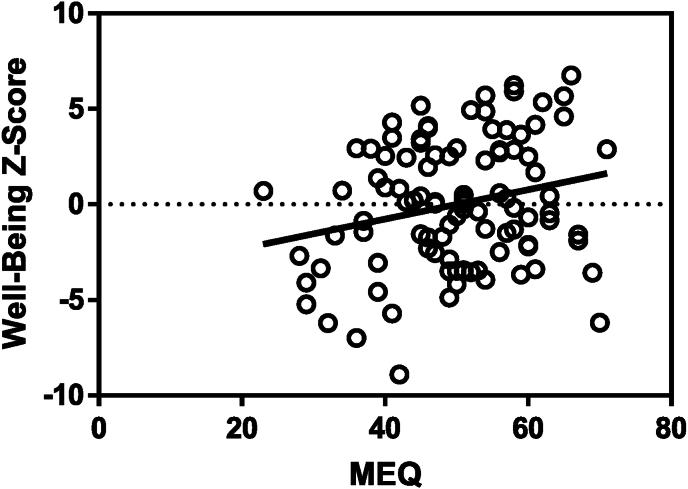
Circadian rhythms are pivotal for human functioning, and their disruption holds significant implications for well-being. One common source for circadian disruptions is circadian misalignment that can be related to chronotypes. Chronotypes refer to an individual's preferred timing for sleep and wakefulness. Individuals with late chronotypes are at a disadvantage in the morning-oriented modern world and are demonstrated to have negative consequences in many aspects of life. In the context of psychiatric disorders, chronotypes are related to prevalence of disorders and to treatment effects but less attention is given to the relationship between chronotype and well-being in chronic psychiatric patients. The current study aims to elucidate the extent to which individual chronotypes contribute to emotional well-being within a cohort of individuals with chronic psychiatric disorder in outpatient clinic. Participants (n = 100) were recruited from the outpatient clinic of the 3rd Department of Psychiatry, AHEPA University Hospital, Thessaloniki, Greece, and the AX Mental Health Outpatient Clinic in Heraklion, Crete, Greece. Most participants were diagnosed within the F2 cluster, Psychotic disorders (n = 38), or F3 cluster, Mood (affective) disorders (n = 48). The Morningness-Eveningness Questionnaire (MEQ) was employed to assess chronotype. The STAI-Y1, CES-D, QoL Uniscale and RASS Questionnaires were used to assess aspects of emotional well-being. A single measure of emotional well-being was generated using Z-score transformation. Student's t-test, ANOVAs and Pearson's correlations were used to identify parameters contributing to emotional well-being, followed by a comprehensive regression model. Results show a significant contribution to emotional well-being by "psychiatric diagnosis" with schizophrenia/schizoaffective patients showing better emotional well-being compared with the "other" group, "receiving treatment" with patients receiving treatment showing higher score than ones who do not receive treatment, and "morningness/eveningness preference" where morningness was associated with higher score of emotional well-being. No other demographic or health-related parameters were significantly associated with emotional well-being score. These findings clearly indicate the critical importance of chronotypes to the emotional well-being of chronic psychiatric patients. Additional thought and research should explore possible chronotherapy interventions that will address this issue in patients.
昼夜节律对人类的机能运作至关重要,其紊乱对健康有着重大影响。昼夜节律紊乱的一个常见原因是昼夜失调,这可能与昼夜类型有关。昼夜类型指的是个体偏好的睡眠和清醒时间。在以早晨为导向的现代社会中,晚睡型个体处于劣势,并且在生活的许多方面都表现出负面影响。在精神疾病的背景下,昼夜类型与疾病的患病率和治疗效果有关,但在慢性精神病患者中,昼夜类型与幸福感之间的关系较少受到关注。本研究旨在阐明在门诊慢性精神疾病患者队列中,个体昼夜类型对情绪幸福感的影响程度。参与者(n = 100)从希腊塞萨洛尼基的阿赫帕大学医院精神科第三门诊以及希腊克里特岛伊拉克利翁的AX心理健康门诊招募。大多数参与者被诊断为F2组,即精神分裂症(n = 38),或F3组,即情绪(情感)障碍(n = 48)。采用晨型-夜型问卷(MEQ)评估昼夜类型。使用状态-特质焦虑量表-Y1(STAI-Y1)、流调中心用抑郁量表(CES-D)、生活质量单一量表(QoL Uniscale)和Richmond躁动镇静评分量表(RASS)问卷来评估情绪幸福感的各个方面。使用Z分数转换生成情绪幸福感的单一测量值。采用学生t检验、方差分析和皮尔逊相关性分析来确定影响情绪幸福感的参数,随后建立一个综合回归模型。结果显示,“精神疾病诊断”对情绪幸福感有显著影响,其中精神分裂症/分裂情感性障碍患者的情绪幸福感优于“其他”组;“接受治疗”方面,接受治疗的患者得分高于未接受治疗的患者;“晨型/夜型偏好”方面,晨型与更高的情绪幸福感得分相关。没有其他人口统计学或健康相关参数与情绪幸福感得分有显著关联。这些发现清楚地表明昼夜类型对慢性精神病患者情绪幸福感的至关重要性。应该进一步思考和研究,探索可能的时间治疗干预措施,以解决患者的这一问题。