Zyambo Cosmas, Somwe Paul, Mandyata Chomba, Musukuma Mwiche, Bwembya Phoebe, Phiri Henry, Chavula Malizgani P, Halwindi Hikabasa, Zulu Joseph, Mutale Wilbroad
Department of Community and Family Medicine, School of Public Health, University of Zambia.
Centre for Infectious Disease Research in Zambia.
PLoS One. 2025 Jul 14;20(7):e0327130. doi: 10.1371/journal.pone.0327130. eCollection 2025.
People living with HIV (PLWH) who use tobacco face significant public health risks compared to non-users, including an average loss of 12.3 years of life expectancy. Tobacco use increases the likelihood of non-communicable diseases (NCDs), such as cardiovascular diseases, hypertension, diabetes mellitus, and non-AIDS-related cancers.
This study investigated factors associated with tobacco smoking and smokeless tobacco (SLT) use among PLWH in Zambia.
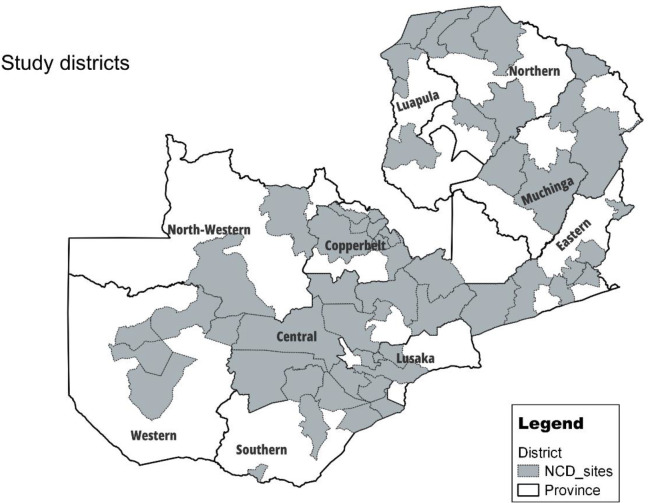
Data were obtained from a national cross-sectional survey involving 5,204 PLWH from 193 clinics across Zambia's 10 provinces. Tobacco smoking, SLT use, behavioral patterns, and clinical characteristics were assessed. Logistic regression was used to determine unadjusted (UOR) and adjusted odds ratios (AOR) at a 95% confidence interval (CI).
Among the 5,204 PLWH surveyed, 9.7% were current tobacco smokers (21.9% men, 3.7% women), while 1.4% used smokeless tobacco (1.81% men, 1.26% women). In the multivariable analysis, several factors were identified as predictors of tobacco smoking. Male individuals had significantly higher odds of smoking (AOR: 4.81, 95% CI: 3.36-6.90). In contrast, higher educational attainment was associated with lower odds of smoking (AOR: 0.29, 95% CI: 0.16-0.52). Alcohol consumption was associated with an increased likelihood of smoking (AOR: 4.97, 95% CI: 2.93-8.44). Additionally, overweight or obese individuals were less likely to smoke, with adjusted odds ratios of 0.55 (95% CI: 0.35-0.85) and 0.36 (95% CI: 0.17-0.79), respectively. Non-adherence to antiretroviral therapy (ART) was also associated with higher smoking rates (AOR: 1.75, 95% CI: 1.14-2.67). Similarly, several factors were identified as predictors of smokeless tobacco (SLT) use. Individuals with an annual income exceeding 4,000 ZMW had lower odds of using SLT (AOR: 0.31, 95% CI: 0.14-0.73). In contrast, alcohol users exhibited significantly higher odds of SLT use (AOR: 14.74, 95% CI: 1.99-109.02). Furthermore, non-adherence to ART was associated with an increased likelihood of SLT use (AOR: 3.32, 95% CI: 1.54-7.17).
Our findings highlight the urgent need for targeted interventions to reduce tobacco use among PLWH in Zambia. Integrating these measures within the existing healthcare framework can maximize impact. Gender-specific programs addressing unique risk factors, alongside economic empowerment initiatives for low-income females, could help curb SLT use. Additionally, reinforcing ART adherence through tobacco cessation counseling within HIV care settings may lower smoking rates. Given the strong association between alcohol consumption and tobacco use, structured behavioral interventions and support programs should also be prioritized. Strengthening collaborations between health authorities and community organizations can further enhance accessibility and outreach. By embedding these strategies within primary care and ART clinics, Zambia can effectively reduce tobacco use among PLWH, ultimately improving overall health outcomes and strengthening HIV management efforts.
与不使用烟草的人相比,感染艾滋病毒的人(PLWH)使用烟草面临重大的公共卫生风险,包括平均预期寿命损失12.3年。使用烟草会增加非传染性疾病(NCDs)的发生可能性,如心血管疾病、高血压、糖尿病和非艾滋病相关癌症。
本研究调查了赞比亚感染艾滋病毒的人吸烟和使用无烟烟草(SLT)的相关因素。
数据来自一项全国横断面调查,涉及赞比亚10个省193个诊所的5204名感染艾滋病毒的人。评估了吸烟、使用无烟烟草情况、行为模式和临床特征。采用逻辑回归确定95%置信区间(CI)下的未调整(UOR)和调整后的优势比(AOR)。
在接受调查的5204名感染艾滋病毒的人中,9.7%为当前吸烟者(男性为21.9%,女性为3.7%),而1.4%使用无烟烟草(男性为1.81%,女性为1.26%)。在多变量分析中,确定了几个吸烟的预测因素。男性吸烟的几率显著更高(AOR:4.81,95%CI:3.36 - 6.90)。相比之下,受教育程度较高与吸烟几率较低相关(AOR:0.29,95%CI:0.16 - 0.52)。饮酒与吸烟可能性增加相关(AOR:4.97,95%CI:2.93 - 8.44)。此外,超重或肥胖个体吸烟的可能性较小,调整后的优势比分别为0.55(95%CI:0.35 - 0.85)和0.36(95%CI:0.17 - 0.79)。不坚持抗逆转录病毒治疗(ART)也与较高的吸烟率相关(AOR:1.75,95%CI:1.14 - 2.67)。同样,确定了几个使用无烟烟草(SLT)的预测因素。年收入超过4000赞比亚克瓦查的个体使用无烟烟草的几率较低(AOR:0.31,95%CI:0.14 - 0.73)。相比之下,饮酒者使用无烟烟草的几率显著更高(AOR:14.74,95%CI:1.99 - 109.02)。此外,不坚持抗逆转录病毒治疗与使用无烟烟草的可能性增加相关(AOR:3.32,95%CI:1.54 - 7.17)。
我们的研究结果突出表明,迫切需要采取有针对性的干预措施来减少赞比亚感染艾滋病毒的人的烟草使用。将这些措施纳入现有的医疗保健框架可以最大限度地发挥影响。针对独特风险因素的针对性别方案,以及针对低收入女性的经济赋权举措,可能有助于遏制无烟烟草的使用。此外,通过在艾滋病毒护理环境中进行戒烟咨询来加强对抗逆转录病毒治疗的依从性,可能会降低吸烟率。鉴于饮酒与烟草使用之间的密切关联,还应优先考虑结构化行为干预和支持方案。加强卫生当局与社区组织之间的合作可以进一步提高可及性和覆盖面。通过将这些策略纳入初级保健和抗逆转录病毒治疗诊所,赞比亚可以有效减少感染艾滋病毒的人的烟草使用,最终改善整体健康结果并加强艾滋病毒管理工作。