Lou Xiran, Chen Hui, Shi Nan, Yu Ruixuan, Li Songli, Yang Yi, Liu Songqiao, Xie Jianfeng, Qiu Haibo
Jiangsu Provincial Key Laboratory of Critical Care Medicine, Department of Critical Care Medicine, Zhongda Hospital, School of Medicine, Southeast University, Nanjing, 210009, China.
The First People's Hospital of Lianyungang, The Lianyungang Clinical College of Nanjing Medical University, The First Affiliated Hospital of Kangda College of Nanjing Medical University, The Affiliated Lianyungang Hospital of Xuzhou Medical University, Lianyungang, Jiangsu, 222000, China.
EClinicalMedicine. 2025 Jul 9;86:103341. doi: 10.1016/j.eclinm.2025.103341. eCollection 2025 Aug.
Xuebijing injection (XBJ) could improve the outcomes of sepsis patients. However, sepsis is a heterogeneous syndrome, and it remains unclear which patients benefit the most. We aimed to identify the sepsis phenotypes most likely to benefit from XBJ treatment.
This post hoc analysis of the EXIT-SEP trial included sepsis patients from 45 intensive care units (ICUs) in China between October 2017 and June 2019. The XBJ group received 100 mL of XBJ every 12 h for 5 days, while the placebo group was given a volume-matched saline. Consensus -means clustering was performed to reproduce previously identified sepsis phenotypes in relation to the SENECA classification (α, β, γ, and δ) based on 19 variables such as age, sex, temperature, and biochemistry/lab results. Clinical characteristics and outcomes (28-day mortality, ventilator-free days, ICU-free days), as well as the heterogeneity of treatment effects (HTE), were compared between the four different phenotypes and across treatment groups. We also developed a probabilistic model for phenotype assignment and evaluated its performance in derivation and internal validation cohorts. The EXIT-SEP trial is registered with ClinicalTrials.gov (NCT03238742).
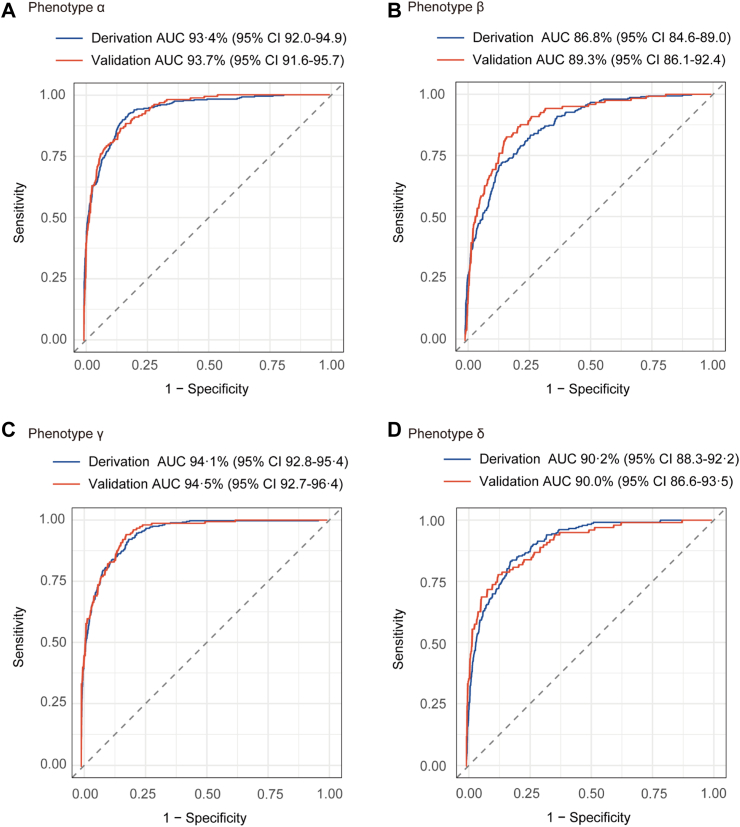
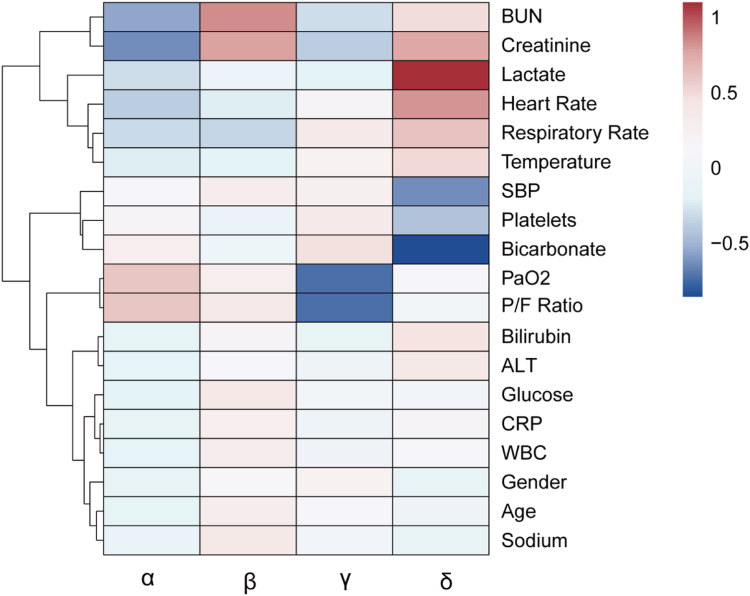
Among 1760 patients (878 in the XBJ group and 882 in the placebo group), four sepsis phenotypes (α: 28.2%, β: 24.0%, γ: 28.9%, and δ: 18.9%) were replicated based on the SENECA classification. Phenotype α had the lowest 28-day mortality. Phenotype β was associated with older age, chronic illness, and renal dysfunction. Phenotype γ was characterized by respiratory dysfunction. Phenotype δ was associated with acidosis, elevated alanine transaminase, coagulation dysfunction, shock, and the highest 28-day mortality (32.5%). Compared with placebo, XBJ treatment was associated with lower 28-day mortality in patients with phenotype γ (p = 0.003) and δ (p = 0.033), while the treatment-by-phenotype interaction was not statistically significant. Additionally, patients with phenotype δ who received XBJ had more ventilator-free days and ICU-free days than those with phenotype α, with p for interaction < 0.001 for both outcomes. Finally, a parsimonious classifier model demonstrated good accuracy in phenotype prediction, with AUROCs of 0.937 (95% CI: 0.916-0.957) for α, 0.893 (0.861-0.924) for β, 0.945 (0.927-0.964) for γ, and 0.900 (0.866-0.935) for δ in the internal validation cohort.
We replicated four sepsis phenotypes in the EXIT-SEP cohort, with patterns similar to previously established phenotypes. XBJ treatment was associated with lower 28-day mortality in patients with phenotypes γ and δ, but these findings require further validation.
This study was funded by the National Natural Science Foundation of China; Noncommunicable Chronic Diseases-National Science and Technology Major Project; Zhongda Hospital Affiliated to Southeast University, Jiangsu Province High-Level Hospital Construction Funds; Nanjing Technology Development Program; The Pilot Project of the Flagship Hospital of Integrated Traditional Chinese and Western Medicines in Zhongda Hospital affiliated to Southeast University.
血必净注射液(XBJ)可改善脓毒症患者的预后。然而,脓毒症是一种异质性综合征,目前尚不清楚哪些患者获益最大。我们旨在确定最有可能从XBJ治疗中获益的脓毒症表型。
这项对EXIT-SEP试验的事后分析纳入了2017年10月至2019年6月期间来自中国45个重症监护病房(ICU)的脓毒症患者。XBJ组每12小时接受100 mL XBJ,共5天,而安慰剂组给予等体积的生理盐水。基于年龄、性别、体温和生化/实验室检查结果等19个变量,采用共识均值聚类法重现先前确定的与SENECA分类(α、β、γ和δ)相关的脓毒症表型。比较了四种不同表型之间以及各治疗组之间的临床特征和预后(28天死亡率、无呼吸机天数、无ICU天数),以及治疗效果的异质性(HTE)。我们还开发了一种表型分配的概率模型,并在推导队列和内部验证队列中评估了其性能。EXIT-SEP试验已在ClinicalTrials.gov注册(NCT03238742)。
在1760例患者中(XBJ组878例,安慰剂组882例),基于SENECA分类重现了四种脓毒症表型(α:28.2%,β:24.0%,γ:28.9%,δ:18.9%)。表型α的28天死亡率最低。表型β与老年、慢性病和肾功能不全有关。表型γ的特征是呼吸功能障碍。表型δ与酸中毒、丙氨酸转氨酶升高、凝血功能障碍、休克以及最高的28天死亡率(32.5%)有关。与安慰剂相比,XBJ治疗使表型γ(p = 0.003)和δ(p = 0.033)患者的28天死亡率降低,而治疗与表型的交互作用无统计学意义。此外,接受XBJ治疗的表型δ患者比表型α患者有更多的无呼吸机天数和无ICU天数,两种预后的交互作用p均<0.001。最后,一个简约分类模型在表型预测中显示出良好的准确性,内部验证队列中α的曲线下面积(AUROC)为0.937(95%CI:0.916 - 0.957),β为0.893(0.861 - 0.924),γ为0.945(0.927 - 0.964),δ为0.900(0.866 - 0.935)。
我们在EXIT-SEP队列中重现了四种脓毒症表型,其模式与先前确立的表型相似。XBJ治疗使表型γ和δ患者的28天死亡率降低,但这些发现需要进一步验证。
本研究由中国国家自然科学基金、国家科技重大专项-慢性非传染性疾病、东南大学附属中大医院、江苏省高水平医院建设基金、南京市科技发展计划、东南大学附属中大医院中西医结合旗舰医院试点项目资助。