Ma Kaige, Ni Hechi, Liu Zihang, Cai Liping, Jiang E, Lu Baohui, Yang Lina, Zhang Yanjing, Gao Jie
College of Plant Protection, Jilin Agricultural University, Changchun, China.
State-Local Joint Engineering Research Center of Ginseng Breeding and Application, Changchun, China.
Front Microbiol. 2025 Jul 2;16:1609431. doi: 10.3389/fmicb.2025.1609431. eCollection 2025.
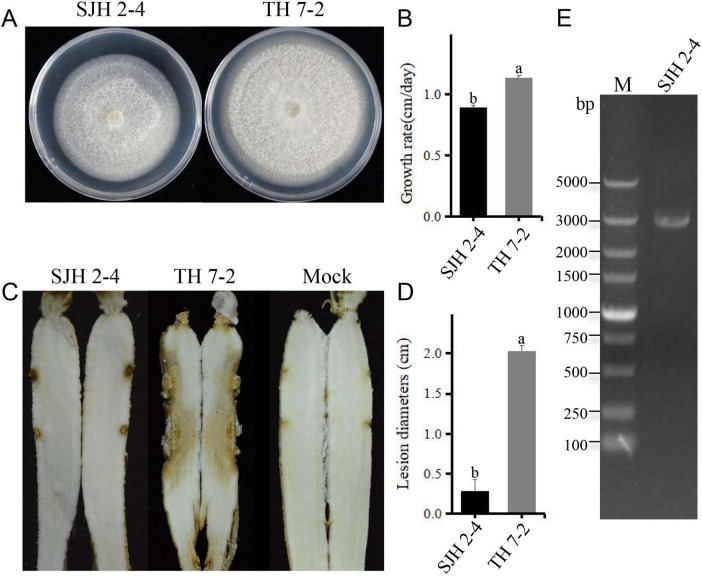
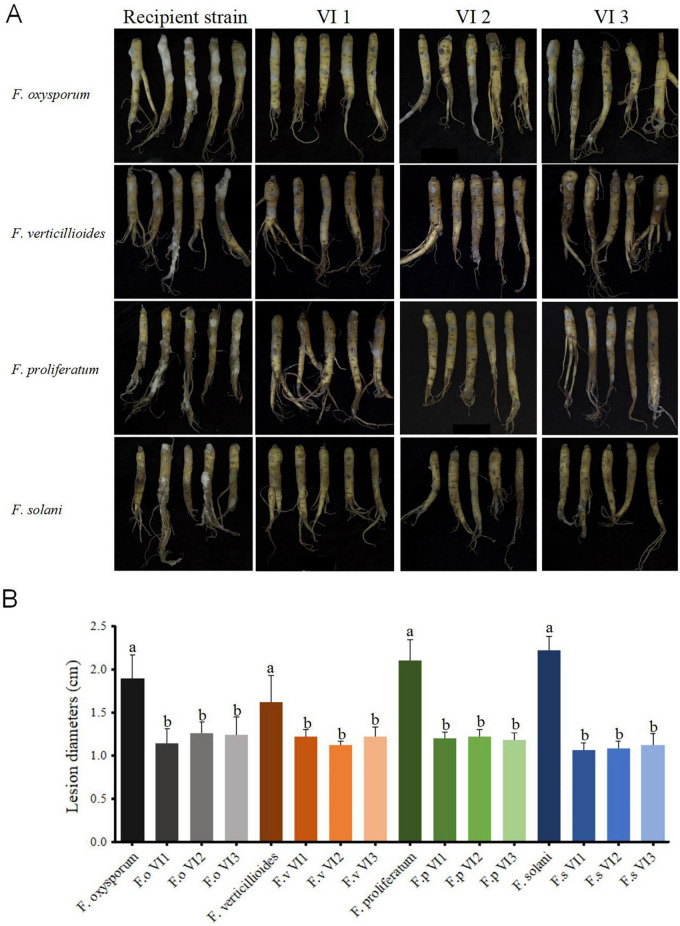
is a widespread plant pathogen known to damage numerous crops, including causing severe root rot in . In this study, we identified a novel ourmia-like mycovirus in , named " ourmia-like virus 1" (FsoOLV1). We demonstrated that FsoOLV1 confers hypovirulence in its host and three other ginseng root rot pathogens, , , and . Additionally, we verified its horizontal and vertical transmission capabilities.
FsoOLV1 was discovered in strain SJH 2-4 using high-throughput sequencing. The genome sequence of FsoOLV1 was obtained through RT-PCR and RACE. Virus elimination was conducted to assess the effect of FsoOLV1 on fungal virulence. Protoplast transfection experiments were performed to evaluate the impact of the virus on other ginseng root rot pathogens. Horizontal and vertical transmission studies were also carried out to examine the spread of the virus.
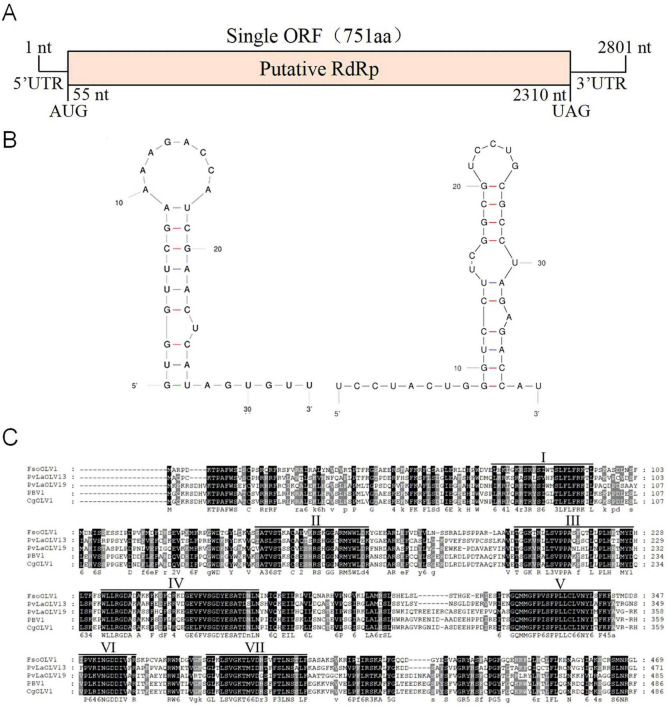
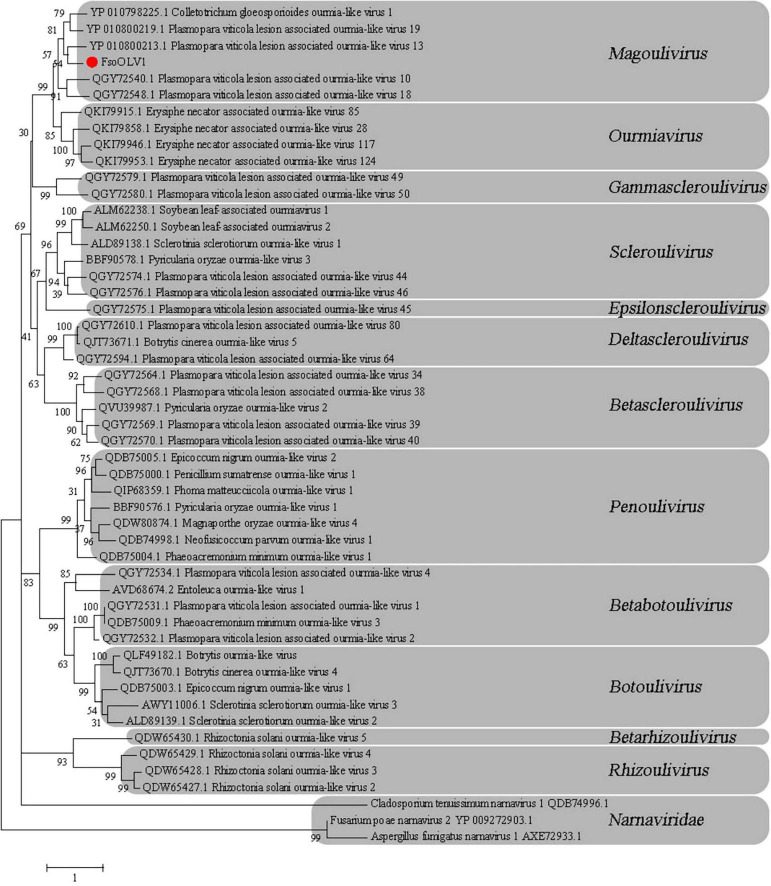
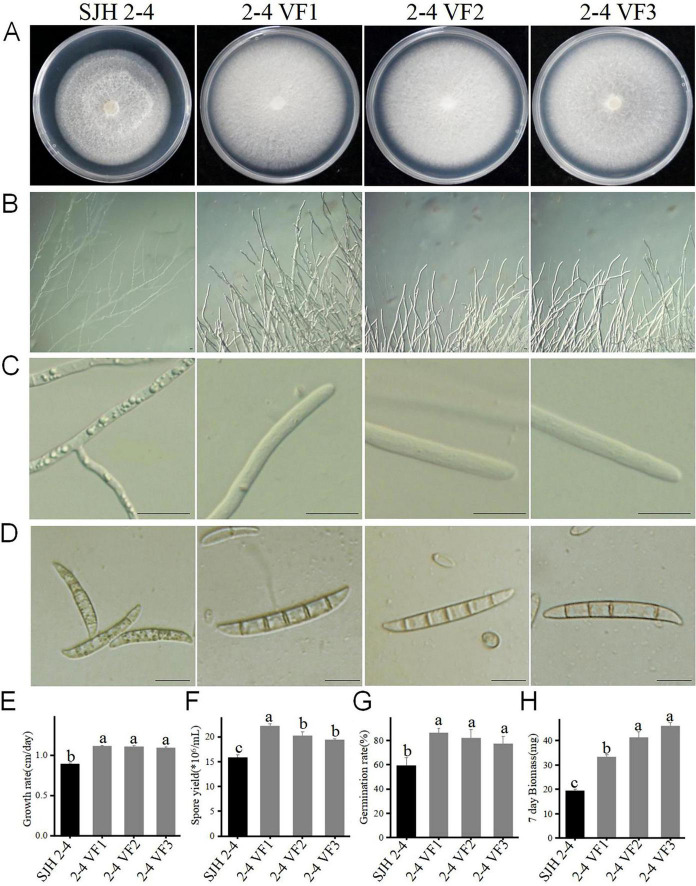
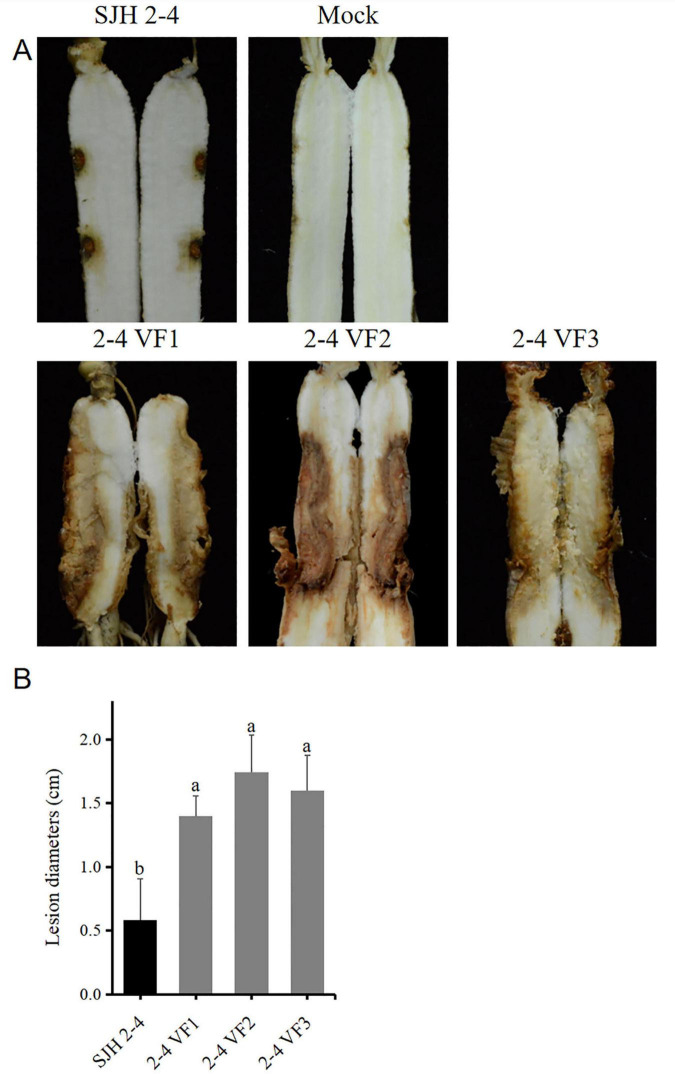
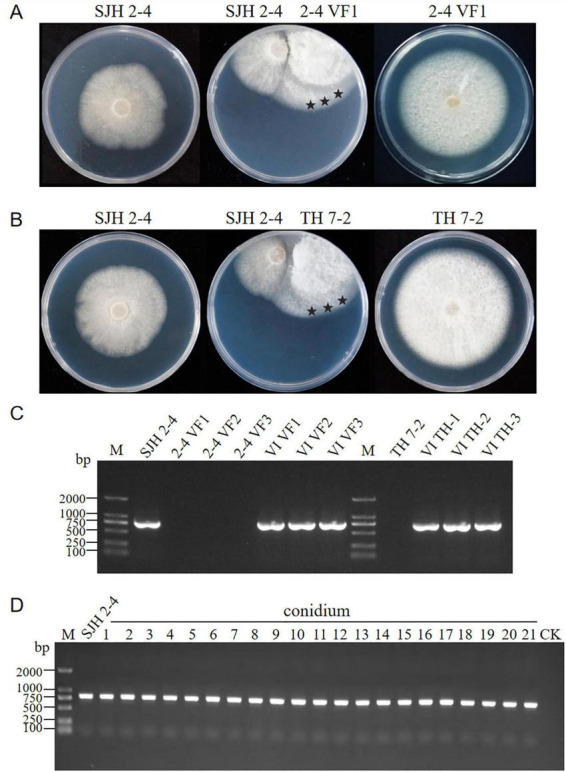
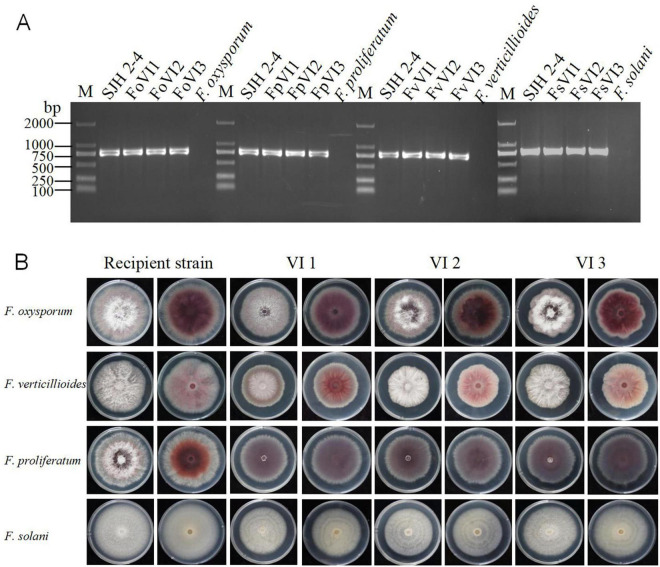
The genome of FsoOLV1 is 2,801 nucleotides (nt) in length with a GC content of 47.05%. It encodes a 750 amino acid RNA-dependent RNA polymerase (RdRp), with a molecular weight of approximately 84.84 kDa. Phylogenetic analysis indicated that FsoOLV1 clusters within a clade containing the genus in the family. Curing FsoOLV1 from the fungal host strain revealed that the mycovirus plays a role in reducing the virulence of the strain SJH 2-4. Furthermore, protoplast transfection revealed that FsoOLV1 can significantly reduce the virulence of other ginseng root rot pathogens, including , , and . Additionally, FsoOLV1 is capable of horizontal transmission between strains and vertical transmission to the next generation via conidia.
This study presents the first hypovirulent ourmia-like virus, FsoOLV1, which reduces the virulence of and other ginseng root rot pathogens. Our findings suggest that FsoOLV1 could serve as a promising biological agent for controlling ginseng root rot. This research not only expands the diversity of known hypovirulent mycoviruses but also provides a potential candidate for controlling Fusarium diseases in ginseng cultivation.
是一种广泛存在的植物病原体,已知会损害多种作物,包括在中引起严重的根腐病。在本研究中,我们在中鉴定出一种新型的类欧尔密病毒,命名为“类欧尔密病毒1”(FsoOLV1)。我们证明FsoOLV1在其宿主以及其他三种人参根腐病病原体、和中赋予低毒力。此外,我们验证了其水平和垂直传播能力。
使用高通量测序在菌株SJH 2-4中发现了FsoOLV1。通过RT-PCR和RACE获得了FsoOLV1的基因组序列。进行病毒消除以评估FsoOLV1对真菌毒力的影响。进行原生质体转染实验以评估该病毒对其他人参根腐病病原体的影响。还进行了水平和垂直传播研究以检查病毒的传播。
FsoOLV1的基因组长度为2801个核苷酸(nt),GC含量为47.05%。它编码一种750个氨基酸的RNA依赖性RNA聚合酶(RdRp),分子量约为84.84 kDa。系统发育分析表明,FsoOLV1聚集在包含科属的一个进化枝内。从真菌宿主菌株中去除FsoOLV1表明,这种真菌病毒在降低菌株SJH 2-4的毒力方面发挥作用。此外,原生质体转染表明,FsoOLV1可以显著降低其他人参根腐病病原体的毒力,包括、和。此外,FsoOLV1能够在菌株之间进行水平传播,并通过分生孢子垂直传播给下一代。
本研究提出了第一种低毒力的类欧尔密病毒FsoOLV1,它降低了和其他人参根腐病病原体的毒力。我们的研究结果表明,FsoOLV1有望成为控制人参根腐病的生物制剂。这项研究不仅扩展了已知低毒力真菌病毒的多样性,还为控制人参种植中的镰刀菌病害提供了一个潜在的候选者。