Adams Kaley T, Haggerty Caoilinn, Scott Richard P, O'Connell Steven, Anderson Kim A
Department of Environmental and Molecular Toxicology, Oregon State University, Corvallis, Oregon, USA.
J Sep Sci. 2025 Jul;48(7):e70227. doi: 10.1002/jssc.70227.
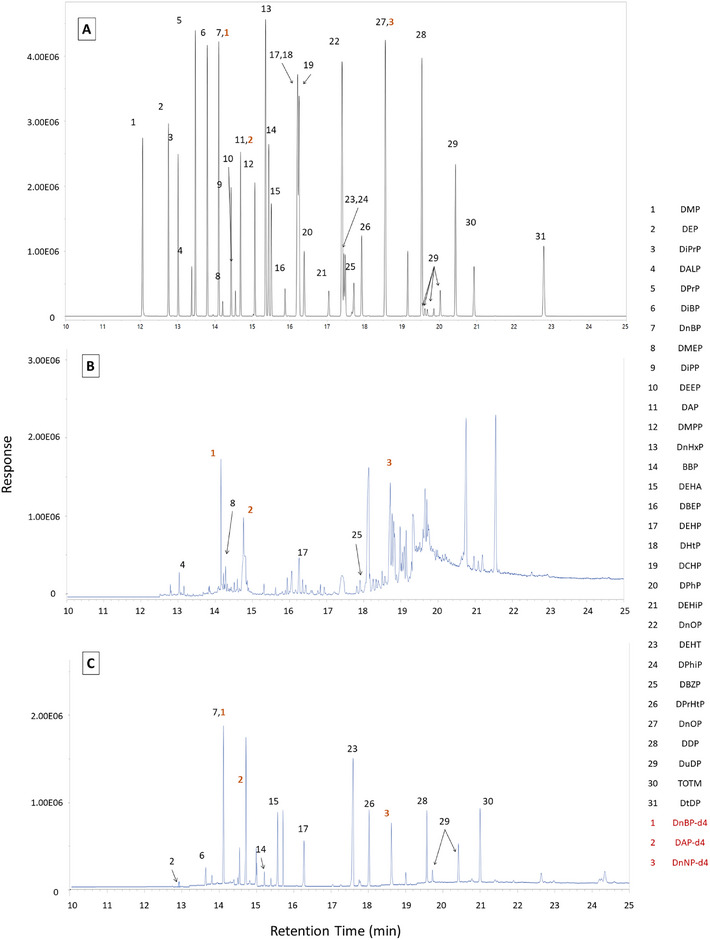
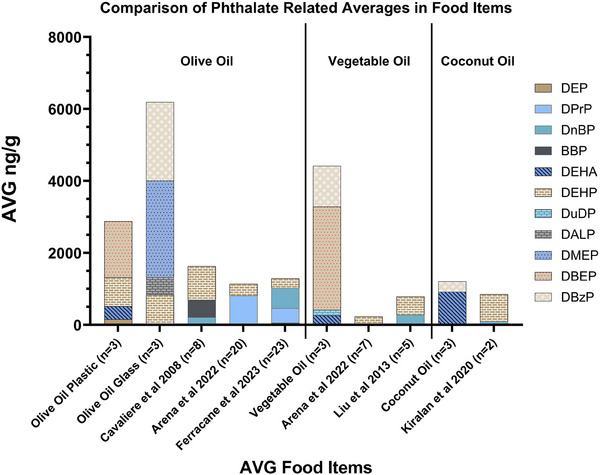
Interest in phthalate detection of foods and other environmental media has grown rapidly in the past decade. However, current analytical and separation techniques are often limited in the breadth of chemistry targeted, most often targeting less than 15 compounds. Challenges to successful methods with this compound group include chromatographic resolution, quantitation across diverse concentration ranges, and sample preparation due to the chemical similarity of these compounds. This project describes the development of a selective ion monitoring gas chromatography mass spectrometry method for quantitation of 29 phthalates and two phthalate replacements along with considerations for quantitation, sample cleanup, and standard storage. Our range of phthalates includes less-studied ones like bis(2-propylheptyl), diundecyl, didecyl, and ditridecyl. Analytical performance included limits of detection ranging from 17-230 ng/mL and robust reproducibility with relative percent differences below 8% for complex matrices. Two calibration ranges were used to accommodate the wide dynamic range of phthalate concentrations observed in real samples. Method application was demonstrated with edible oils (n = 12) and silicone wristbands (n = 18), representing dietary and personal exposure pathways. Sample preparation strategies, including solid phase extraction were evaluated to mitigate matrix interferences. In addition, compound storage stability was assessed over 133 days to inform best practices for standard preparation and handling. The finalized method demonstrates the uniquely large compound ranges for some phthalates and the importance of analyzing a wide variety of these compounds, making it a valuable foundation for comprehensive environmental monitoring of phthalates and their alternatives.
在过去十年中,对食品及其他环境介质中邻苯二甲酸盐检测的关注度迅速增长。然而,当前的分析和分离技术在目标化学物质的广度上往往存在局限,通常针对的化合物少于15种。针对这类化合物成功建立方法面临的挑战包括色谱分辨率、不同浓度范围的定量以及由于这些化合物化学性质相似而导致的样品制备问题。本项目描述了一种选择性离子监测气相色谱质谱法的开发,用于定量29种邻苯二甲酸盐和两种邻苯二甲酸酯替代物,同时还考虑了定量、样品净化和标准品储存等方面。我们所涉及的邻苯二甲酸盐包括研究较少的种类,如双(2-丙基庚基)、二十一烷基、二十烷基和二十三烷基。分析性能包括检测限在17 - 230 ng/mL之间,对于复杂基质具有稳健的重现性,相对百分差异低于8%。使用了两个校准范围来适应实际样品中观察到的邻苯二甲酸盐浓度的宽动态范围。通过食用油(n = 12)和硅胶手环(n = 18)展示了方法的应用,分别代表饮食和个人暴露途径。评估了包括固相萃取在内的样品制备策略以减轻基质干扰。此外,评估了化合物在133天内的储存稳定性,以确定标准品制备和处理的最佳做法。最终确定的方法展示了某些邻苯二甲酸盐独特的大化合物范围以及分析多种此类化合物的重要性,使其成为邻苯二甲酸盐及其替代品综合环境监测的宝贵基础。