Ji Kunhao, Richardson David J, Wabnitz Stefan, Guasoni Massimiliano
Optoelectronics Research Centre, University of Southampton, Southampton, United Kingdom.
Microsoft (Lumenisity Limited), Unit 7, The Quadrangle, Abbey Park Industrial Estate, Romsey, United Kingdom.
Nat Commun. 2025 Jul 19;16(1):6665. doi: 10.1038/s41467-025-61984-8.
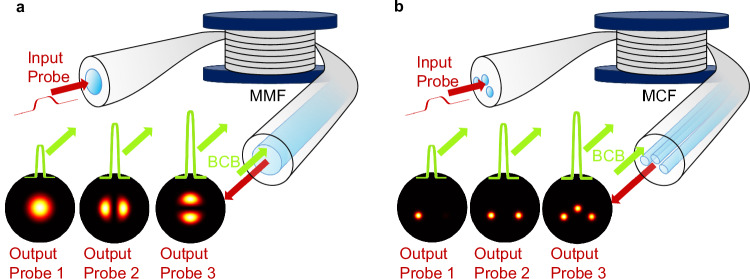
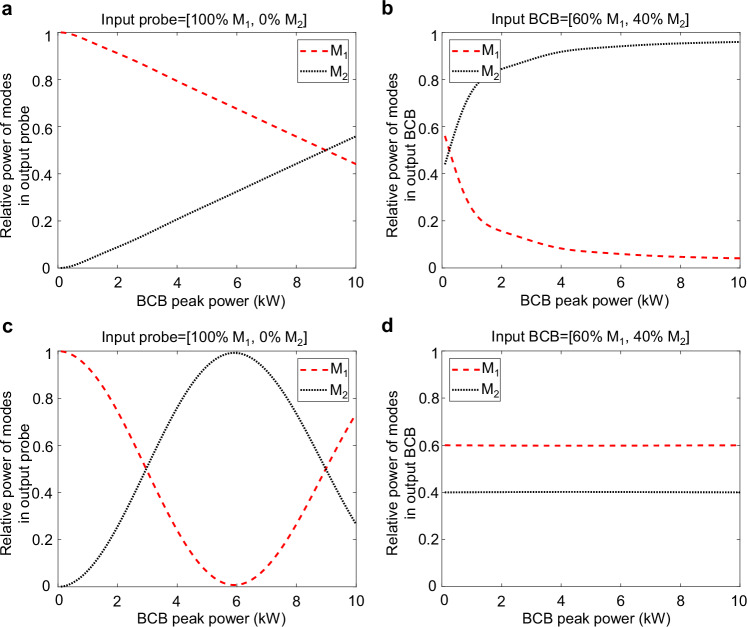
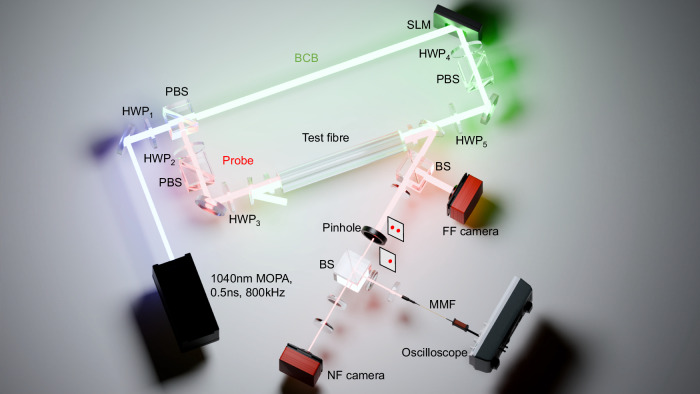
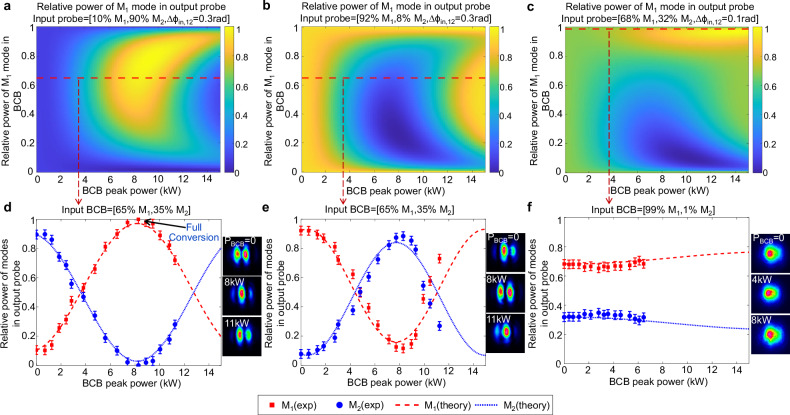
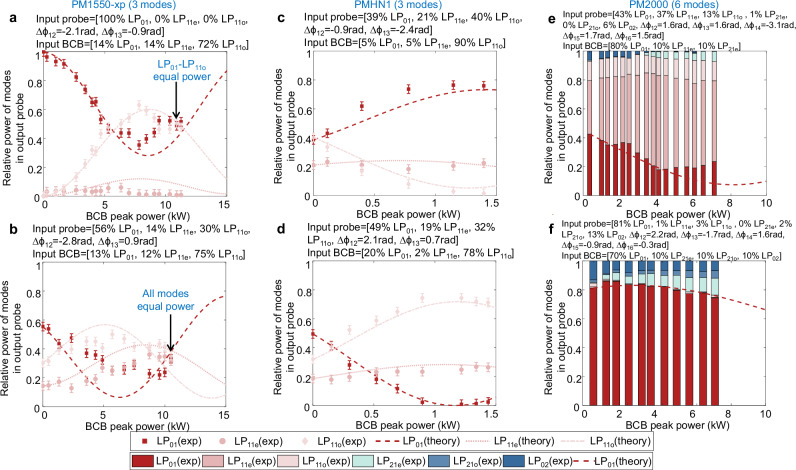
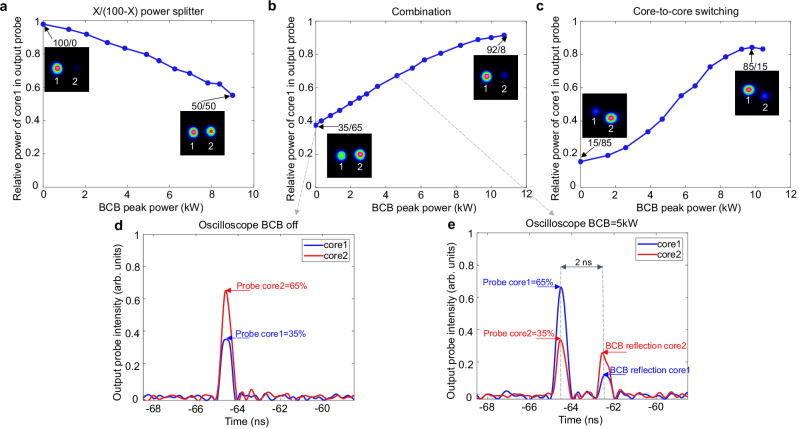
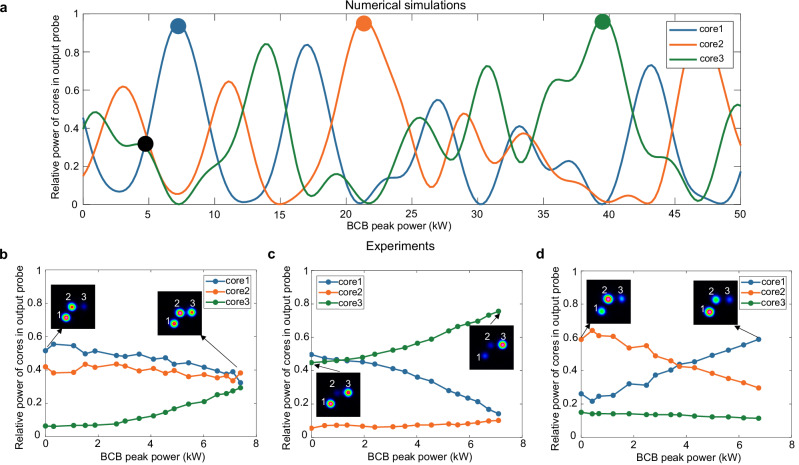
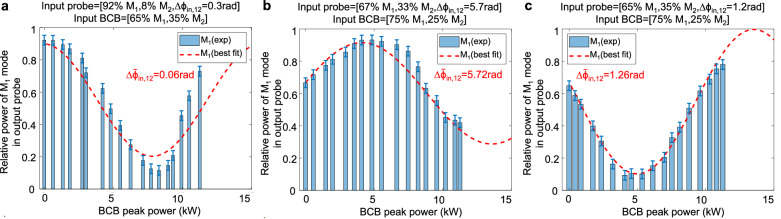
Reconfigurable photonic systems provide a versatile platform for dynamic, on-demand control and switching. Here we introduce an all-optical platform in multimode and multicore fibres. By using a low-power probe beam and a counter-propagating control beam, we achieve dynamic control over light propagation within the fibres. This setup ensures simultaneous phase-matching of all probe-control beam four-wave mixing interactions, enabling all-optical reconfiguration of the probe modal state by tuning the control beam power. Key operations such as fully tuneable power splitting and mode conversion, core-to-core switching and combination, along with remote probe characterization, are demonstrated at the sub-nanosecond time scale. Our experimental results are supported by a theoretical model that extends to fibres with an arbitrary number of modes and cores. The implementation of these operations in a single platform underlines its versatility, a critical feature of next-generation energy-efficient photonic systems. Scaling this approach to highly nonlinear materials could underpin photonic programmable hardware for optical computing and machine learning.
可重构光子系统为动态、按需控制和切换提供了一个多功能平台。在此,我们介绍一种在多模和多芯光纤中的全光平台。通过使用低功率探测光束和反向传播的控制光束,我们实现了对光纤内光传播的动态控制。这种设置确保了所有探测 - 控制光束四波混频相互作用的同时相位匹配,通过调整控制光束功率实现探测模态状态的全光重构。在亚纳秒时间尺度上展示了诸如完全可调功率分配和模式转换、芯间切换和组合以及远程探测表征等关键操作。我们的实验结果得到了一个理论模型的支持,该模型扩展到具有任意数量模式和芯的光纤。在单个平台上实现这些操作突出了其多功能性,这是下一代节能光子系统的一个关键特性。将这种方法扩展到高度非线性材料可能为光学计算和机器学习的光子可编程硬件奠定基础。