De Rosa Caterina, Amato Luisa, Ariano Annalisa, Capaldo Sara, Esposito Daniela, Heydari Sheikhhossein Hamid, Salzillo Alessia, Di Liello Alessandra, Tuccillo Concetta, Cesarano Martina, Frezzetti Daniela, Carmelingo Rosa, De Luca Antonella, Gambardella Antonio, Tirino Virginia, Ciardiello Fortunato, Morgillo Floriana, Papaccio Federica, Servetto Alberto, De Rosa Viviana, Iommelli Francesca, Della Corte Carminia Maria
Department of Precision Medicine, University of Campania Luigi Vanvitelli, 80131, Naples, Italy.
Department of Clinical Medicine and Surgery, University of Naples Federico II, 80131, Naples, Italy.
J Liq Biopsy. 2025 Jun 26;9:100307. doi: 10.1016/j.jlb.2025.100307. eCollection 2025 Sep.
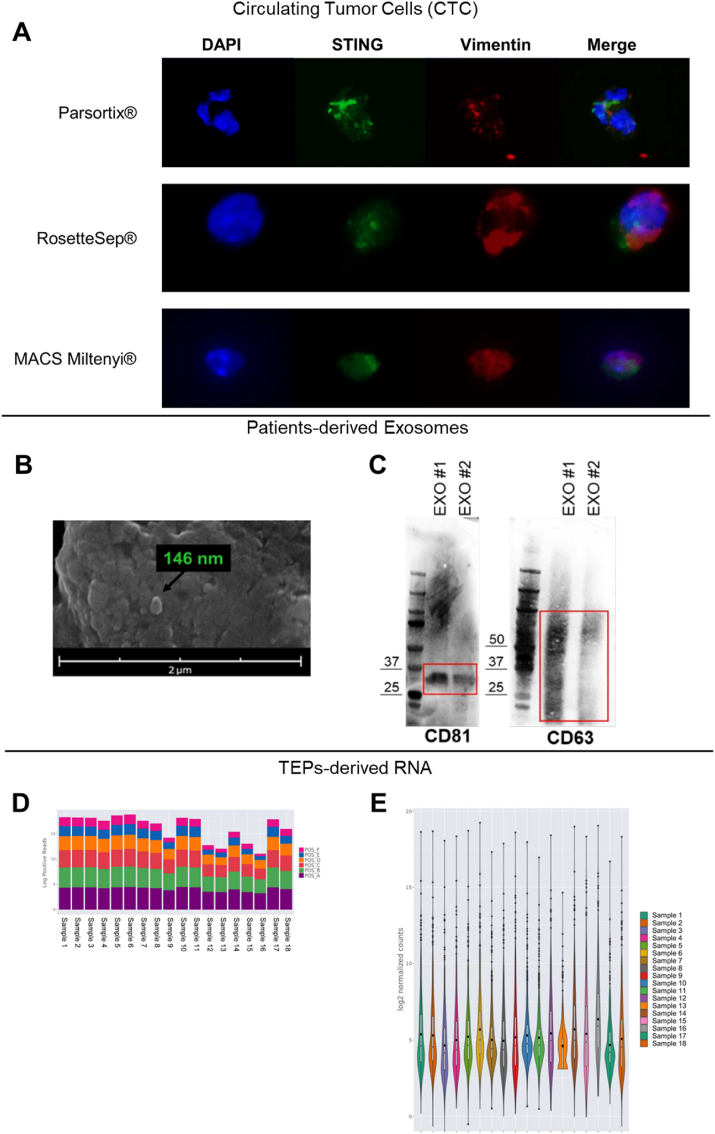
The liquid biopsy (LB) represents a minimally invasive method for cancer screening that has been introduced in clinical practice for over a decade and that can accelerate treatment response assessment. LB allows the analysis of tumor cells or tumor-derived products (e.g. cell-free circulating nucleic acids, extracellular vesicles, and proteins) released from primary or metastatic tumor lesions into blood or other body fluids. In the era of immune-oncology, recent evidence indicates that tumor-specific immune responses can be detected in peripheral immune cells. The improvement of knowledge and the standardization of the isolation methods of these techniques will allow the detection and characterization of circulating tumor and immune biomarkers at an early stage as innovative tools to predict response to therapies. Nowadays, the analysis of peripheral blood mononuclear cells (PBMCs), circulating tumor cells (CTCs), peripheral blood-derived extracellular vesicles (EVs) and circulating tumor RNA (ctRNA) remains under-developed even if these non-invasive techniques can provide the complete genetic landscape of tumors and allow systematic tracking of cancer evolution. In addition, the evaluation of blood circulating cytokines, and early dynamics changes in the PBMCs of patients with solid tumors represent a promising area of research. Here, we present a comprehensive methodological framework for the evaluation of innovative peripheral blood-derived biomarkers. We also address the current challenges in isolation methods and analysis of PBMC, CTC, EVs and TEPs which are crucial for structuring the large amount of comprehensive information obtained from such samples, with the aim of advancing the translational cancer field.
液体活检(LB)是一种微创癌症筛查方法,已在临床实践中应用了十多年,可加速治疗反应评估。LB允许分析从原发性或转移性肿瘤病变释放到血液或其他体液中的肿瘤细胞或肿瘤衍生产物(例如游离循环核酸、细胞外囊泡和蛋白质)。在免疫肿瘤学时代,最近的证据表明,在外周免疫细胞中可以检测到肿瘤特异性免疫反应。这些技术知识的完善和分离方法的标准化,将能够在早期检测和表征循环肿瘤和免疫生物标志物,作为预测治疗反应的创新工具。如今,外周血单核细胞(PBMC)、循环肿瘤细胞(CTC)、外周血来源的细胞外囊泡(EV)和循环肿瘤RNA(ctRNA)的分析仍不发达,即使这些非侵入性技术可以提供肿瘤的完整基因图谱,并允许系统追踪癌症进展。此外,评估血液循环中的细胞因子以及实体瘤患者PBMC的早期动态变化是一个很有前景的研究领域。在此,我们提出了一个评估创新外周血来源生物标志物的综合方法框架。我们还讨论了PBMC、CTC、EV和TEP分离方法及分析中当前面临的挑战,这些对于构建从此类样本中获得的大量综合信息至关重要,目的是推动癌症转化领域的发展。