Datta Apon Kumar, Hossain M Khalid, Revathy M S, Reddy M Sudhakara, Singh Abhayveer, Radhika S, Choudhury Satish, Bisht Ankur Singh, Alhuthali Abdullah M S, Abdellattif Magda H, Balachandran R, Haldhar Rajesh
Department of Electrical and Electronic Engineering, Mymensingh Engineering College, Mymensingh, 2200, Bangladesh.
Institute of Electronics, Atomic Energy Research Establishment, Bangladesh Atomic Energy Commission, Dhaka, 1349, Bangladesh.
Sci Rep. 2025 Jul 21;15(1):26380. doi: 10.1038/s41598-025-11576-9.
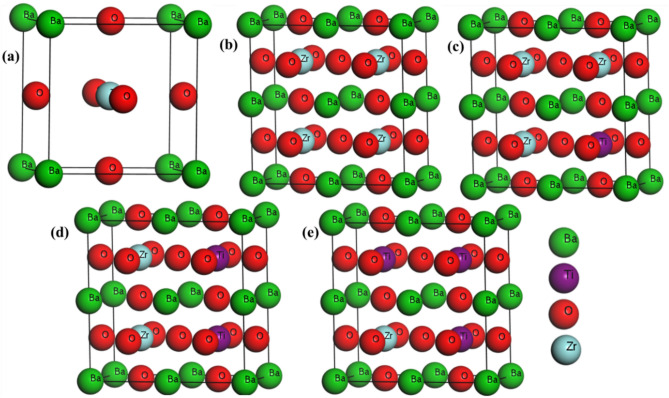
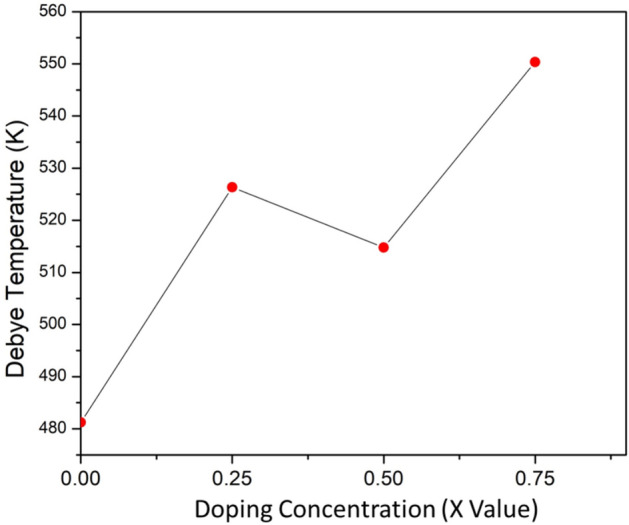
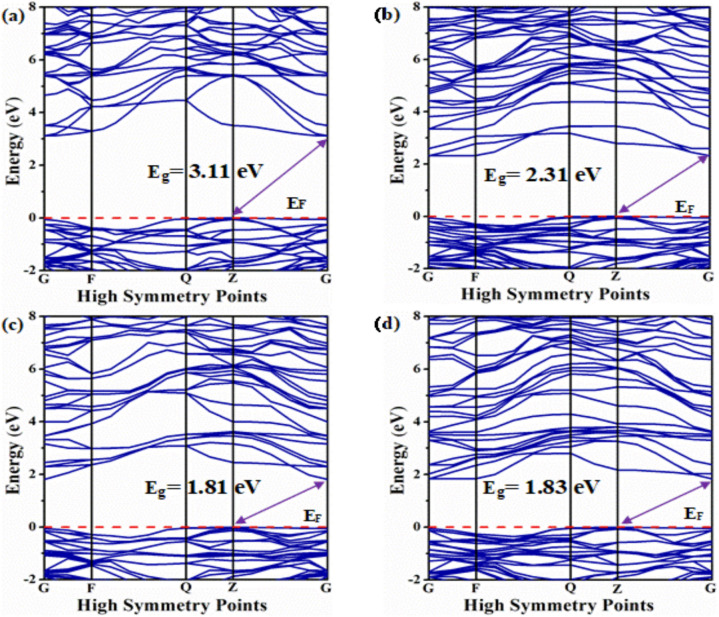
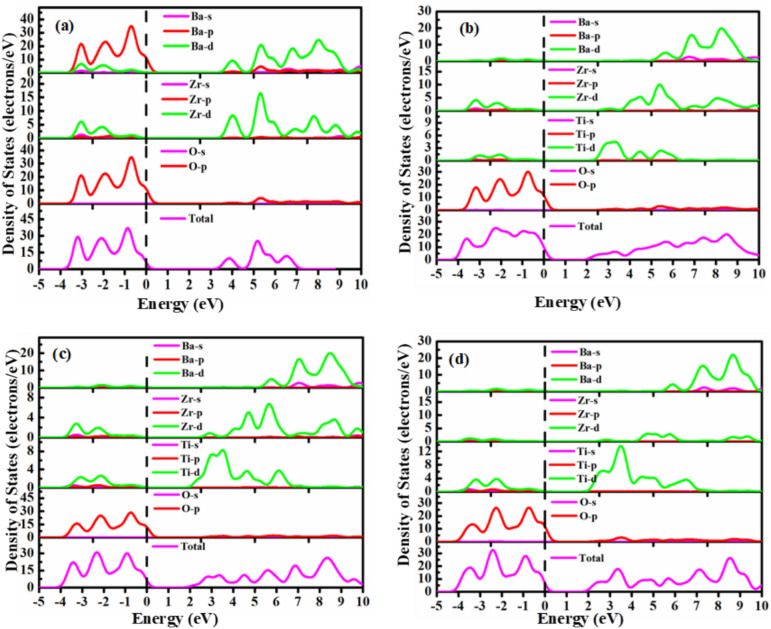
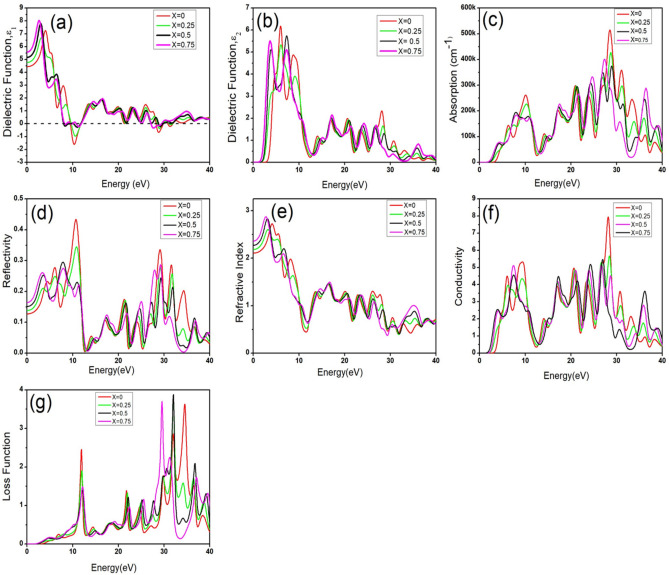
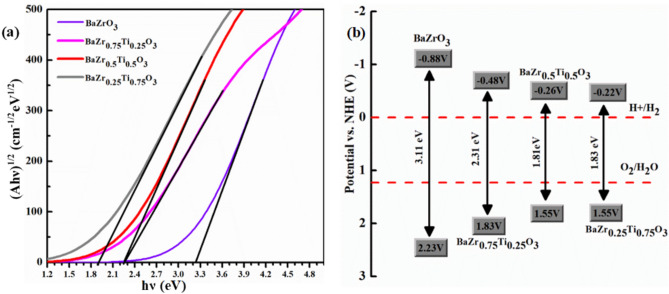
Doped BaZrO is well recognized as a promising material for proton conduction, particularly in solid oxide fuel cells (SOFCs) and various electrochemical applications. While this material has been thoroughly examined for proton conduction, it has not been as extensively studied for other potential applications, such as photocatalytic water splitting and solar cell devices. This investigation delves into the comprehensive assessment of structural, electronic, optical, mechanical, and thermodynamic properties in Ti-doped BaZrO (BaZrTiO where x = 0,0.25, 0.5, 0.75) through the application of Density Functional Theory (DFT) employing the Generalized Gradient Approximation (GGA) and Perdew-Burke-Ernzerhof (PBE) exchange-correlation function. After doping, all of the doped compounds undergo a phase transition from cubic to tetragonal once Ti is added to BaZrO. Analysis of the computed structural properties reveals a slight reduction in lattice parameters accompanied by a decrease in cell volume. The doping of Ti led to a reduction in the electronic bandgap energy of BaZrO. Specifically, the bandgap decreased from an initial value of 3.118 eV at x = 0, which was an indirect bandgap, to a lowest value of 1.8 eV at x = 0.5, also identified as an indirect bandgap. This bandgap reduction leads to significant changes in optical properties, enabling absorption at lower photon energies compared to pure BaZrO, which is beneficial for photocatalytic water splitting and solar cell applications. Mechanical properties confirmed the stability of the investigated composition through the Born stability criteria. Furthermore, thermodynamic properties across different doping concentrations revealed the highest Debye temperature at x = 0.75, indicating a higher melting point and enhanced thermal stability.
掺杂的 BaZrO 被公认为是一种有前途的质子传导材料,特别是在固体氧化物燃料电池(SOFC)和各种电化学应用中。虽然这种材料已经针对质子传导进行了深入研究,但对于其他潜在应用,如光催化水分解和太阳能电池器件,尚未进行广泛研究。本研究通过应用采用广义梯度近似(GGA)和 Perdew-Burke-Ernzerhof(PBE)交换相关函数的密度泛函理论(DFT),深入研究了 Ti 掺杂的 BaZrO(BaZrTiO,其中 x = 0、0.25、0.5、0.75)的结构、电子、光学、机械和热力学性质的综合评估。掺杂后,一旦将 Ti 添加到 BaZrO 中,所有掺杂化合物都会经历从立方相到四方相的相变。对计算得到的结构性质的分析表明,晶格参数略有减小,同时晶胞体积也减小。Ti 的掺杂导致 BaZrO 的电子带隙能量降低。具体而言,带隙从 x = 0 时的初始值 3.118 eV(间接带隙)降至 x = 0.5 时的最低值 1.8 eV(也被确定为间接带隙)。这种带隙减小导致光学性质发生显著变化,与纯 BaZrO 相比,能够在更低的光子能量下吸收,这有利于光催化水分解和太阳能电池应用。机械性能通过玻恩稳定性标准证实了所研究成分的稳定性。此外,不同掺杂浓度下的热力学性质表明,在 x = 0.75 时德拜温度最高,表明熔点更高且热稳定性增强。