Suffo M, Quiroga-De Castro M, Galán-Romero L, Andrés-Cano P
Department of Mechanical Engineering and Industrial Design, High Engineering School and Research Group "Biomedical innovation in osteoarticular surgery". Biomedical Research and Innovation Institute of Cádiz (INiBICA) Research Unit"Puerta del Mar" University Hospital, University of Cádiz, Puerto Real (Cádiz), Avda. de la Universidad nº 10, Cádiz, 11510, Spain.
Research Group "Biomedical innovation in osteoarticular surgery". Biomedical Research and Innovation Institute of Cádiz (INiBICA) Research Unit, "Puerta del Mar" University Hospital, University of Cádiz, Spain., Avda. Ana de Viya 21, Cádiz, 11009, Spain.
3D Print Med. 2025 Jul 21;11(1):40. doi: 10.1186/s41205-025-00279-6.
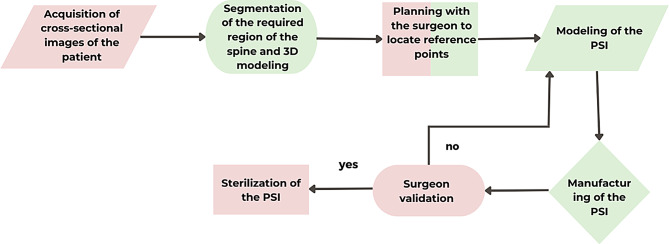
This study validates the intra-hospital design and 3D printing process of personalized surgical guides to enhance the accuracy of pedicle screw insertion in patients with thoracic scoliotic deformities. It introduces a novel collaborative paradigm between surgeons and engineers, aiming to improve efficiency and reduce errors in the manufacturing of patient-specific instruments (PSIs).
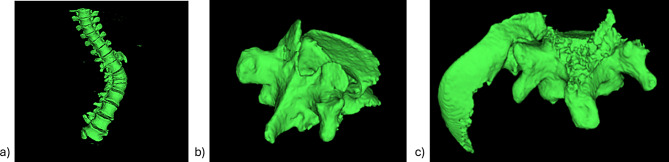
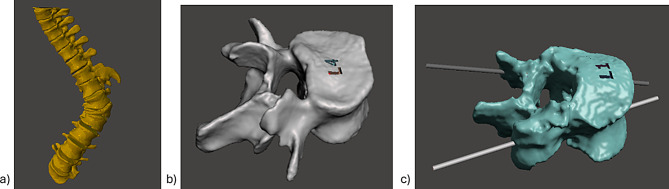
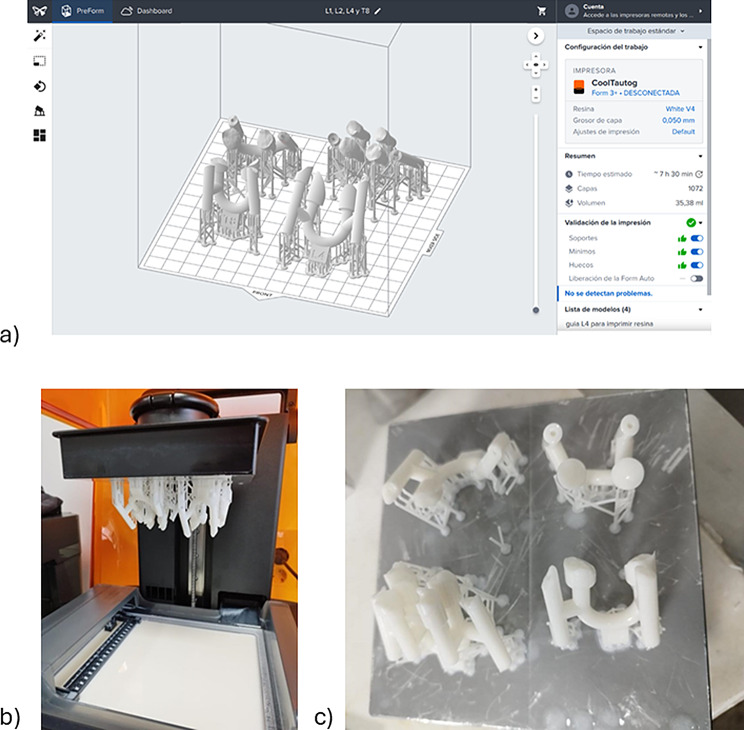
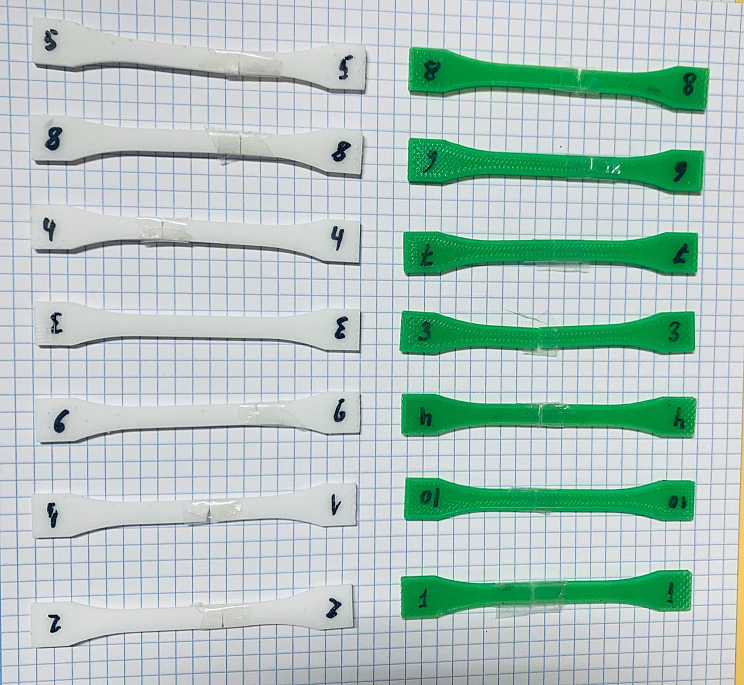
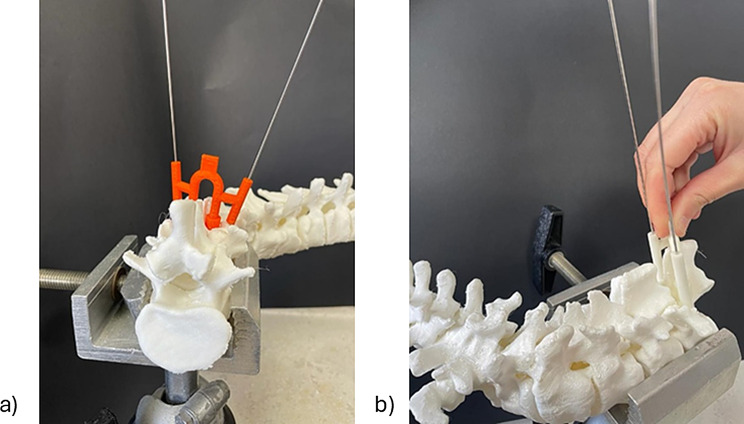
The process began with the generation of 3D biomodels of vertebrae from computed tomography scans. Surgical guides were then created using two 3D printing techniques: Fused Filament Fabrication (FFF) with polylactic acid (PLA) and Stereolithography (SLA) with photopolymer resin. Three different prototypes were compared based on multifactorial indicators, including economic cost, macroscopic surface finish, and mechanical stability. The mechanical performance of the guides was evaluated under loads generated during pedicle screw penetration and threading.
PLA models printed using FFF were found to be cheaper and simpler to manufacture than SLA resin models. Despite differences observed under a microscope, PLA models exhibited a macroscopic surface finish comparable to that of SLA resin models. Both materials demonstrated similar mechanical properties, although their values were lower than those reported in the manufacturer's datasheet. Importantly, both types of guides successfully withstood the mechanical loads generated during surgical procedures. The intra-hospital collaboration between engineers and surgeons was identified as a key factor in improving outcomes and reducing error risks, showcasing the benefits of interdisciplinary teamwork.
3D-printed PSIs made from PLA using FFF are more cost-effective and quicker to produce compared to SLA resin models, while achieving similar results in surface finish and mechanical stability. The implementation of a collaborative approach between engineers and surgeons within hospital settings enhances the efficiency and accuracy of patient-specific surgical guide manufacturing, offering a promising solution for improving surgical outcomes in thoracic scoliotic deformities.
本研究验证了个性化手术导板的院内设计及3D打印流程,以提高胸椎侧弯畸形患者椎弓根螺钉植入的准确性。它引入了一种外科医生与工程师之间的新型协作模式,旨在提高效率并减少定制患者器械(PSI)制造过程中的误差。
该流程始于从计算机断层扫描生成椎骨的3D生物模型。然后使用两种3D打印技术创建手术导板:使用聚乳酸(PLA)的熔融沉积成型(FFF)和使用光聚合物树脂的立体光刻(SLA)。基于多因素指标(包括经济成本、宏观表面光洁度和机械稳定性)对三种不同的原型进行了比较。在椎弓根螺钉穿透和穿线过程中产生的载荷下评估导板的机械性能。
发现使用FFF打印的PLA模型比SLA树脂模型更便宜且制造更简单。尽管在显微镜下观察到有差异,但PLA模型的宏观表面光洁度与SLA树脂模型相当。两种材料都表现出相似的机械性能,尽管其数值低于制造商数据手册中报告的数值。重要的是,两种类型的导板都成功承受了手术过程中产生的机械载荷。工程师与外科医生之间的院内协作被确定为改善结果和降低误差风险的关键因素,展示了跨学科团队合作的益处。
与SLA树脂模型相比,使用FFF由PLA制成的3D打印PSI更具成本效益且生产更快,同时在表面光洁度和机械稳定性方面取得了相似的结果。在医院环境中实施工程师与外科医生之间的协作方法可提高定制手术导板制造的效率和准确性,为改善胸椎侧弯畸形的手术结果提供了一个有前景的解决方案。