Eraso Jesus M, Olsen Randall J, Long S Wesley, Faili Ahmad, Kayal Samer, Musser James M
Laboratory for Molecular and Translational Human Infectious Diseases Research, Center for Infectious Diseases, Houston Methodist Research Institute, Houston, Texas, USA.
Department of Pathology and Genomic Medicine, Houston Methodist Hospital, Houston, Texas, USA.
mBio. 2025 Aug 13;16(8):e0134925. doi: 10.1128/mbio.01349-25. Epub 2025 Jul 22.
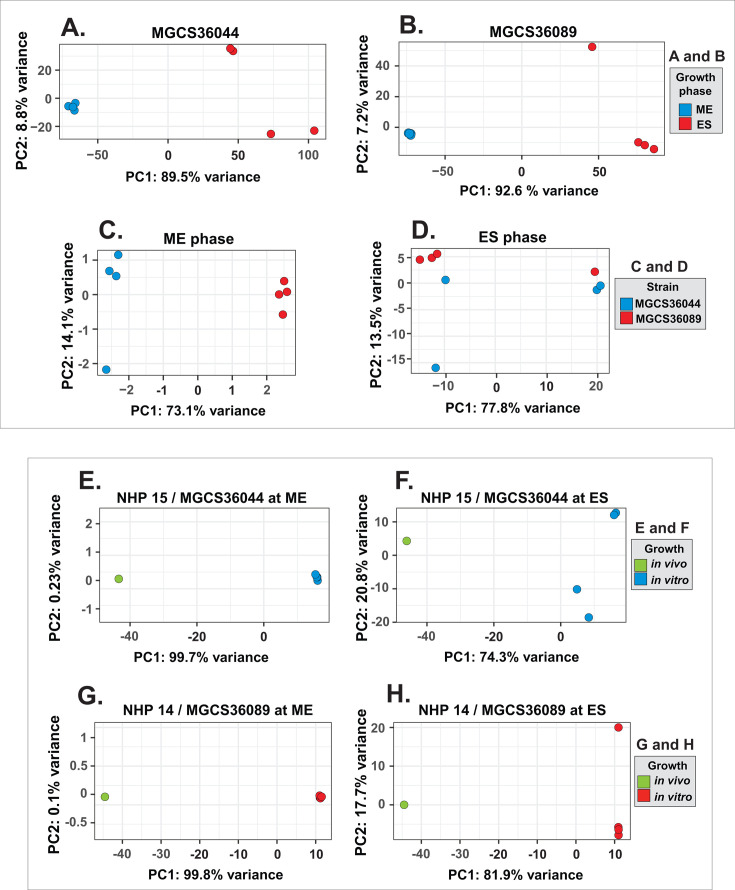
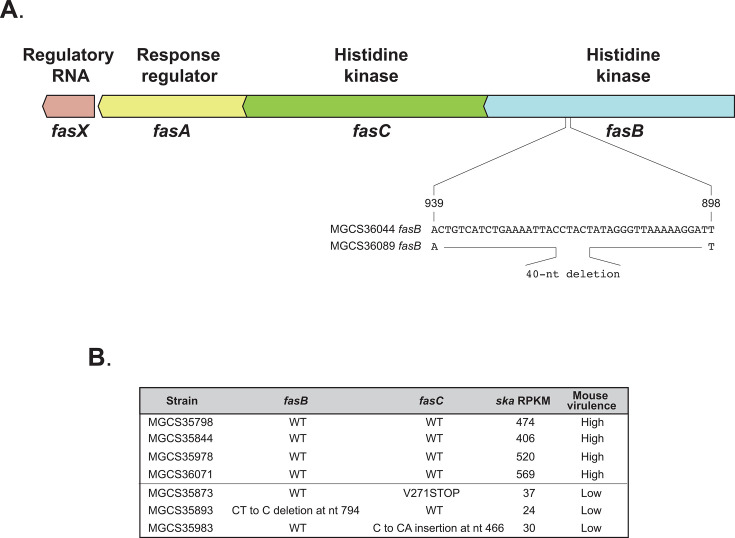
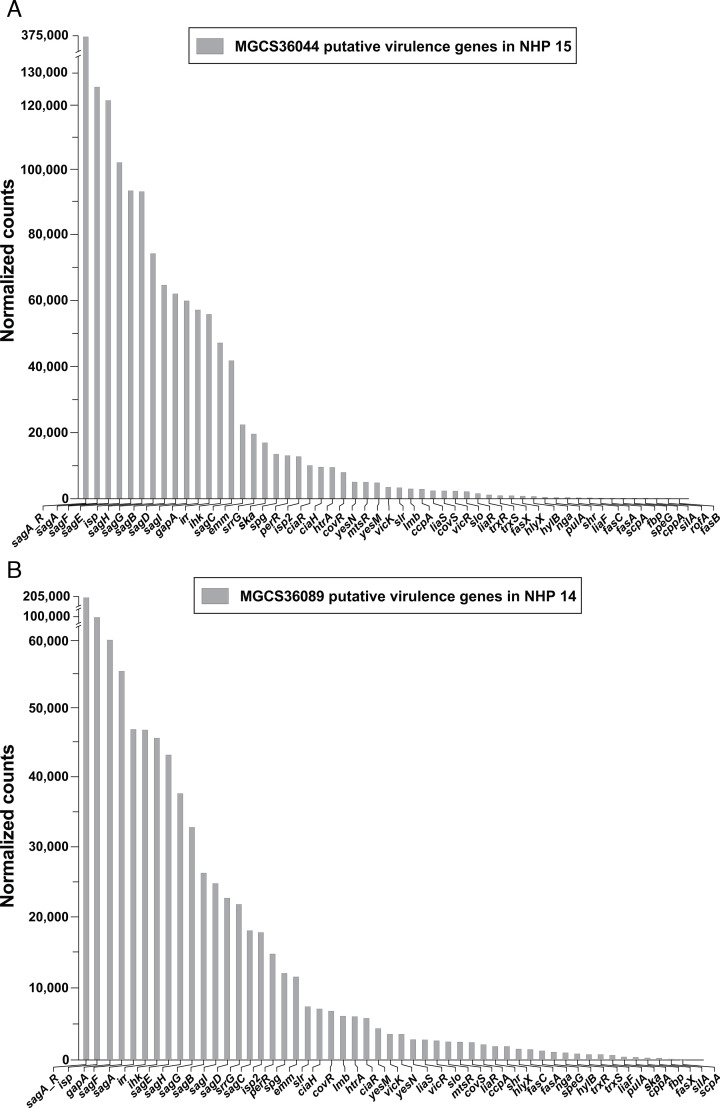
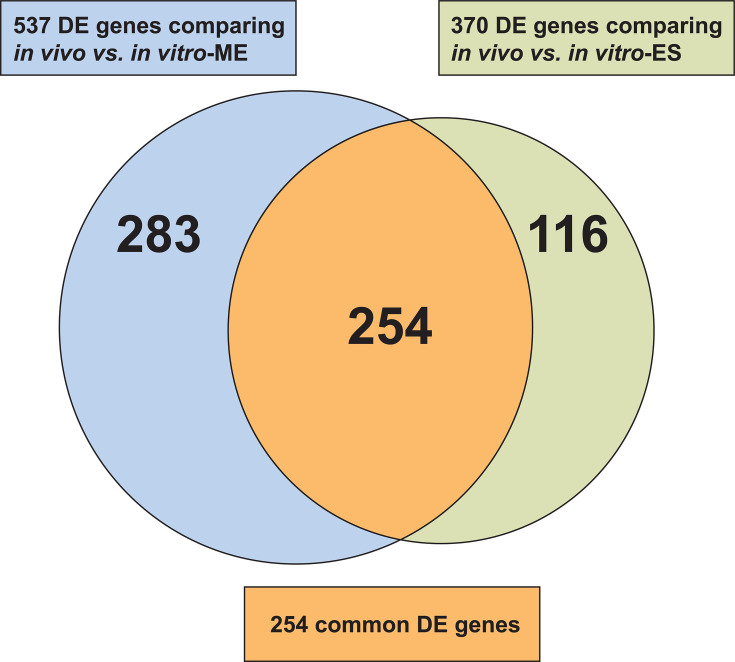
subspecies (SDSE) is a gram-positive bacterial pathogen capable of causing various infections in humans. Recently, isolates of SDSE type have emerged as a cause of severe invasive infections, including necrotizing myositis. However, the molecular processes underlying these infections remain poorly understood. To address this gap, we performed RNAseq analysis to examine SDSE gene transcript levels during experimental necrotizing myositis infection in non-human primates, animals phylogenetically closely related to humans. We analyzed the transcriptomes of two related SDSE human isolates (MGCS36044 and MGCS36089) during necrotizing myositis infection in six non-human primates. The transcriptome from growth in nutrient-rich media differed considerably from that of SDSE bacteria grown in experimental necrotizing myositis, with 254 genes differentially expressed, indicating extensive genetic adaptation in infected skeletal muscle. Notably, we observed a marked upregulation of genes encoding a two-component regulatory system that promotes evasion of phagocytosis and resistance to killing by human polymorphonuclear leukocytes in . Similarly, genes comprising the operon encoding the streptolysin S cytolytic toxin virulence factor demonstrated very high transcript abundance . Additionally, we present evidence that a 40-nt deletion in alters expression of , encoding streptokinase. Collectively, our data provide new insights into the SDSE genes transcribed , thereby enhancing our understanding of the molecular basis of pathogen and primate host interactions. The SDSE genes identified in this study offer promising targets for future studies on molecular pathogenesis and therapeutic interventions.IMPORTANCE subspecies (SDSE) has emerged as an increasingly important bacterial pathogen causing serious invasive infections in humans worldwide. Despite its clinical importance, the mechanisms through which SDSE causes infections remain poorly understood, and no licensed vaccine currently exists. SDSE can cause necrotizing myositis, an infection with high morbidity and mortality. We used a primate infection model and bacterial transcriptome analysis to gain new understanding of the molecular events contributing to SDSE pathogenesis in necrotizing myositis. Our results provide extensive new information about the transcriptome of SDSE and reveal numerous potential targets for future therapeutic and vaccine research.
猪源无乳链球菌亚种(SDSE)是一种革兰氏阳性细菌病原体,能够在人类中引起各种感染。最近,SDSE型分离株已成为严重侵袭性感染的病因,包括坏死性肌炎。然而,这些感染背后的分子过程仍知之甚少。为了填补这一空白,我们进行了RNA测序分析,以检查在与人类系统发育关系密切的非人类灵长类动物实验性坏死性肌炎感染期间SDSE基因的转录水平。我们分析了两种相关的SDSE人类分离株(MGCS36044和MGCS36089)在六只非人类灵长类动物坏死性肌炎感染期间的转录组。在营养丰富的培养基中生长的转录组与在实验性坏死性肌炎中生长的SDSE细菌的转录组有很大差异,有254个基因差异表达,表明在感染的骨骼肌中存在广泛的基因适应性。值得注意的是,我们观察到编码促进逃避吞噬作用和抵抗人类多形核白细胞杀伤的双组分调节系统的基因明显上调。同样,编码链球菌溶血素S细胞溶解毒素毒力因子的操纵子中的基因表现出非常高的转录丰度。此外,我们提供的证据表明,某基因中的40个核苷酸缺失会改变编码链激酶的基因的表达。总的来说,我们的数据为SDSE转录的基因提供了新的见解,从而增强了我们对病原体与灵长类宿主相互作用分子基础的理解。本研究中鉴定的SDSE基因是未来分子发病机制研究和治疗干预的有希望的靶点。重要性猪源无乳链球菌亚种(SDSE)已成为一种在全球范围内引起人类严重侵袭性感染的日益重要的细菌病原体。尽管其具有临床重要性,但SDSE引起感染的机制仍知之甚少,目前尚无许可疫苗。SDSE可导致坏死性肌炎,这是一种发病率和死亡率都很高的感染。我们使用灵长类动物感染模型和细菌转录组分析,以重新了解导致SDSE在坏死性肌炎中发病的分子事件。我们的结果提供了关于SDSE转录组的大量新信息,并揭示了未来治疗和疫苗研究的众多潜在靶点。