Department of Medicine, Haukeland University Hospital, Bergen, Norway.
Department of Clinical Science, University of Bergen, Bergen, Norway.
Sci Rep. 2017 Aug 8;7(1):7589. doi: 10.1038/s41598-017-08162-z.
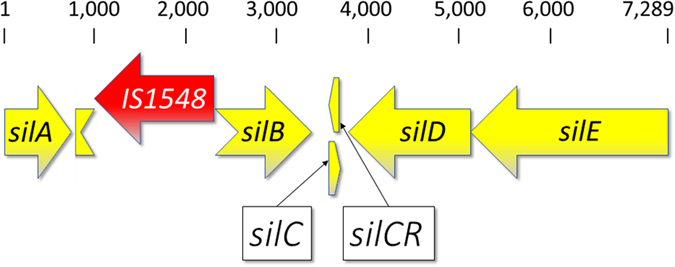
Increasing incidence rates of invasive Streptococcus dysgalactiae subspecies equisimilis (SDSE) infections have been reported worldwide, but the evolutionary mechanisms underlying this development remain elusive. Through prospective surveillance of invasive SDSE infections in western Norway, we observed the emergence of a novel and virulent SDSE genotype, stG62647. This emm-type, rarely encountered as a cause of invasive disease during 1999-2012, emerged in 2013 as the predominant SDSE-genotype. The stG62647-infections were associated with an aggressive clinical course, including the occurrence of streptococcal toxic shock syndrome, necrotizing soft-tissue infections and endocarditis. All the invasive stG62647-isolates were subjected to whole genome sequencing, attempting to explore the genetic events underpinning its epidemicity. Although 10% of the genomes was unique for stG62647-genotype, notably 18 out of 19 isolates contained a disrupted streptococcal invasive locus (sil) due to the insertion of a transposase, IS1548, into the silB-gene. We postulate that the virulence of stG6267-isolates could be partly attributable to the abrogation of the attenuating control normally exerted by this regulon, although experimental verification was not performed. To the best of our knowledge, this is the first study employing large scale whole genome sequencing to illuminate the genetic landscape of epidemic lineages in SDSE.
全球范围内有报道称,侵袭性无乳链球菌亚种(SDSE)感染的发病率不断上升,但导致这种情况发生的进化机制仍不清楚。通过对挪威西部侵袭性 SDSE 感染的前瞻性监测,我们观察到一种新型且具有毒性的 SDSE 基因型 stG62647 的出现。这种 emm 型在 1999-2012 年期间很少作为侵袭性疾病的原因出现,但在 2013 年成为主要的 SDSE 基因型。stG62647 感染与侵袭性临床病程相关,包括链球菌中毒性休克综合征、坏死性软组织感染和心内膜炎的发生。所有侵袭性 stG62647 分离株均进行了全基因组测序,试图探索其流行的遗传事件。尽管 stG62647 基因型的 10%基因组是独特的,但值得注意的是,19 个分离株中有 18 个由于转座酶 IS1548 插入 silB 基因而导致 sil 缺失。我们推测,stG6267 分离株的毒力部分归因于该调节子通常发挥的衰减控制的丧失,尽管没有进行实验验证。据我们所知,这是首次采用大规模全基因组测序来阐明 SDSE 流行谱系的遗传景观的研究。