Aguilar-Ascón Edwar, Marrufo-Saldaña Liliana, Barra-Hinojosa Julio, Buleje-Del-Carpio Robert
Instituto de Investigación Científica, Grupo de Investigación en Tecnologías, Exponenciales, Estudios Generales, Universidad de Lima, Lima, Perú.
Centro de Innovación Productiva y Transferencia Tecnológica del Cuero, Calzado e Industrias Conexas (CITEccal Lima), Instituto Tecnológico de la Producción (ITP), Lima, Perú.
PLoS One. 2025 Jul 22;20(7):e0328654. doi: 10.1371/journal.pone.0328654. eCollection 2025.
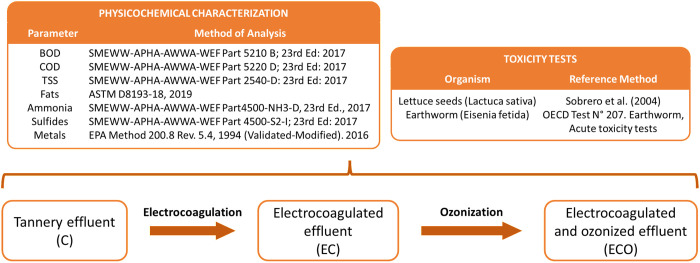
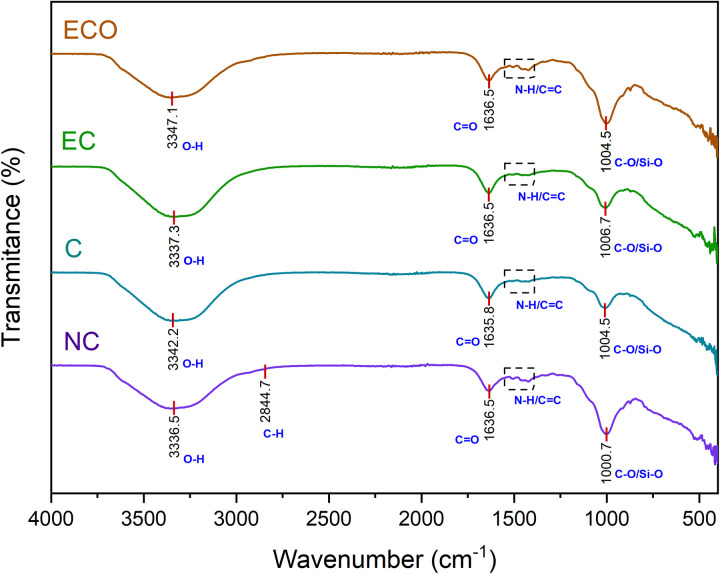
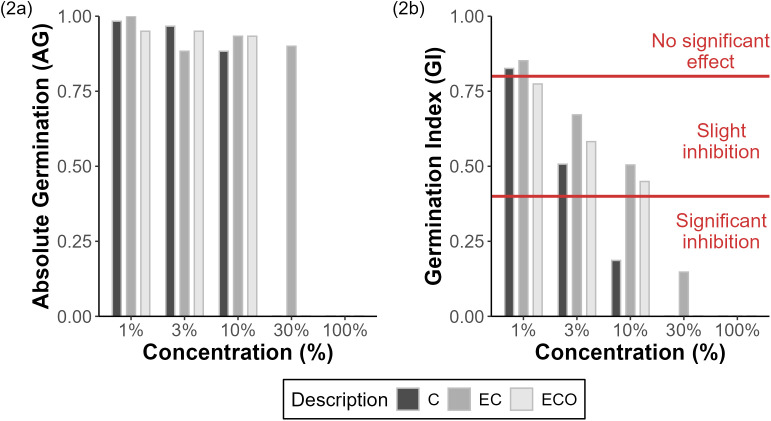
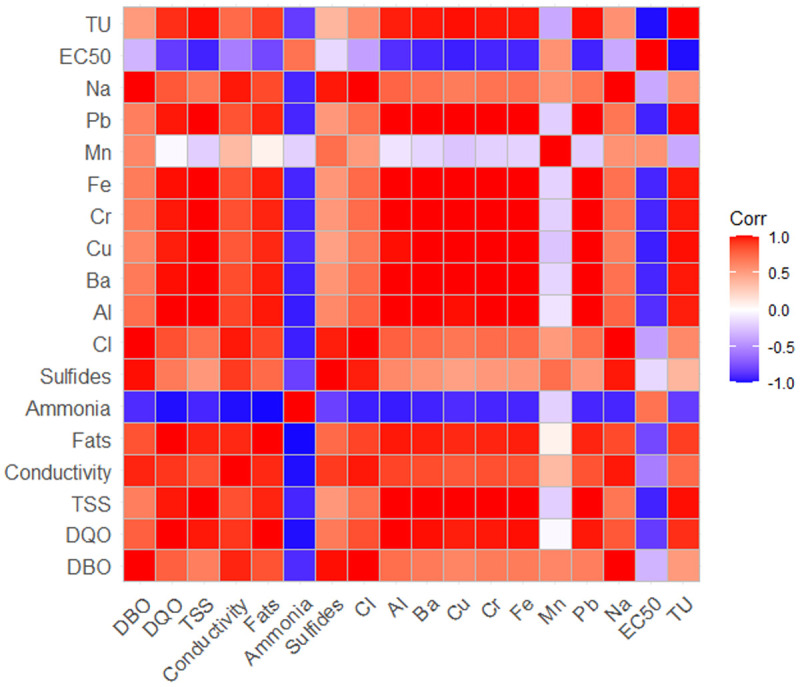
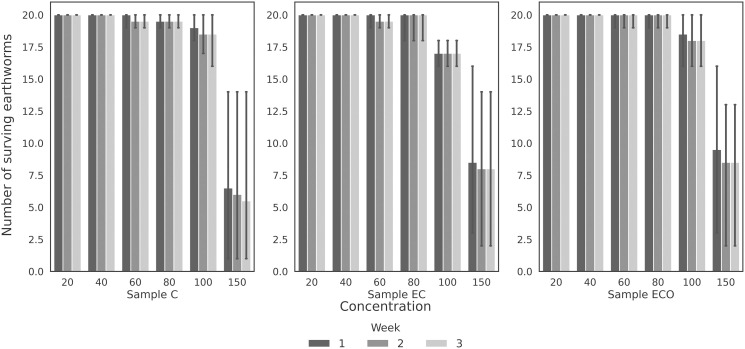
Tannery effluents are characterized by their high toxicity and complex pollutant load, posing significant risks to aquatic ecosystems. Although conventional treatment processes often achieve regulatory standards for pollutant concentrations, they do not necessarily guarantee the reduction of effluent toxicity. This study aimed to evaluate the quality of tannery effluents treated by electrocoagulation (EC) and the combined electrocoagulation-ozonation (ECO) process, while analyzing the associated toxicity reduction, in order to determine the suitability of these technologies for application and ensure environmental protection of receiving water bodies. For this purpose, tannery wastewater was treated sequentially using an electrocoagulation reactor followed by an ozonation system, yielding three sample types: raw (C), electrocoagulation-treated (EC), and electrocoagulation-ozonation treated (ECO). Physicochemical parameters were measured, toxicity was assessed through bioassays with Lactuca sativa and Eisenia fetida, and chemical changes were analyzed using FTIR spectroscopy.EC achieved 96.4% removal of total suspended solids (TSS), 30.9% of chemical oxygen demand (COD), and 99% of chromium, while ozonation further removed 10% of COD and 99% of sulfides. Toxicity assays indicated a reduction from 23.89 toxicity units (TUs) in the raw effluent to 8.32 TUs after EC and 11.12 TUs after ECO. The slight increase in toxicity after ozonation was associated with elevated ammoniacal nitrogen levels and the formation of new functional groups, as evidenced by the FTIR spectrum. Despite significant pollutant removal, the results highlight that treated effluents may still present residual toxicity, emphasizing the need for complementary treatment strategies to achieve true environmental safety.
制革废水具有高毒性和复杂的污染物负荷,对水生生态系统构成重大风险。尽管传统处理工艺通常能达到污染物浓度的监管标准,但不一定能保证降低废水毒性。本研究旨在评估经电凝聚(EC)和电凝聚 - 臭氧联合(ECO)工艺处理的制革废水的质量,同时分析相关的毒性降低情况,以确定这些技术的应用适用性,并确保对受纳水体的环境保护。为此,制革废水依次通过电凝聚反应器和臭氧氧化系统进行处理,产生了三种样品类型:原水(C)、电凝聚处理后的水(EC)和电凝聚 - 臭氧氧化处理后的水(ECO)。测量了理化参数,通过对莴苣和赤子爱胜蚓的生物测定评估了毒性,并使用傅里叶变换红外光谱(FTIR)分析了化学变化。EC实现了96.4%的总悬浮固体(TSS)去除率、30.9%的化学需氧量(COD)去除率和99%的铬去除率,而臭氧氧化进一步去除了10%的COD和99%的硫化物。毒性测定表明,原废水的毒性从23.89毒性单位(TUs)降至EC处理后的8.32 TUs和ECO处理后的11.12 TUs。臭氧氧化后毒性略有增加与氨氮水平升高和新官能团的形成有关,FTIR光谱证明了这一点。尽管污染物去除效果显著,但结果表明处理后的废水仍可能存在残留毒性,强调需要采用补充处理策略以实现真正的环境安全。