Liu Yuan, Xian Yang, Liu Bo, Zhao Wenrui, Ying Lijuan, Xu Jinyan, Luo Xuefeng, Luo Chen, Li Fuping
Department of Andrology/Human Sperm Bank of Sichuan Province, West China Second University Hospital, Sichuan University, Chengdu, Sichuan, P.R. China.
Key Laboratory of Birth Defects and Related Diseases of Women and Children (Sichuan University), Ministry of Education, Chengdu, Sichuan, P.R. China.
Medicine (Baltimore). 2025 Jul 18;104(29):e43272. doi: 10.1097/MD.0000000000043272.
Efficient semen preservation is important in patients with hematospermia (HS). Few reports have delineated effective methods for the removal of red blood cells (RBCs), and existing techniques have exhibited constraints that affect sperm preservation. There is a paucity of studies on semen preservation in HS patients.
Prior to surgical intervention for an ejaculatory duct cyst, the patient expressed concerns regarding potential fertility impairment. Considering his intention to conceive in the near future, he opted for sperm cryopreservation in a sperm bank as a precautionary measure.
We report the case of a patient who presented with HS and was diagnosed with an ejaculatory duct cyst accompanied by cyst wall calcification. Semen analysis revealed the presence of numerous RBCs in the ejaculate.
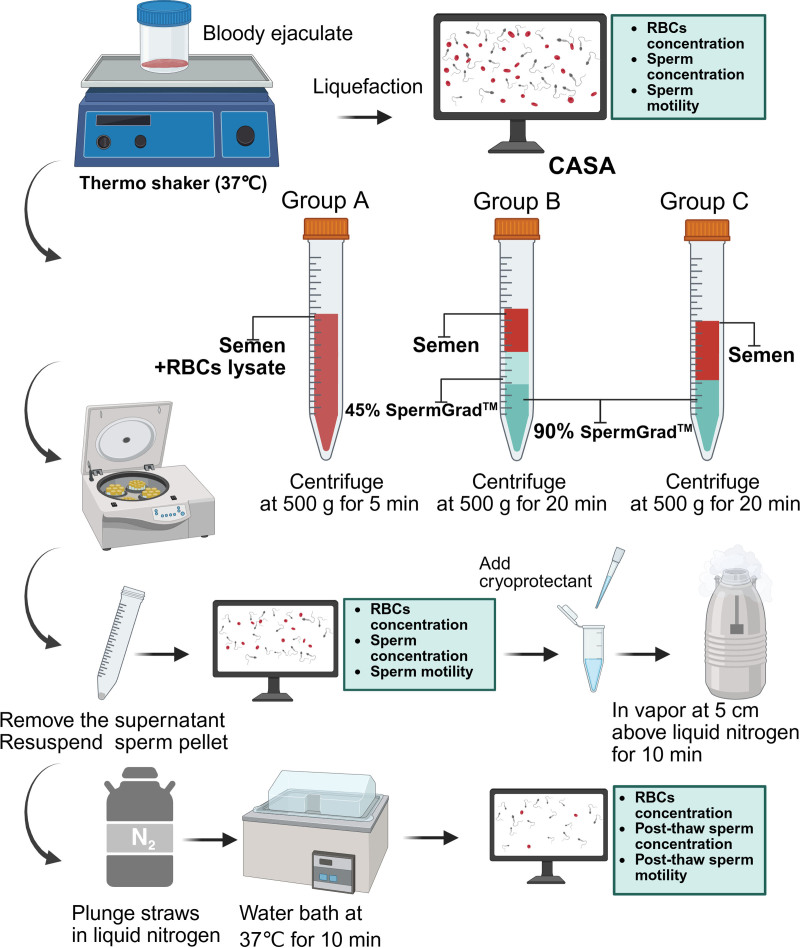
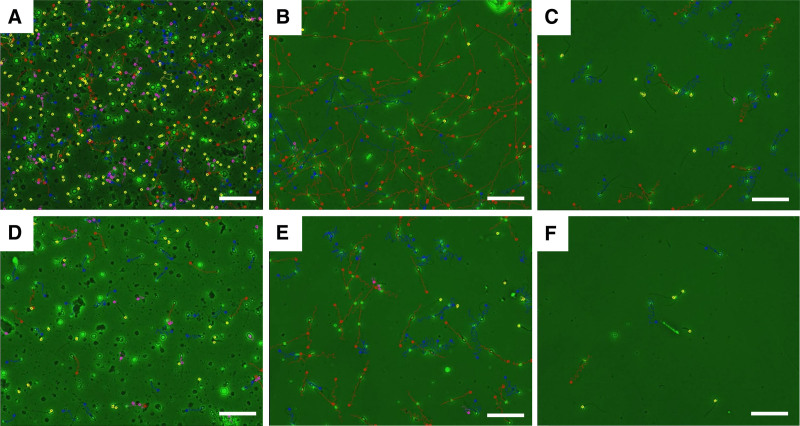
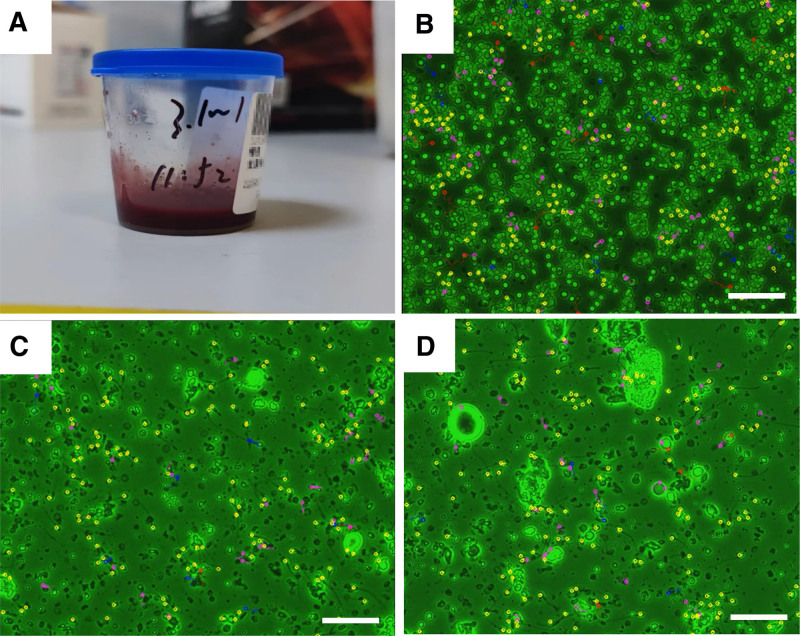
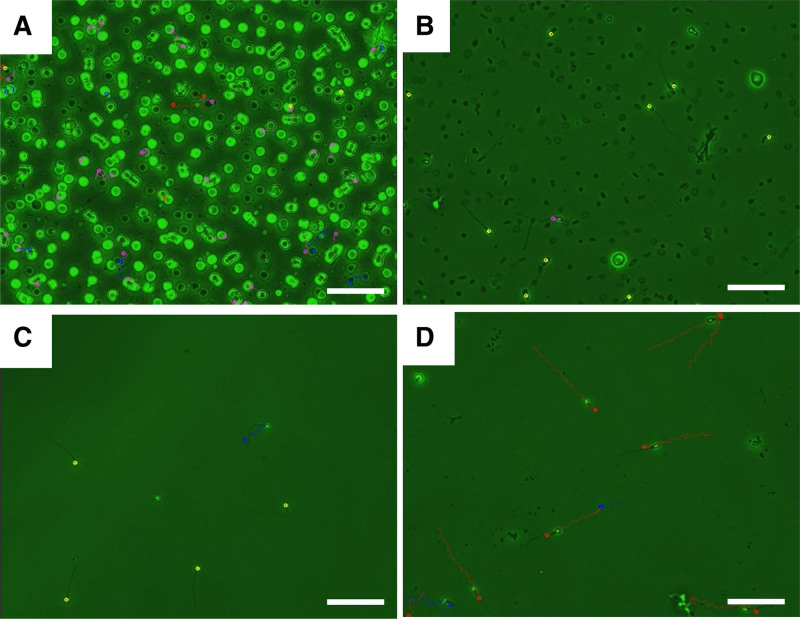
Three semen processing techniques to eliminate blood contamination were evaluated in the laboratory. (A) Processing of the RBC lysis buffer, (B) density gradient centrifugation, and (C) single layer centrifugation (SLC). Donor semen mixed with peripheral blood was used for the experiment. Post-thawing progressive motility (%) of the sperm was evaluated using computer-assisted sperm analysis. Additionally, the patient was advised to undergo a brief period of abstinence (4 hours) to diminish the quantity of RBCs in the semen and to facilitate the freezing of additional straws.
The SLC can effectively remove RBCs from semen while maintaining high sperm recovery and post-thawing progressive motility. The combination of SLC and very short-term abstinence elevates the quantity of frozen sperm relative to alternative compositions. Ultimately, the patient successfully cryopreserved 5 semen straws.
Before commencing formal treatment, it is essential to evaluate fertility preservation in individuals with HS. Employing SLC and subsequent semen collection following a brief abstinence period can mitigate the adverse effects of physical damage on sperm and avert the influence of RBC lysis on the efficacy of sperm cryopreservation. This method offers an effective strategy for autologous semen cryopreservation in a clinical setting for patients with HS.
高效的精液保存对血精症(HS)患者很重要。很少有报告描述去除红细胞(RBC)的有效方法,现有技术存在影响精子保存的局限性。关于HS患者精液保存的研究很少。
在对射精管囊肿进行手术干预之前,患者对潜在的生育能力损害表示担忧。考虑到他近期有生育打算,他选择在精子库进行精子冷冻保存作为预防措施。
我们报告了一例患有HS的患者,被诊断为射精管囊肿并伴有囊肿壁钙化。精液分析显示射精液中存在大量红细胞。
在实验室评估了三种消除血液污染的精液处理技术。(A)红细胞裂解缓冲液处理,(B)密度梯度离心,以及(C)单层离心(SLC)。将供体精液与外周血混合用于实验。使用计算机辅助精子分析评估解冻后精子的渐进性运动率(%)。此外,建议患者进行短时间禁欲(4小时),以减少精液中的红细胞数量,并便于冷冻更多的冻存管。
SLC可以有效地从精液中去除红细胞,同时保持较高的精子回收率和解冻后的渐进性运动率。SLC与极短期禁欲相结合,相对于其他组合可提高冷冻精子的数量。最终,患者成功冷冻保存了5管精液。
在开始正式治疗之前,评估HS患者的生育力保存至关重要。采用SLC并在短时间禁欲后进行精液采集,可以减轻物理损伤对精子的不利影响,并避免红细胞裂解对精子冷冻保存效果的影响。该方法为HS患者在临床环境中进行自体精液冷冻保存提供了一种有效的策略。