Zhang Yu, Zhu Kaina, Zhang Fengshuo, Wu Zhenling, Hou Shengzhen, Gui Linsheng
College of Agriculture and Animal Husbandry, Qinghai University, Xining, Qinghai, China.
Front Nutr. 2025 Jul 8;12:1614114. doi: 10.3389/fnut.2025.1614114. eCollection 2025.
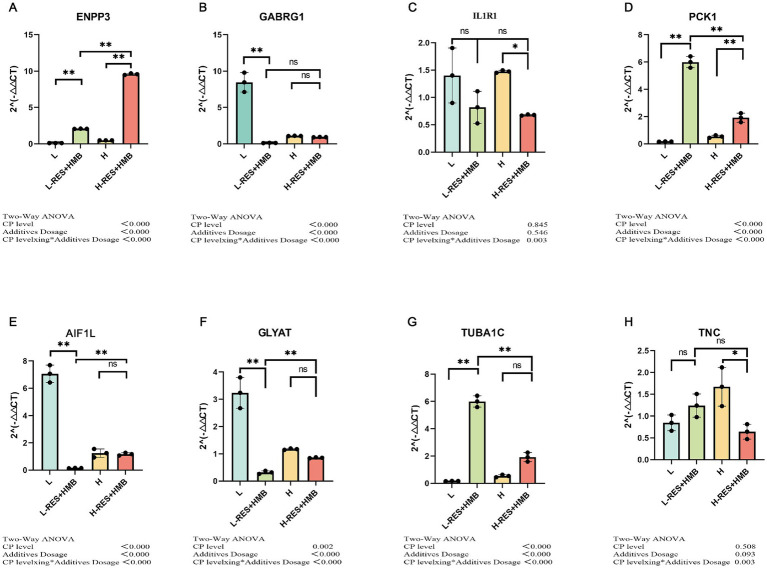
Increasing evidence indicated resveratrol (RES) and β-hydroxy-β-methylbutyric acid (HMB) regulated several biological processes via modulating gene expression. This study employed transcriptomic and metabolomic analyses to investigate the impact of RES and HMB supplementation, in combination with varying dietary protein levels on hepatic immunity, antioxidant capacity, and morphology in Tibetan sheep.
Two treatments (with or without RES and HMB supplementation) and two dietary protein levels (12% vs. 14% of the basal diet) were tested according to a 2 × 2 factorial arrangement within a Latin square design. A total of 120 healthy two-month-old male Tibetan lambs (16.87 ± 0.31 kg) were randomly allocated for 90-day feeding experiment, with the following treatments: low-protein basal diet without (L group) or with (L-RES + HMB group) supplemental 1.50 g/d RES and 1.25 g/d HMB, and high-protein basal diet without (H group) or with (H-RES + HMB group) supplemental 1.50 g/d RES and 1.25 g/d HMB.
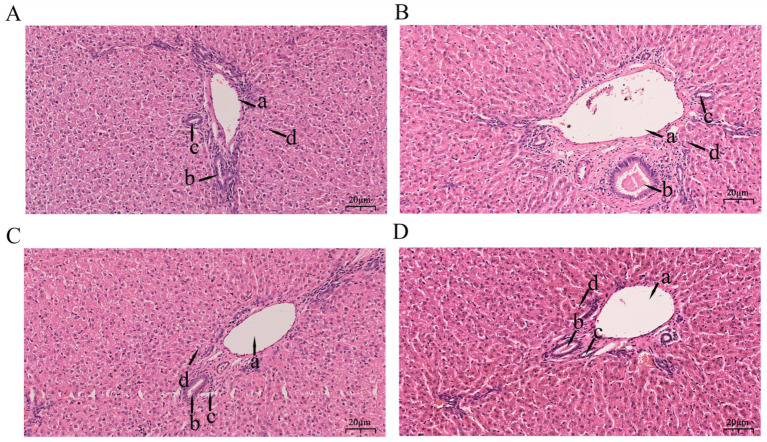
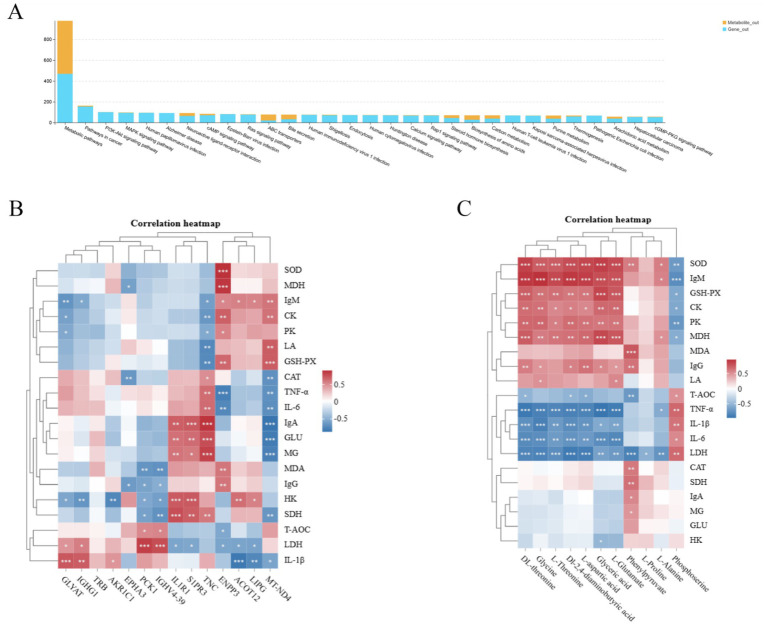
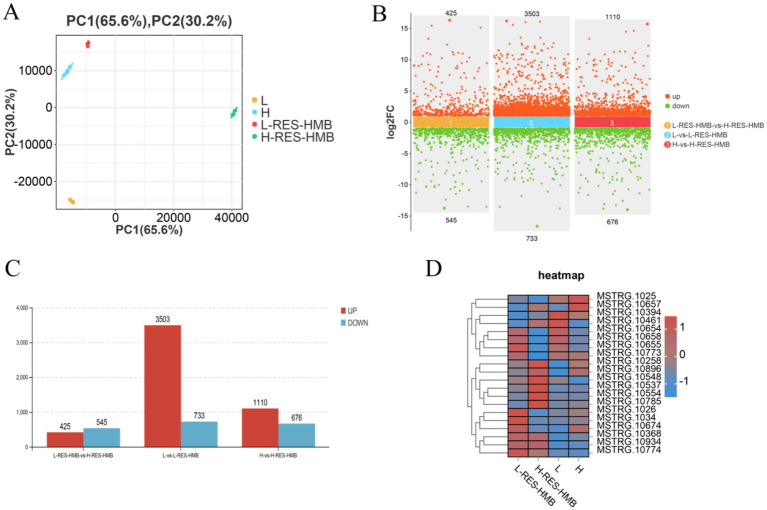
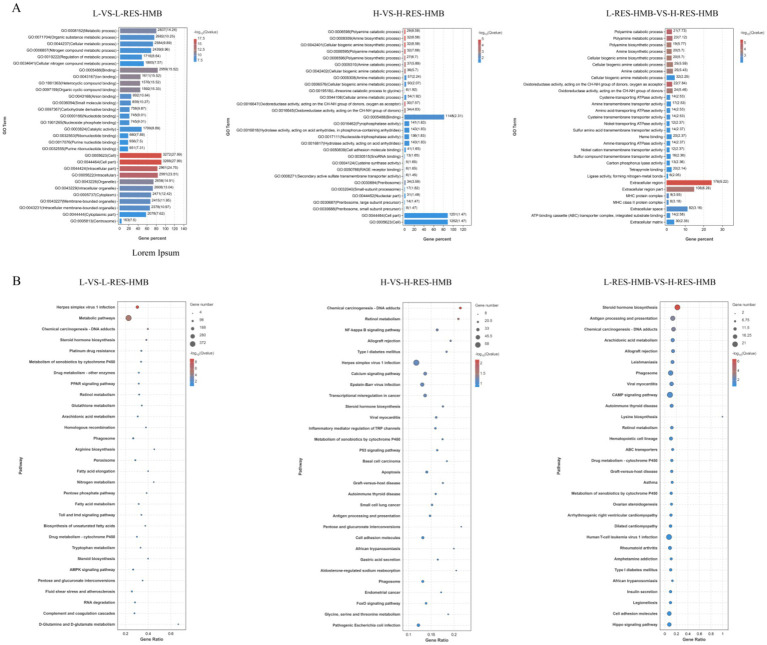
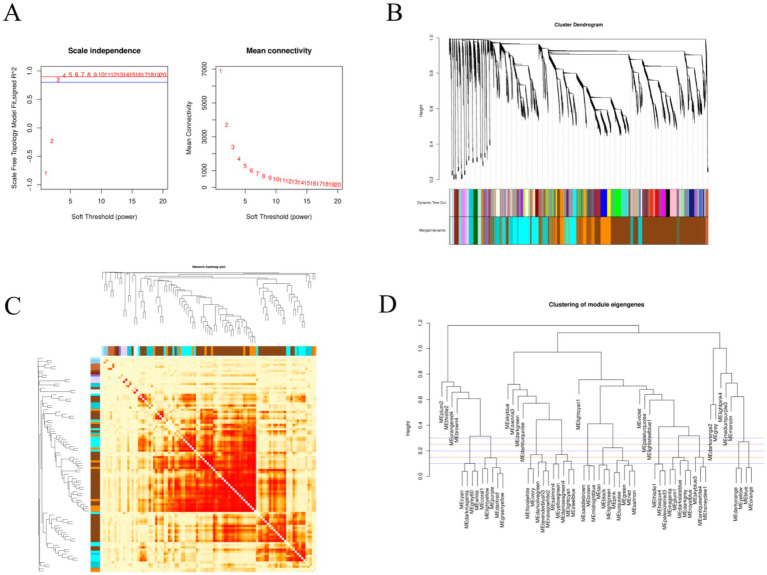
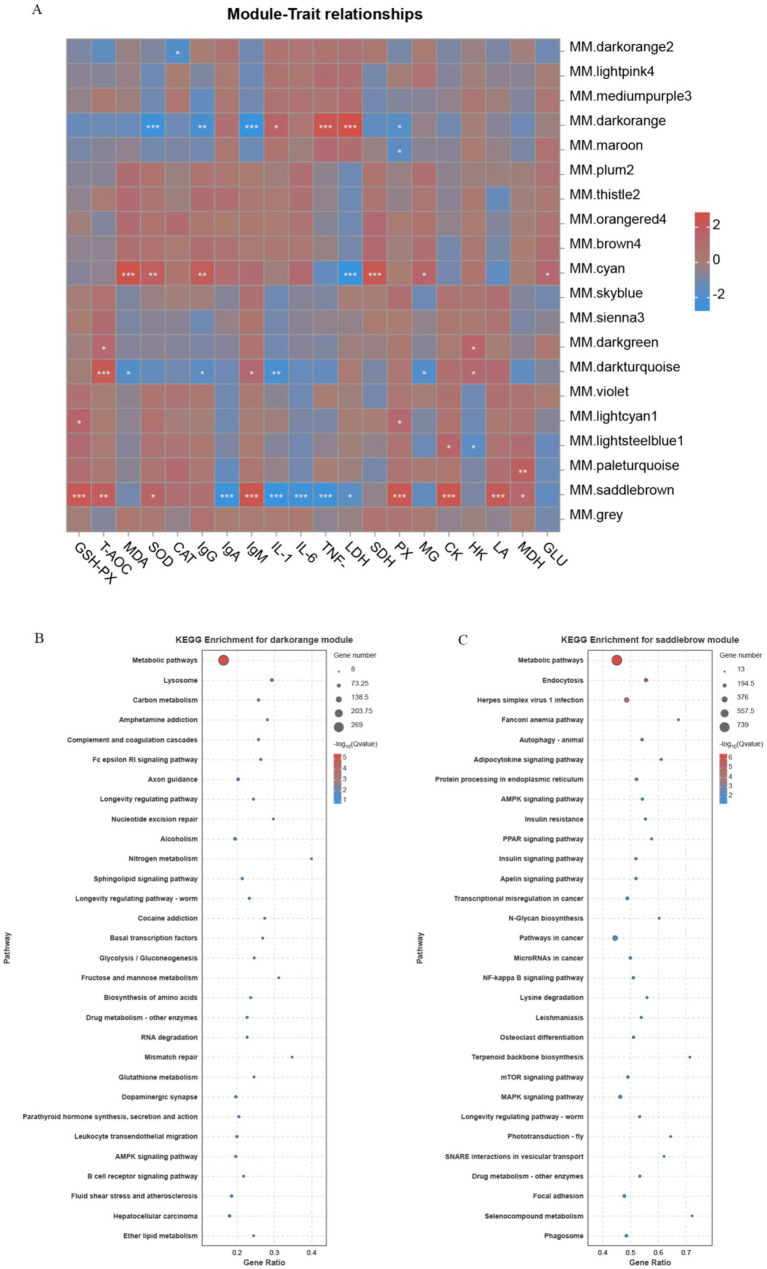
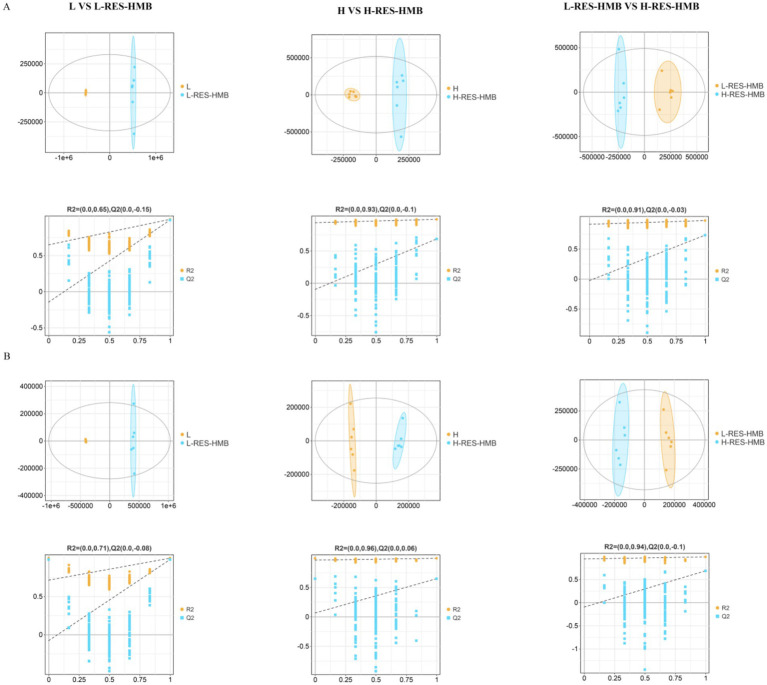
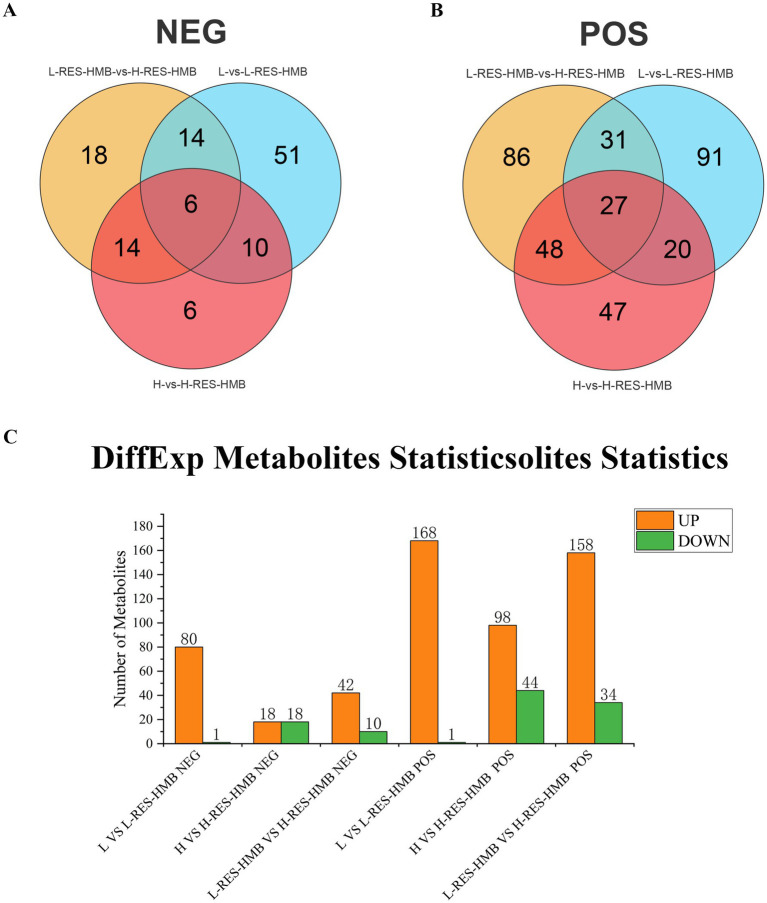
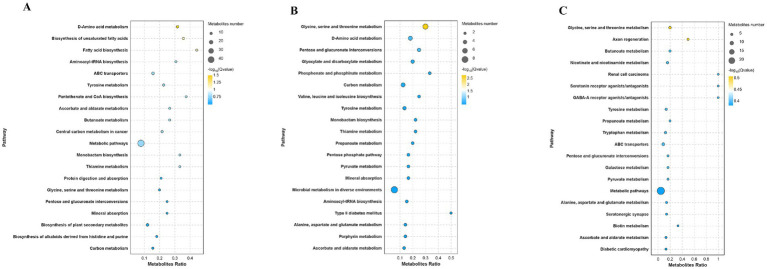
The results indicated that the liver tissue structure was predominantly normal in the H-RES + HMB group, devoid of central vein congestion. The catalase (CAT) activity and total antioxidant (T-AOC) capacity were significantly increased when fed the 14% protein diet ( < 0.05). The superoxide dismutase (SOD) and CAT activities of sheep fed supplementary-treated diets were significantly increased than the basal diet ( < 0.05). Immunoglobulin M (IgM) level and tumor necrosis factor-alpha (TNF-) activity in the H-RES + HMB group were significantly increased than those in the H and L groups ( < 0.05), whereas interleukin-1 beta (IL-1β) levels were significantly lower ( < 0.05). A total of 4,236 differentially expressed genes (DEGs) were identified, including 3,503 upregulated genes and 733 downregulated genes, which were categorized into immune-related KEGG signaling pathways. Metabolomic analysis identified that compared to L group, the abundance of 918 metabolites were significantly changed in H-RES + HMB group including 829 upregulated and 89 downregulated. Those differential metabolites enriched in KEGG pathways primarily related to immunity and antioxidation.
Dietary protein level and RES/HMB supplementation exhibited positively interaction effect on immunity and antioxidant capacity. The 14% protein diet with RES and HMB improved the hepatic function through modulating the gene and metabolite in Tibetan sheep.
越来越多的证据表明,白藜芦醇(RES)和β-羟基-β-甲基丁酸(HMB)通过调节基因表达来调控多种生物学过程。本研究采用转录组学和代谢组学分析方法,研究RES和HMB添加物与不同膳食蛋白质水平相结合对藏羊肝脏免疫、抗氧化能力和形态的影响。
根据拉丁方设计中的2×2析因安排,测试了两种处理(添加或不添加RES和HMB)和两种膳食蛋白质水平(基础日粮的12%与14%)。总共120只健康的2月龄雄性藏羊羔羊(16.87±0.31 kg)被随机分配进行为期90天的饲养实验,处理如下:低蛋白基础日粮不添加(L组)或添加(L-RES+HMB组)1.50 g/d RES和1.25 g/d HMB,高蛋白基础日粮不添加(H组)或添加(H-RES+HMB组)1.50 g/d RES和1.25 g/d HMB。
结果表明,H-RES+HMB组肝脏组织结构基本正常,无中央静脉淤血。饲喂14%蛋白质日粮时,过氧化氢酶(CAT)活性和总抗氧化(T-AOC)能力显著提高(P<0.05)。饲喂添加处理日粮的绵羊超氧化物歧化酶(SOD)和CAT活性显著高于基础日粮(P<0.05)。H-RES+HMB组的免疫球蛋白M(IgM)水平和肿瘤坏死因子-α(TNF-)活性显著高于H组和L组(P<0.05),而白细胞介素-1β(IL-1β)水平显著降低(P<0.05)。共鉴定出4236个差异表达基因(DEG),包括3503个上调基因和733个下调基因,这些基因被归类到免疫相关的KEGG信号通路中。代谢组学分析表明,与L组相比,H-RES+HMB组918种代谢物的丰度发生了显著变化,包括829种上调和89种下调。这些差异代谢物在KEGG通路中富集,主要与免疫和抗氧化有关。
膳食蛋白质水平和RES/HMB添加物对免疫和抗氧化能力表现出正交互作用。含RES和HMB的14%蛋白质日粮通过调节藏羊的基因和代谢物改善了肝功能。