Han Han, Sun Xiaoyan, Guo Xiaoyun, Wen Jiaxin, Zhao Xiaoming, Zhou Weiqiang
Department of Biochemistry and Molecular Biology, School of Basic Medicine, Shenyang Medical College, Shenyang, Liaoning, China.
Department of Pathogen Biology, School of Basic Medicine, Shenyang Medical College, Shenyang, Liaoning, China.
Front Pharmacol. 2025 Jul 8;16:1552741. doi: 10.3389/fphar.2025.1552741. eCollection 2025.
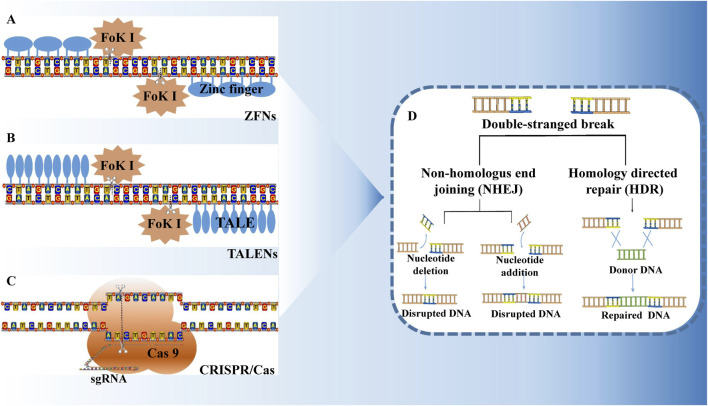
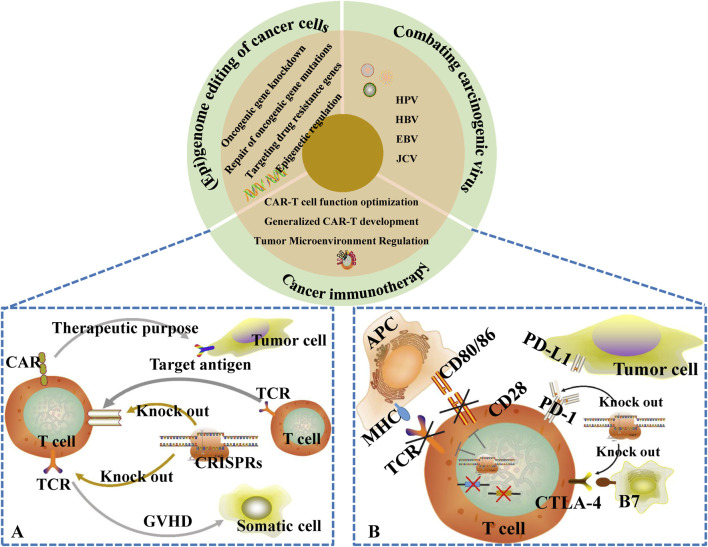
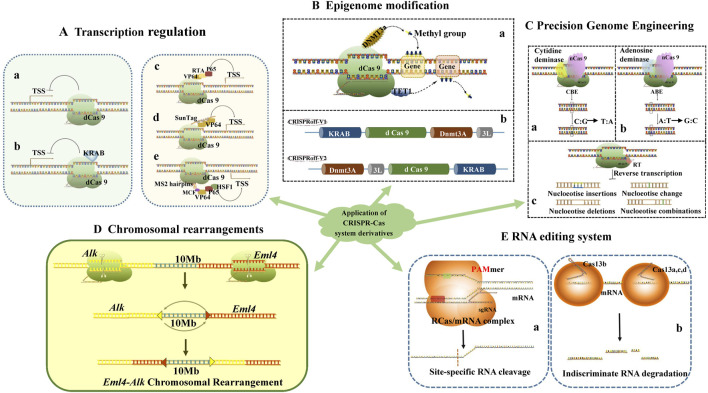
The CRISPR/Cas9 system is an acquired immune defense mechanism that has evolved in bacteria and archaea to protect against viral and plasmid attacks. It consists of regularly spaced clusters of short palindromic repeats (CRISPR) and CRISPR-associated proteins (Cas). By adapting the simplest type II CRISPR system to utilize special small guide RNA (sgRNA) and Cas9 nucleic acid endonuclease, precise cuts can be made at specific locations in double-stranded DNA, facilitating gene knockout or knock-in. Due to its efficient gene editing capabilities, CRISPR/Cas9 technology has been widely adopted across various biological and scientific research fields, demonstrating significant potential in tumor research and drug development. This article reviews the progress and future prospects of CRISPR/Cas9 technology in tumor genome editing, drug target screening and validation, and new drug development. It details the fundamental role of this technology in cancer biology research, encompassing various aspects such as gene transcription editors, epigenetic editors, precision genome engineering, and CRISPR-Cas systems targeting RNA. Additionally, the article discusses key applications of CRISPR/Cas9 in anticancer drug discovery, including drug target identification, drug target screening and validation, combinatorial genetic screening, screening of small molecules to overcome resistance to CAR-T therapies, and multimodal functional genomics integration strategies. Finally, although CRISPR/Cas9 has demonstrated great potential for efficient gene editing, precise target discovery, and promotion of personalized therapy and drug screening in oncology research, its application still faces technical bottlenecks such as off-target effects, genomic instability, and low editing efficiency in solid tumors, as well as ethical controversies in gene editing, safety assessment of delivery systems and immune responses in clinical translation, and other ethical and translational challenges.
CRISPR/Cas9系统是一种在细菌和古生菌中进化而来的获得性免疫防御机制,用于抵御病毒和质粒的攻击。它由规则间隔的短回文重复序列(CRISPR)簇和CRISPR相关蛋白(Cas)组成。通过采用最简单的II型CRISPR系统来利用特殊的小向导RNA(sgRNA)和Cas9核酸内切酶,可以在双链DNA的特定位置进行精确切割,从而促进基因敲除或敲入。由于其高效的基因编辑能力,CRISPR/Cas9技术已在各种生物学和科学研究领域中广泛应用,在肿瘤研究和药物开发中显示出巨大潜力。本文综述了CRISPR/Cas9技术在肿瘤基因组编辑、药物靶点筛选与验证以及新药开发方面的进展和未来前景。详细阐述了该技术在癌症生物学研究中的基础作用,包括基因转录编辑器、表观遗传编辑器、精确基因组工程以及靶向RNA的CRISPR-Cas系统等各个方面。此外,本文还讨论了CRISPR/Cas9在抗癌药物发现中的关键应用,包括药物靶点鉴定、药物靶点筛选与验证、组合基因筛选、克服CAR-T疗法耐药性的小分子筛选以及多模态功能基因组学整合策略。最后,尽管CRISPR/Cas9在肿瘤学研究中已显示出在高效基因编辑、精确靶点发现以及促进个性化治疗和药物筛选方面的巨大潜力,但其应用仍面临技术瓶颈,如脱靶效应、基因组不稳定性以及实体瘤中编辑效率低下等问题,同时在基因编辑方面还存在伦理争议、临床转化中递送系统的安全性评估和免疫反应等伦理和转化挑战。