
病例报告:保留的脐带突出了免疫缺陷病的家族病史。
Case Report: Preserved umbilical cords underscore family histories of inborn errors of immunity.
作者信息
Nishimura Madoka, Tomomasa Dan, Suzuki Rika, Miyaoka Futaba, Kanegane Hirokazu
机构信息
Department of Pediatrics and Developmental Biology, Graduate School of Medical and Dental Sciences, Institute of Science Tokyo, Tokyo, Japan.
Department of Pediatrics, Graduate School of Medical Sciences, Kumamoto University, Kumamoto, Japan.
出版信息
Front Immunol. 2025 Jul 8;16:1605857. doi: 10.3389/fimmu.2025.1605857. eCollection 2025.
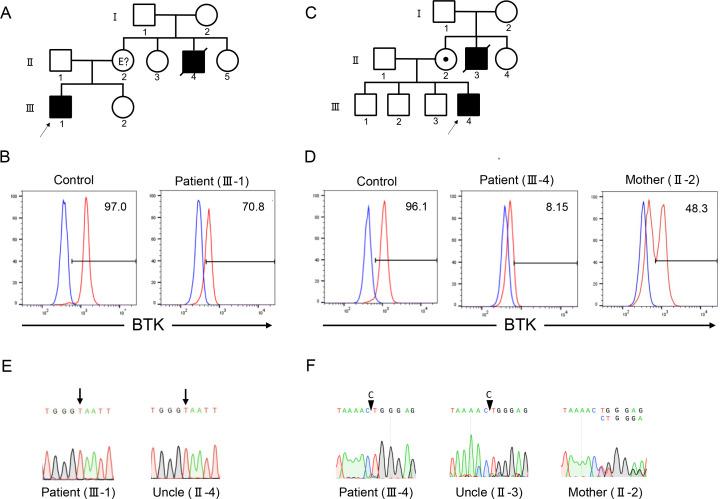
A history of susceptibility to infections and a family history of death because of unexplained infections during infancy are helpful in diagnosing inborn errors of immunity (IEIs). However, infections can occur because of various reasons, and determining whether the underlying disease is undoubtedly an IEI is implausible at present. In Japan, preservation of the umbilical cord at birth is customary. Two patients were suspected of having X-linked agammaglobulinemia (XLA); the patients were ultimately diagnosed with XLA based on the history of susceptibility to infections and family histories of deaths of maternal uncles because of infections during infancy. DNA was extracted from umbilical cords that had been preserved for approximately 50 years. The affected children harbored the same () variants as those detected using the umbilical cord samples of their maternal uncles. Analysis of preserved umbilical cords can help in ascertaining a family history of IEIs.
有感染易感性病史以及婴儿期因不明原因感染导致的家族死亡史,有助于诊断先天性免疫缺陷(IEIs)。然而,感染可能由多种原因引起,目前确定潜在疾病无疑是一种IEI是不太可能的。在日本,出生时保存脐带是惯例。两名患者被怀疑患有X连锁无丙种球蛋白血症(XLA);根据感染易感性病史以及其舅舅因婴儿期感染而死亡的家族史,这两名患者最终被诊断为XLA。从保存了大约50年的脐带中提取了DNA。患病儿童携带的相同()变体与使用其舅舅脐带样本检测到的变体相同。对保存的脐带进行分析有助于确定IEIs的家族史。
 Zotero 插件