Ogunwale Abayomi N, Schulz Paul E, Bordes Jude K des, Elefteriou Florent, Rianon Nahid J
UTHealth McGovern Medical School, Houston, TX 77030, USA.
Baylor College of Medicine, Houston, TX 77030, USA.
Geriatrics (Basel). 2025 Jul 20;10(4):96. doi: 10.3390/geriatrics10040096.
The biological mediators for the epidemiologic overlap between osteoporosis and dementia are unclear. We undertook a scoping review of clinical studies to identify genetic and biological factors linked with these degenerative conditions, exploring the mechanisms and pathways connecting both conditions.
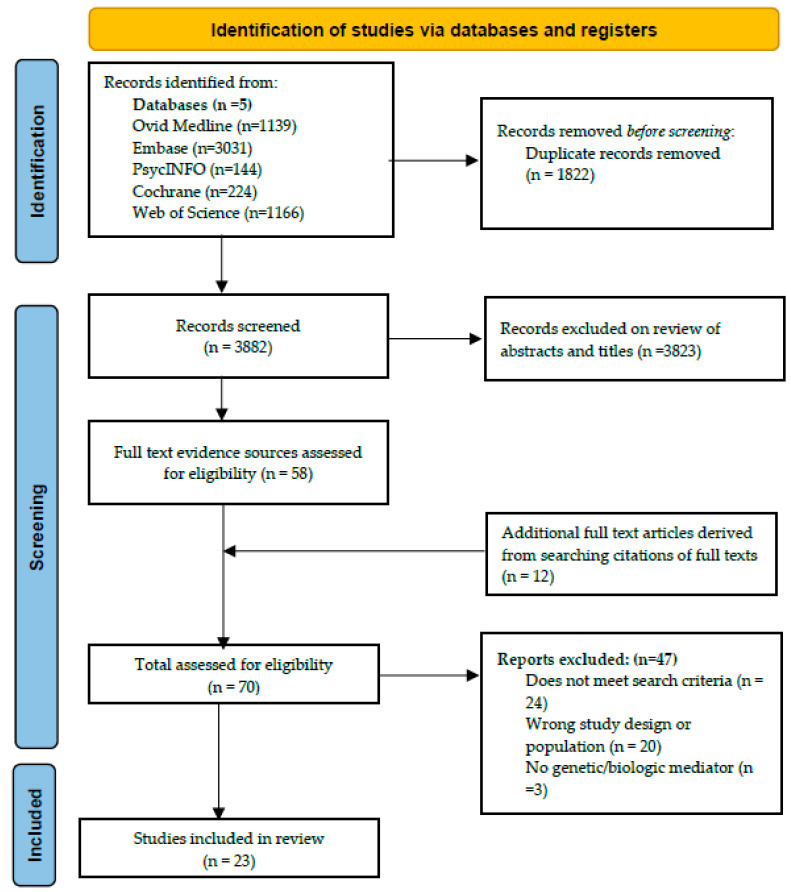
Studies selected (1) involved clinical research investigating genetic factors or biomarkers associated with dementia or osteoporosis, and (2) were published in English in a peer-reviewed journal between July 1993 and March 2025. We searched Medline Ovid, Embase, PsycINFO, the Cochrane Library, the Web of Science databases, Google Scholar, and the reference lists of studies following the guidelines for Preferred Reporting Items for Systematic Reviews and Meta-Analyses for Scoping Reviews (PRISMA-ScR).
Twenty-three studies were included in this review. These explored the role of the APOE polymorphism (n = 2) and the APOE4 allele (n = 13), associations between TREM2 mutation and late onset AD (n = 1), and associations between amyloid beta and bone remodeling (n = 1); bone-related biomarkers like DKK1, OPG, and TRAIL as predictors of cognitive change (n = 2); extracellular vesicles as bone-brain communication pathways (1); and the role of dementia-related genes (n = 1), AD-related CSF biomarkers (n = 1), and parathyroid hormone (PTH) (n = 1) in osteoporosis-dementia pathophysiology.
Bone-related biomarkers active in the Wnt/β-Catenin pathway (Dkk1 and sclerostin) and the RANKL/RANK/OPG pathway (OPG/TRAIL ratio) present consistent evidence of involvement in AD and osteoporosis development. Reports proposing APOE4 as a causal genetic link for both osteoporosis and AD in women are not corroborated by newer observational studies. The role of Aβ toxicity in osteoporosis development is unverified in a large clinical study.
骨质疏松症和痴呆症之间流行病学重叠的生物学介质尚不清楚。我们对临床研究进行了一项范围综述,以确定与这些退行性疾病相关的遗传和生物学因素,探索连接这两种疾病的机制和途径。
所选研究(1)涉及调查与痴呆症或骨质疏松症相关的遗传因素或生物标志物的临床研究,(2)于1993年7月至2025年3月期间在同行评审期刊上以英文发表。我们按照系统评价和元分析扩展综述的首选报告项目指南(PRISMA-ScR),检索了Medline Ovid、Embase、PsycINFO、Cochrane图书馆、科学网数据库、谷歌学术以及研究的参考文献列表。
本综述纳入了23项研究。这些研究探讨了载脂蛋白E(APOE)多态性(n = 2)和APOE4等位基因(n = 13)的作用、触发受体表达于髓细胞2(TREM2)突变与晚发性阿尔茨海默病(AD)之间的关联(n = 1),以及β淀粉样蛋白与骨重塑之间的关联(n = 1);骨相关生物标志物如 Dickkopf相关蛋白1(DKK1)、骨保护素(OPG)和肿瘤坏死因子相关凋亡诱导配体(TRAIL)作为认知变化预测指标(n = 2);细胞外囊泡作为骨-脑通讯途径(1);以及痴呆相关基因(n = 1)、AD相关脑脊液生物标志物(n = 1)和甲状旁腺激素(PTH)(n = 1)在骨质疏松症-痴呆症病理生理学中的作用。
在Wnt/β-连环蛋白途径(Dkk1和骨硬化蛋白)和核因子κB受体活化因子配体/核因子κB受体活化因子/骨保护素途径(OPG/TRAIL比值)中起作用的骨相关生物标志物,提供了参与AD和骨质疏松症发展的一致证据。较新的观察性研究并未证实将APOE4作为女性骨质疏松症和AD的因果遗传联系的报告。在一项大型临床研究中,Aβ毒性在骨质疏松症发展中的作用尚未得到证实。