Khare Kriti, Yadav Sunita, Halder Sayanti, Ray Yogiraj, Ganguly Dipyaman, Pandey Rajesh
Division of Immunology and Infectious Disease Biology, INtegrative GENomics of HOst-PathogEn (INGEN-HOPE) Laboratory, Council of Scientific and Industrial Research (CSIR)-Institute of Genomics and Integrative Biology (CSIR-IGIB), Delhi, India.
Academy of Scientific and Innovative Research (AcSIR), Ghaziabad, India.
Front Immunol. 2025 Jul 10;16:1582949. doi: 10.3389/fimmu.2025.1582949. eCollection 2025.
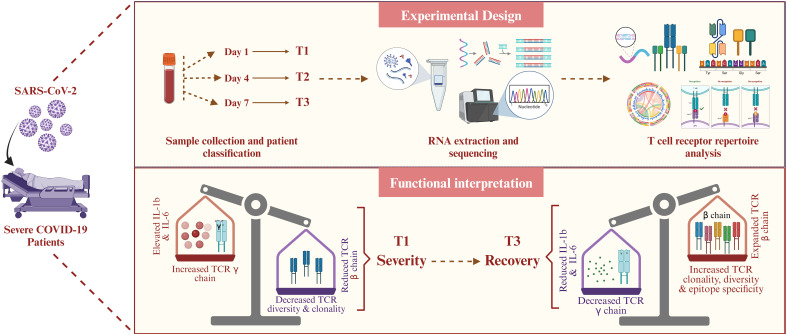
Severe COVID-19 is characterized by immune dysregulation, with T cells playing a central role in disease progression and recovery. However, the longitudinal dynamics of the T cell receptor (TCR) repertoire during the course of severe illness remain unclear.
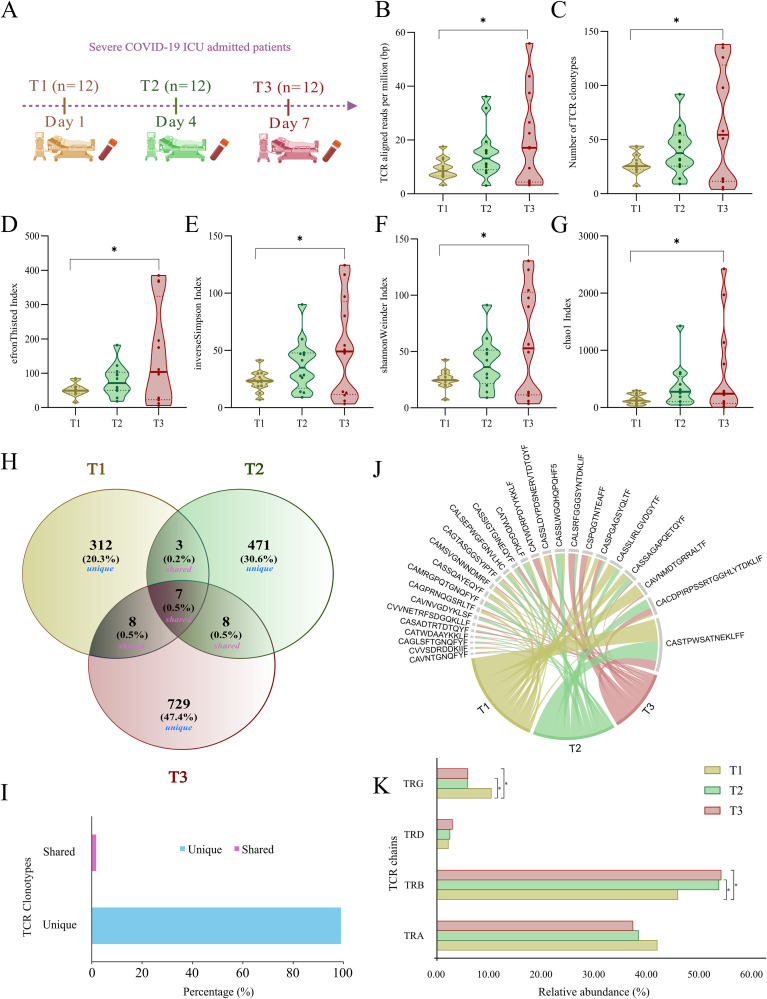
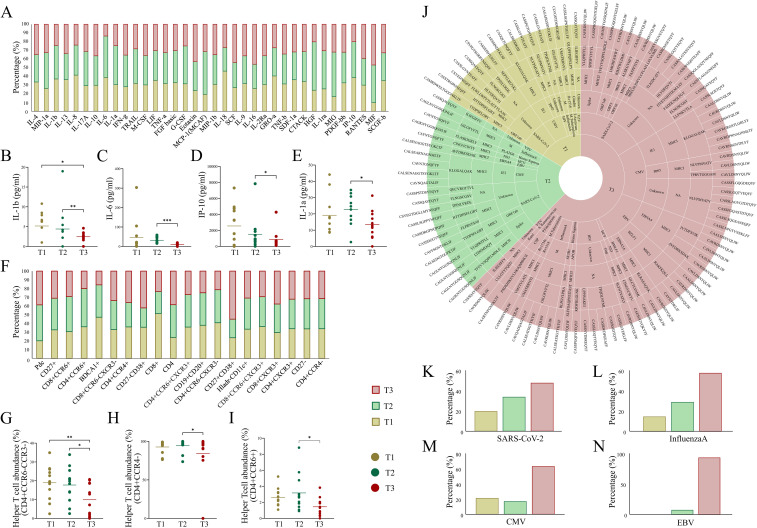
To investigate temporal changes in adaptive immunity, we analyzed peripheral blood samples from the ICU-admitted severe COVID-19 patients (n = 36) collected at three time points: Day 1 (T1), Day 4 (T2), and Day 7 (T3). Bulk RNA-sequencing was performed to extract TCR repertoires, and cytokine profiles were assessed in parallel. TCR clonotypes were annotated using VDJdb and TCRex to infer potential epitope specificities.
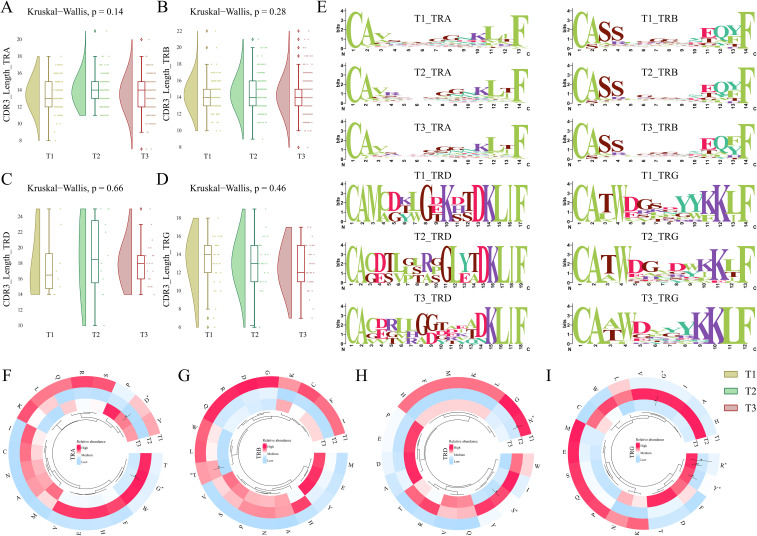
By T3, we observed a 2.3-fold expansion in TCR clonotypes along with increased TCR-β (TRB) chain usage, indicating the emergence of a broad polyclonal T cell response. In contrast, TCR-γ (TRG) chain prevalence declined. Pro-inflammatory cytokines, including IL-1β and IL-6, were reduced over time, marking a shift toward immune resolution. Changes in CDR3 motifs and preferential TRBV gene segment usage were detected, suggesting repertoire adaptation. Additionally, annotated TCR clonotypes at T3 mapped to SARS-CoV-2 and other pathogen-associated epitopes (e.g., CMV, Plasmodium), reflecting possible cross-reactivity or memory T cell recruitment.
These findings suggest a coordinated transition from immune dysfunction to recovery in severe COVID-19, marked by expanding TCR diversity, reduced inflammation, and predicted broadening of antigen recognition. The integrated analysis of TCR repertoire dynamics and cytokine profiles provides insights into the adaptive immune mechanisms underlying viral clearance and immune stabilization.
重症新型冠状病毒肺炎(COVID-19)的特征是免疫失调,T细胞在疾病进展和恢复中起核心作用。然而,重症疾病过程中T细胞受体(TCR)库的纵向动态变化仍不清楚。
为了研究适应性免疫的时间变化,我们分析了入住重症监护病房(ICU)的36例重症COVID-19患者在三个时间点采集的外周血样本:第1天(T1)、第4天(T2)和第7天(T3)。进行批量RNA测序以提取TCR库,并同时评估细胞因子谱。使用VDJdb和TCRex对TCR克隆型进行注释,以推断潜在的表位特异性。
到T3时,我们观察到TCR克隆型扩增了2.3倍,同时TCR-β(TRB)链的使用增加,表明出现了广泛的多克隆T细胞反应。相比之下,TCR-γ(TRG)链的流行率下降。包括IL-1β和IL-6在内的促炎细胞因子随时间减少,标志着向免疫消退的转变。检测到互补决定区3(CDR3)基序和优先TRBV基因片段使用的变化,表明库的适应性。此外,T3时注释的TCR克隆型映射到严重急性呼吸综合征冠状病毒2(SARS-CoV-2)和其他病原体相关表位(如巨细胞病毒、疟原虫),反映了可能的交叉反应或记忆T细胞募集。
这些发现表明,重症COVID-19从免疫功能障碍到恢复的协调转变,其特征是TCR多样性增加、炎症减轻以及预测的抗原识别范围扩大。TCR库动态变化和细胞因子谱的综合分析为病毒清除和免疫稳定的适应性免疫机制提供了见解。