Botero-Rodríguez Felipe, Castro Juan Camilo, Salazar-Londoño Salomón, Moreno-Contreras Juanita, Bornacelly Maria José, Verhelst Patrick, Santacruz-Escudero José Manuel, Santamaría-García Hernando
Hospital Universitario San Ignacio.
Pontificia Universidad Javeriana.
Res Sq. 2025 Jul 14:rs.3.rs-7040277. doi: 10.21203/rs.3.rs-7040277/v1.
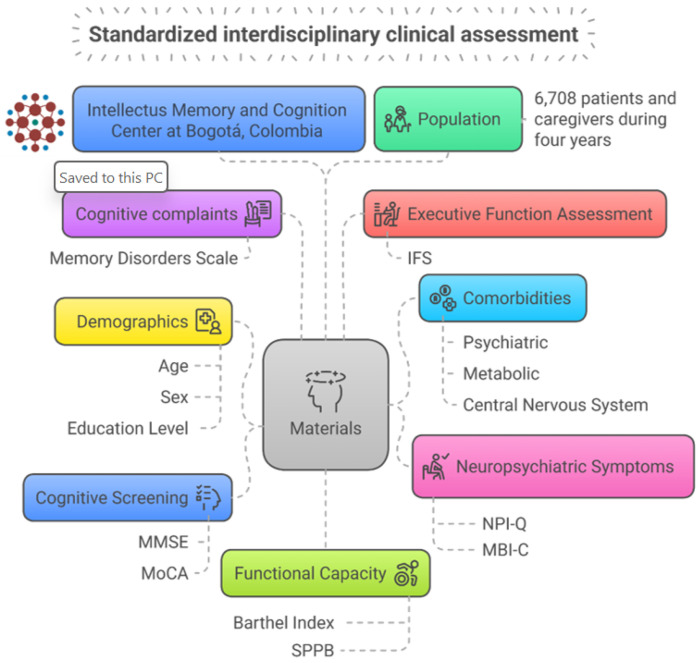
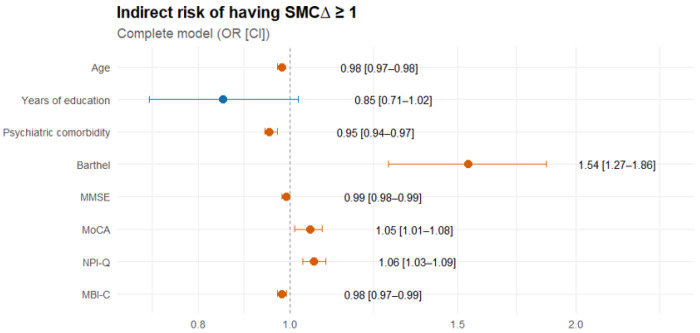
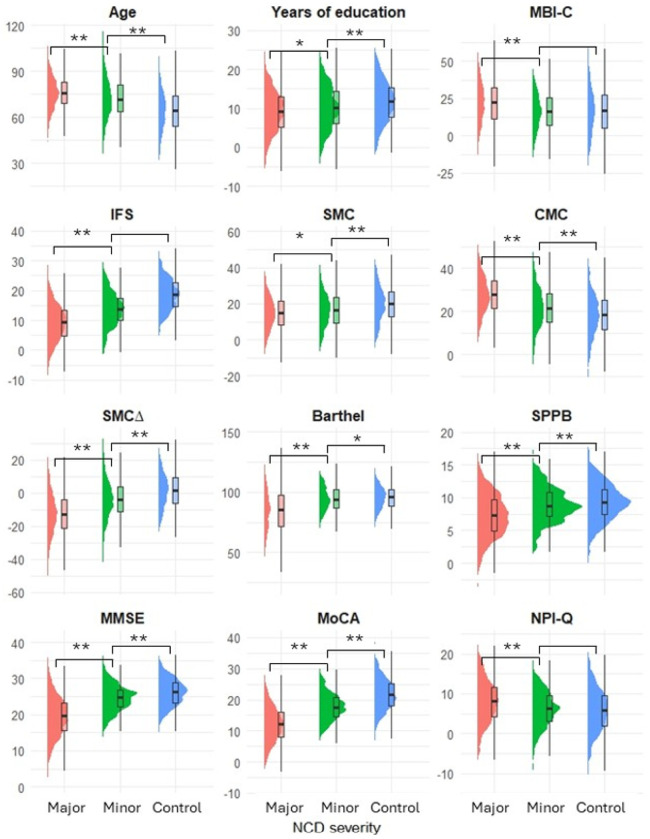
Subjective memory complaints (SMC) are common in older adults and may signal cognitive decline. We examined the clinical correlates of patient-reported SMC and caregiver-reported complaints (CMC) and introduced their discrepancy (SMCΔ) as a potential marker of anosognosia or caregiver overestimation. We carried out a cross-sectional study and systematically assessed cognitive, functional, and behavioral domains of 6,708 individuals from a Latin American memory clinic. CMC scores were significantly higher than SMC and were more strongly associated with cognitive and functional impairments, while SMC was linked to neurological comorbidities and higher education. Psychiatric symptoms were associated with both CMC and SMCΔ. Lower cognitive scores predicted greater CMC, and SMCΔ was best explained by education, MoCA, and NPI-Q. Our findings suggest that SMC, CMC, and their discrepancy capture distinct aspects of disease awareness and caregiver perception, supporting the clinical utility of SMCΔ in early detection and assessment of neurodegenerative conditions.
主观记忆抱怨(SMC)在老年人中很常见,可能预示着认知能力下降。我们研究了患者报告的SMC与照顾者报告的抱怨(CMC)的临床相关性,并引入它们之间的差异(SMCΔ)作为失认症或照顾者高估的潜在指标。我们进行了一项横断面研究,系统评估了来自拉丁美洲记忆诊所的6708名个体的认知、功能和行为领域。CMC得分显著高于SMC,且与认知和功能障碍关联更强,而SMC与神经合并症和高等教育相关。精神症状与CMC和SMCΔ均有关联。较低的认知得分预示着更高的CMC,而教育程度、蒙特利尔认知评估量表(MoCA)和神经精神科问卷(NPI-Q)能最好地解释SMCΔ。我们的研究结果表明,SMC、CMC及其差异反映了疾病认知和照顾者认知的不同方面,支持了SMCΔ在神经退行性疾病早期检测和评估中的临床效用。