Gül Özlem, Akkuş Merve, Akkuş Fatih
Department of Obstetrics and Gynecology, Afyonkarahisar State Hospital, Afyonkarahisar, Turkey.
Department of Psychiatry, Faculty of Medicine, Kütahya Health Science University, Kütahya, 43100, Turkey.
BMC Womens Health. 2025 Jul 28;25(1):377. doi: 10.1186/s12905-025-03930-w.
Polycystic Ovary Syndrome (PCOS) is a common endocrine disorder affecting up to 10% of women of reproductive age, with significant physical and psychological consequences. This study aimed to investigate the prevalence of adult separation anxiety in women with PCOS. The secondary objective was to investigate the relationship between ASA (Adult Separation Anxiety) symptoms and the levels of depression, anxiety, stress, and intolerance of uncertainty.
This cross-sectional study included 114 women with PCOS. Participants were administered the Sociodemographic Data Form, Adult Separation Anxiety Scale (ASA-27), Depression Anxiety Stress Scale (DASS-21) and Intolerance of Uncertainty Scale (IUS-12). Data were analyzed using SPSS 22.0 with Mann-Whitney U, chi-square tests, and Spearman correlations (significance set at p < 0.05).
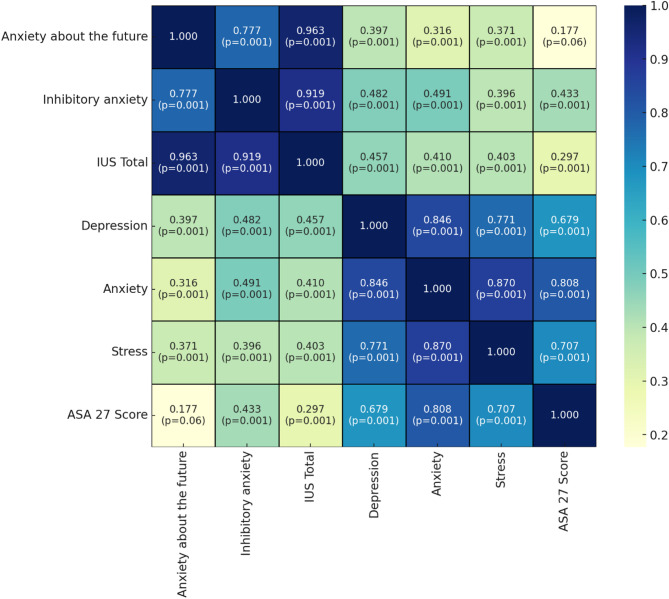
The findings revealed that 28.9% of women with PCOS exhibited separation anxiety symptoms above the cut-off score of 25. These symptoms were significantly correlated with elevated levels of stress, anxiety, depression, and intolerance of uncertainty. Moreover, individuals with separation anxiety above the cut-off score demonstrated notably higher levels of anxiety, depression, stress, and intolerance of uncertainty compared to those below the cut-off score. They also exhibited greater rates of clinical symptoms such as weight gain, acne, and infertility, as well as higher levels of testosterone, DHEAS, and LH/FSH ratio.
Adult separation anxiety may be relatively common among women with PCOS and may be linked to both psychological distress and hormonal/metabolic characteristics.These findings suggest that considering ASA during psychological assessments of PCOS could be valuable and warrant further investigation through longitudinal research.
多囊卵巢综合征(PCOS)是一种常见的内分泌紊乱疾病,影响着高达10%的育龄女性,会带来严重的生理和心理后果。本研究旨在调查PCOS女性中成人分离焦虑症的患病率。次要目的是研究成人分离焦虑症(ASA)症状与抑郁、焦虑、压力以及对不确定性的不耐受程度之间的关系。
这项横断面研究纳入了114名PCOS女性。参与者接受了社会人口学数据表、成人分离焦虑量表(ASA - 27)、抑郁焦虑压力量表(DASS - 21)和对不确定性的不耐受量表(IUS - 12)的测试。使用SPSS 22.0进行数据分析,采用曼 - 惠特尼U检验、卡方检验和斯皮尔曼相关性分析(显著性设定为p < 0.05)。
研究结果显示,28.9%的PCOS女性表现出高于临界值25分的分离焦虑症状。这些症状与压力、焦虑、抑郁水平升高以及对不确定性的不耐受程度显著相关。此外,分离焦虑高于临界值的个体与低于临界值的个体相比,焦虑、抑郁、压力和对不确定性的不耐受程度明显更高。他们还表现出更高的临床症状发生率,如体重增加、痤疮和不孕,以及更高的睾酮、脱氢表雄酮和LH/FSH比值水平。
成人分离焦虑症在PCOS女性中可能相对常见,并且可能与心理困扰以及激素/代谢特征有关。这些发现表明,在对PCOS进行心理评估时考虑成人分离焦虑症可能是有价值的,值得通过纵向研究进一步调查。