Rajeev Ria, Kannan Porteen, Sundaram Sureshkannan, Mohan Sandhya Bhavani, Radjendirane Sivachandiran, Harnathbhai Chaudhary Jeetendrakumar, Subbaiyan Anbazhagan, Naveenkumar Viswanathan, Mohanadasse Nithya Quintoil, Savariraj Wilfred Ruban, Cull Charley A, Amachawadi Raghavendra G
Department of Veterinary Public Health and Epidemiology, Madras Veterinary College, Tamil Nadu Veterinary and Animal Sciences University (TANUVAS), Chennai 600051, India.
Department of Clinics, Madras Veterinary College, Tamil Nadu Veterinary and Animal Sciences University (TANUVAS), Chennai 600051, India.
Antibiotics (Basel). 2025 Jun 23;14(7):639. doi: 10.3390/antibiotics14070639.
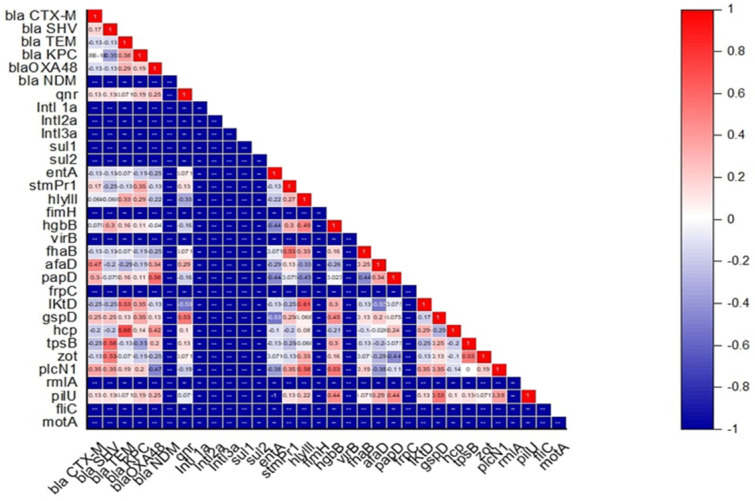
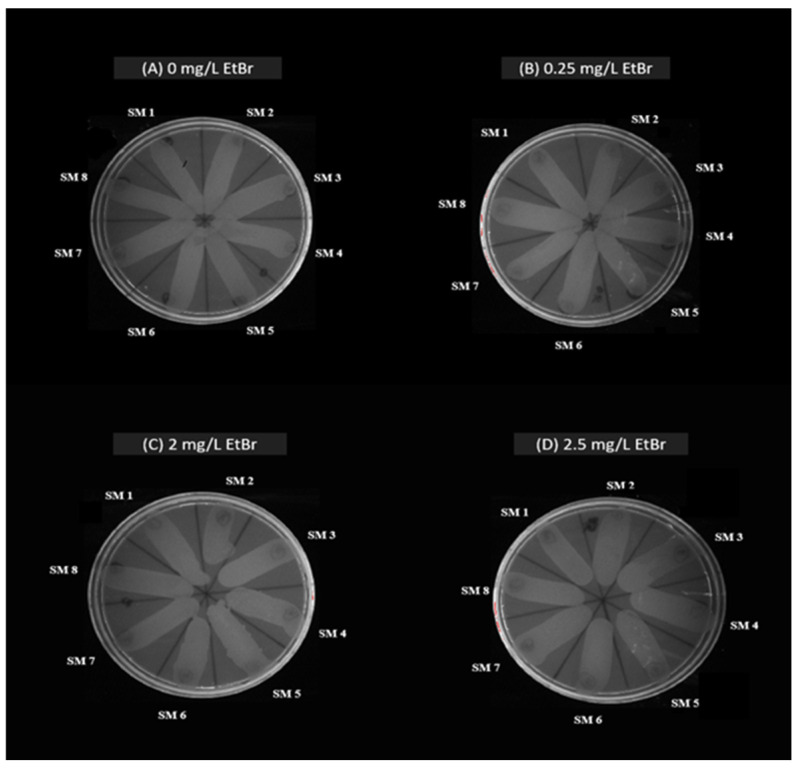
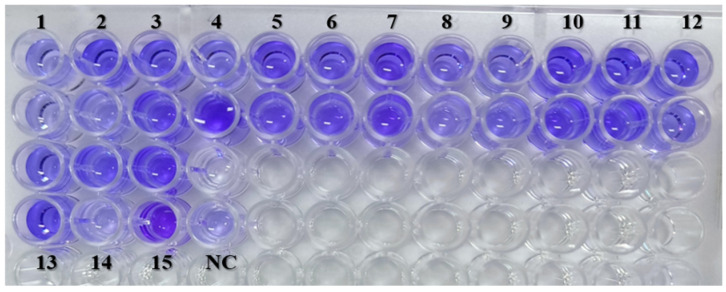
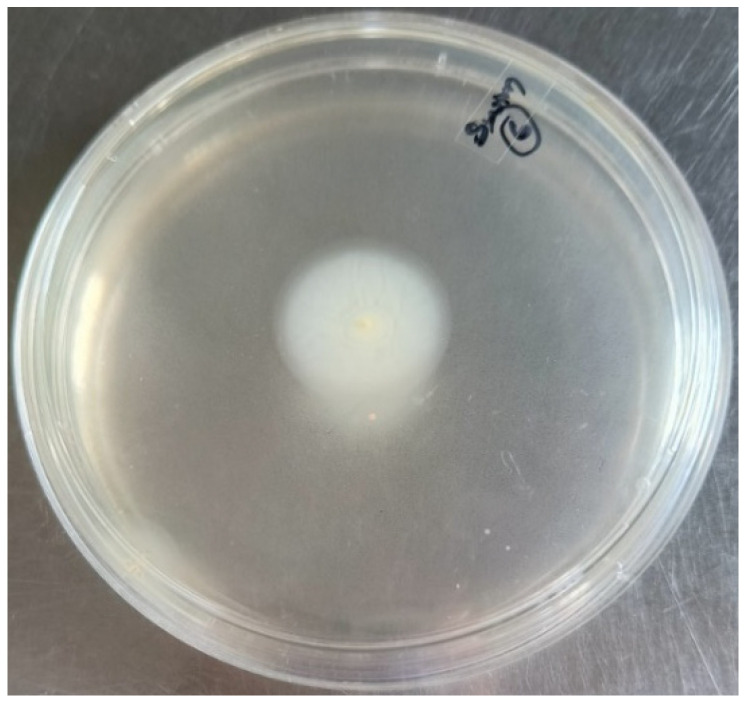
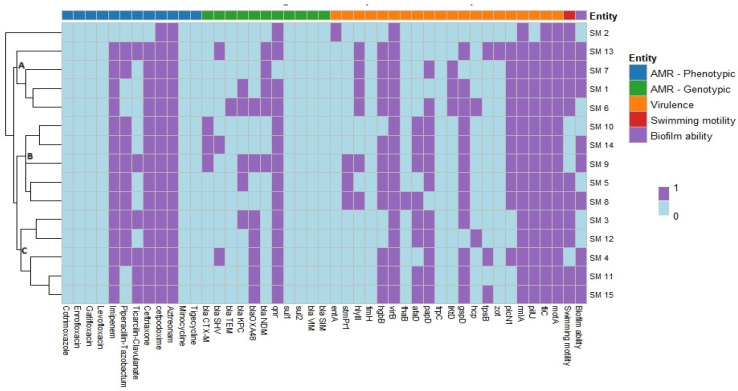
: The present study was aimed at documenting occurrence in dogs with skin ailments, investigating its virulence, biofilm-forming ability, antimicrobial susceptibility, and zoonotic potential to inform preventive and therapeutic strategies against multidrug resistant infections. : Skin swabs ( = 300) were collected from dogs with dermatological ailments. Isolation was performed using selective media and confirmed with molecular methods, validated by MALDI Biotyper. Antimicrobial susceptibility testing and efflux activity assessment were conducted. Resistance genes related to sulfonamides, quinolones, and β-lactams were screened. Virulence was assessed by biofilm formation, motility, and virulence gene profiling. : In total, 15 (5%) isolates were identified. All 15 isolates were susceptible to trimethoprim-sulfamethoxazole, enrofloxacin, gatifloxacin, levofloxacin, minocycline, and tigecycline, but resistant to cefpodoxime and aztreonam. The following resistance genes (93.3%), (46.7%), (33.3%), (33.3%), (20%), (20%), and (6.7%) were detected. All 15 isolates displayed high efflux activity. Overall, 9 isolates (60%) were strong biofilm producers, and 6 (40%) were moderate. Virulence genes such as , , , and were present in all 15 isolates, with others varying in frequency. All isolates exhibited swimming motility. Heat map clustering showed diverse profiles, with no identical isolate patterns. Correlation analysis indicated positive associations between several antimicrobial resistance and virulence genes. : This study underscores the zoonotic potential of from dogs, advocating for a One Health approach to mitigate infection risks and limit the spread of virulent multidrug resistant pathogens.
本研究旨在记录犬皮肤疾病中的[病原体名称]感染情况,研究其毒力、生物膜形成能力、抗菌药物敏感性及人畜共患病潜力,以为针对多重耐药感染的预防和治疗策略提供依据。从患有皮肤病的犬只采集皮肤拭子(n = 300)。使用选择性培养基进行分离,并通过分子方法确认,经基质辅助激光解吸电离飞行时间质谱(MALDI Biotyper)验证。进行了抗菌药物敏感性测试和外排活性评估。筛选了与磺胺类、喹诺酮类和β-内酰胺类相关的耐药基因。通过生物膜形成、运动性和毒力基因谱分析评估毒力。共鉴定出15株(5%)分离株。所有15株分离株对甲氧苄啶-磺胺甲恶唑、恩诺沙星、加替沙星、左氧氟沙星、米诺环素和替加环素敏感,但对头孢泊肟和氨曲南耐药。检测到以下耐药基因:[基因名称1](93.3%)、[基因名称2](46.7%)、[基因名称3](33.3%)、[基因名称4](33.3%)、[基因名称5](20%)、[基因名称6](20%)和[基因名称7](6.7%)。所有15株分离株均表现出高外排活性。总体而言,9株(60%)为强生物膜产生菌,6株(40%)为中度生物膜产生菌。所有15株分离株均存在[毒力基因名称1]、[毒力基因名称2]、[毒力基因名称3]和[毒力基因名称4]等毒力基因,其他毒力基因频率各异。所有分离株均表现出泳动能力。热图聚类显示出不同的图谱,没有相同的分离株模式。相关性分析表明几种抗菌药物耐药性和毒力基因之间存在正相关。本研究强调了犬源[病原体名称]的人畜共患病潜力,倡导采用“同一健康”方法来降低感染风险并限制强毒多重耐药病原体的传播。