Lou Jerry, Yong William, Aldape Kenneth, Chu Eleanor, Hui Caressa, Hsu Frank P K, Zheng Michelle, Ribeiro Anatevka, Fote Gianna, Na Daniel, Yuen Carlen A
Department of Pathology, University of California Irvine, Irvine, CA 92697, USA.
Chao Family Comprehensive Cancer Center, University of California Irvine, Irvine, CA 92697, USA.
Int J Mol Sci. 2025 Jul 14;26(14):6729. doi: 10.3390/ijms26146729.
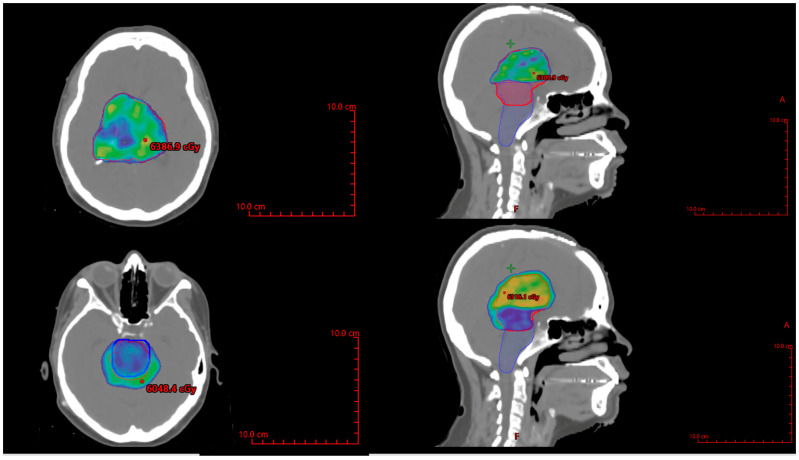
Central nervous system (CNS) tumor with BCL6 corepressor gene BCOR/BCORL1 fusion is an extremely rare tumor entity, with fewer than 40 cases reported. These tumors are distinct from the WHO 2021-defined CNS tumor with BCOR internal tandem duplication. Even rarer are CNS tumors that match to the methylation class of CNS tumors with BCOR/BCORL1 fusion, but lack fusions and instead harbor truncating small nucleotide variants in BCOR. To our knowledge, only two other cases of this scenario have been previously reported. Due to their scarcity and morphological features that mimic oligodendrogliomas and ependymomas, the diagnosis of CNS tumor with BCOR/BCORL1 fusion can be challenging, and misdiagnoses are not uncommon. Histologic findings of Olig2 positivity with focal to absent GFAP warrant further evaluation for this tumor entity. Moreover, no standard of care therapy exists for these tumors, making treatment selection difficult. We present a case of a 37-year-old woman with a midline CNS tumor with BCOR/BCORL1 fusion, harboring a pathogenic BCOR c.626del (p.S209Cfs*7) (Exon 4) variant, who was successfully treated with definitive radiation therapy and adjuvant temozolomide. Notably, EMA showed focal strong dot-like perinuclear immunoreactivity, which has not been previously reported in these tumors. This case adds to the limited but growing body of evidence supporting the use of radiation and temozolomide in treating tumors matching the methylation class of CNS tumors with BCOR/BCORL1 fusion without a detectable fusion.
具有BCL6共抑制因子基因BCOR/BCORL1融合的中枢神经系统(CNS)肿瘤是一种极其罕见的肿瘤实体,报告的病例少于40例。这些肿瘤与世界卫生组织2021年定义的具有BCOR内部串联重复的CNS肿瘤不同。更罕见的是与具有BCOR/BCORL1融合的CNS肿瘤甲基化类别相匹配,但缺乏融合且在BCOR中存在截断性小核苷酸变异的CNS肿瘤。据我们所知,此前仅另外报道过两例这种情况。由于其稀缺性以及形态学特征类似少突胶质细胞瘤和室管膜瘤,具有BCOR/BCORL1融合的CNS肿瘤的诊断可能具有挑战性,误诊并不罕见。Olig2阳性且GFAP局灶性阳性至阴性的组织学表现值得对该肿瘤实体进行进一步评估。此外,这些肿瘤不存在标准的治疗方案,使得治疗选择困难。我们报告一例37岁女性,患有具有BCOR/BCORL1融合的中线CNS肿瘤,携带致病性BCOR c.626del(p.S209Cfs*7)(外显子4)变异,经确定性放疗和辅助替莫唑胺治疗成功。值得注意的是,EMA显示局灶性强点状核周免疫反应性,这在这些肿瘤中此前未被报道。该病例增加了有限但不断增长的证据,支持在治疗与具有BCOR/BCORL1融合且无可检测融合的CNS肿瘤甲基化类别相匹配的肿瘤时使用放疗和替莫唑胺。