Hsu Christine, Yassin Mohamed
College of Medicine, National Cheng Kung University, Tainan 701401, Taiwan.
Monmouth Medical Center, Robert Wood Johnson/Barnabas Health Care System, Long Branch, NJ 07740, USA.
Microorganisms. 2025 Jun 24;13(7):1461. doi: 10.3390/microorganisms13071461.
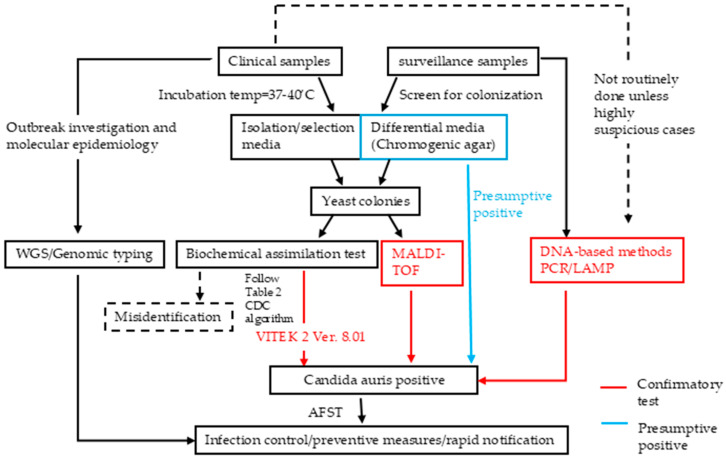
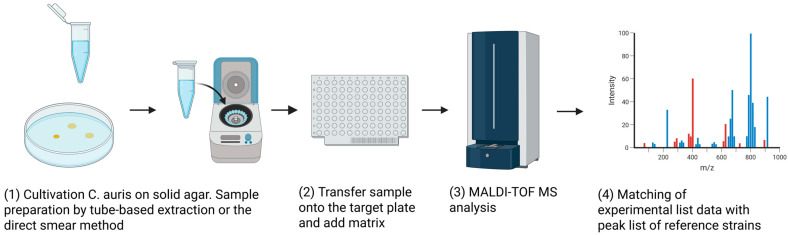
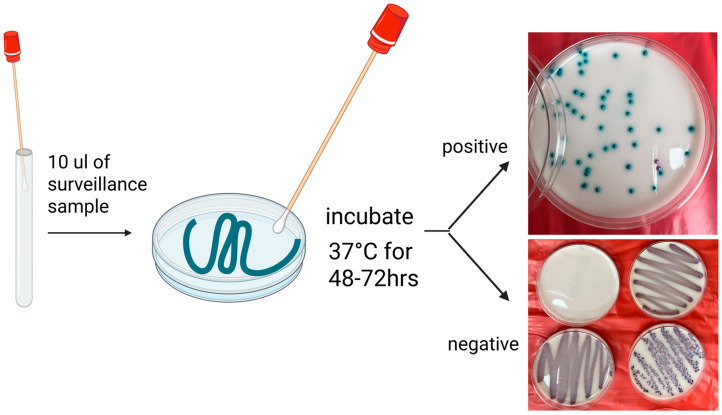
() is an emerging multidrug-resistant fungal pathogen recognized by the World Health Organization (WHO) as a critical global health threat. Its rapid transmission, high mortality rate, and frequent misidentification in clinical laboratories present significant challenges for diagnosis and infection control. This review provides a comprehensive overview of current and emerging diagnostic methods for detection, including culture-based techniques, biochemical assays, matrix-assisted laser desorption/ionization time-of-flight mass spectrometry (MALDI-TOF MS), and molecular diagnostics such as PCR and loop-mediated isothermal amplification (LAMP). We evaluate each method's sensitivity, specificity, turnaround time, and feasibility in clinical and surveillance settings. While culture remains the diagnostic gold standard, it is limited by slow turnaround and phenotypic overlap with related species. Updated biochemical platforms and MALDI-TOF MS with expanded databases have improved identification accuracy. Molecular assays offer rapid, culture-independent detection. Antifungal susceptibility testing (AFST), primarily using broth microdilution, is essential for guiding treatment, although standardized breakpoints remain lacking. This review proposes an integrated diagnostic workflow and discusses key innovations and gaps in current practice. Our findings aim to support clinicians, microbiologists, and public health professionals in improving early detection, containment, and management of infections.
()是一种新兴的多重耐药真菌病原体,被世界卫生组织(WHO)认定为对全球健康的重大威胁。它传播迅速、死亡率高,且在临床实验室中经常被误识别,给诊断和感染控制带来了重大挑战。本综述全面概述了当前及新兴的检测诊断方法,包括基于培养的技术、生化检测、基质辅助激光解吸/电离飞行时间质谱(MALDI-TOF MS)以及分子诊断方法,如聚合酶链反应(PCR)和环介导等温扩增(LAMP)。我们评估了每种方法在临床和监测环境中的敏感性、特异性、周转时间和可行性。虽然培养仍然是诊断的金标准,但它受到周转时间长以及与相关菌种表型重叠的限制。更新后的生化平台和拥有扩展数据库的MALDI-TOF MS提高了鉴定准确性。分子检测提供了快速、无需培养的检测方法。抗真菌药敏试验(AFST)主要采用肉汤微量稀释法,对于指导治疗至关重要,尽管仍缺乏标准化的断点。本综述提出了一种综合诊断工作流程,并讨论了当前实践中的关键创新点和差距。我们的研究结果旨在支持临床医生、微生物学家和公共卫生专业人员改善对()感染的早期检测、控制和管理。