Ruiz Medina Maritza D, Ruales Jenny
Departamento de Ciencias de Alimentos y Biotecnología (DECAB), Escuela Politécnica Nacional (EPN), Quito 170143, Ecuador.
Carrera de Alimentos, Universidad Politécnica Estatal del Carchi (UPEC), Tulcán 040102, Ecuador.
Microorganisms. 2025 Jul 15;13(7):1663. doi: 10.3390/microorganisms13071663.
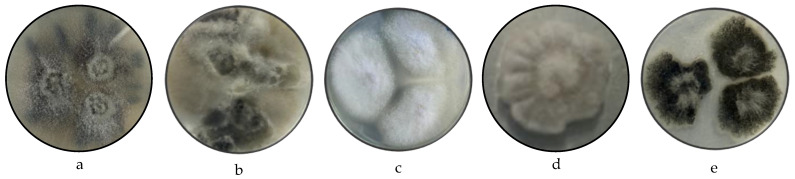
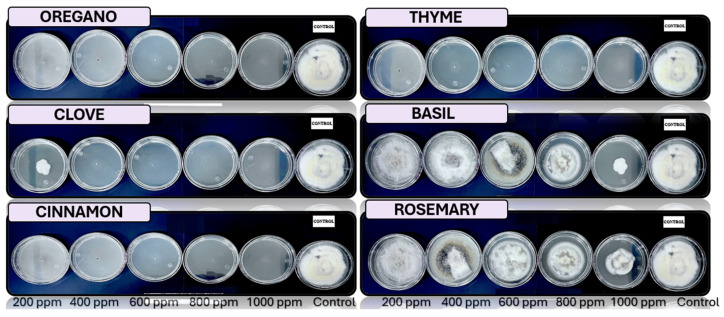
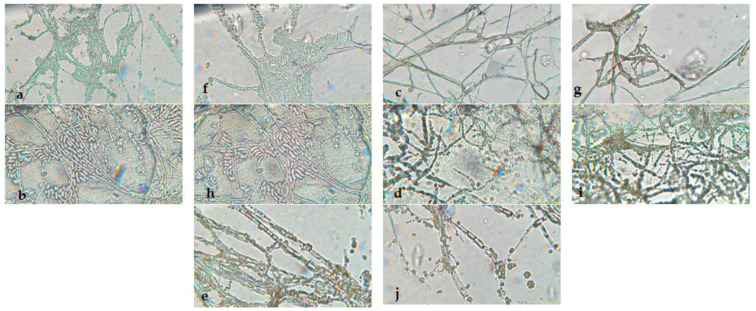
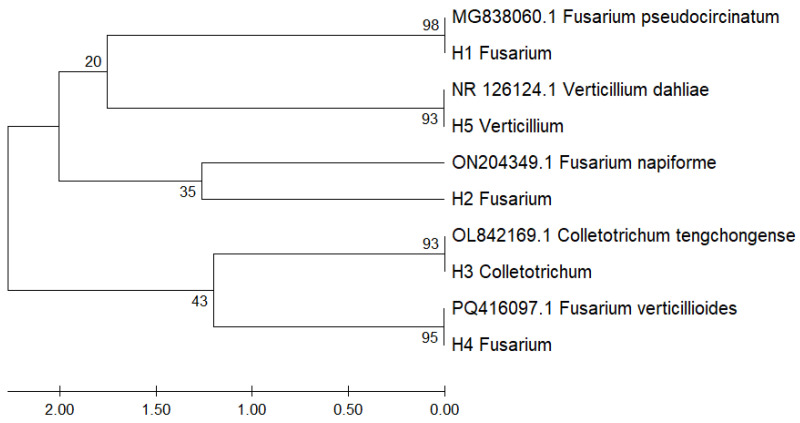
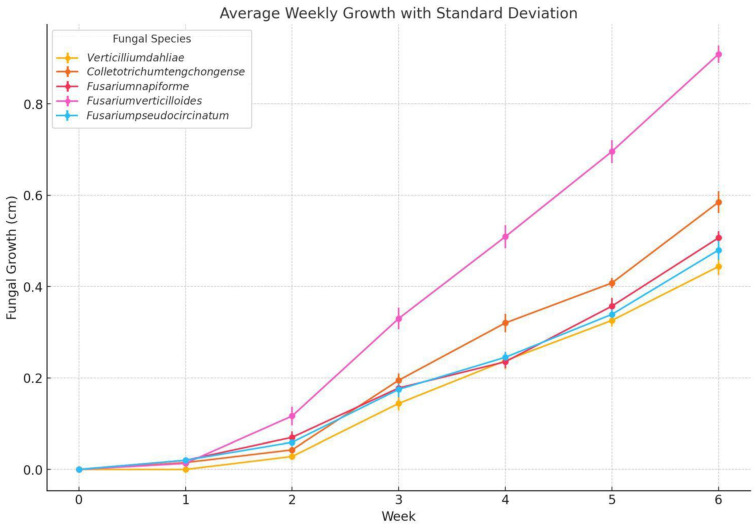
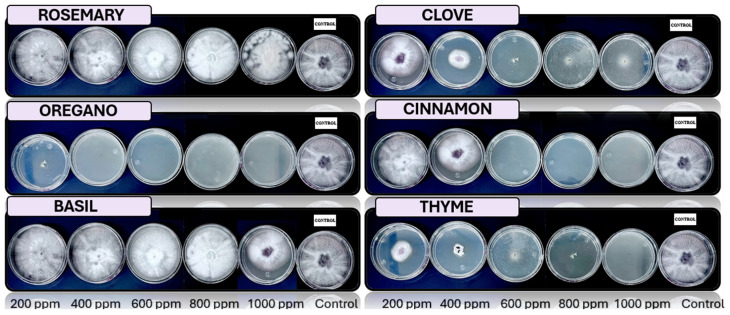
Essential oils (EOs) are widely recognized for their antifungal properties, but their efficacy against specific phytopathogenic fungi associated with banana () rot remains underexplored. This study aimed to evaluate the antifungal potential of EOs from , , , , , and against five fungal species isolated from infected banana peels. Fungal isolates were obtained using PDA medium supplemented with chloramphenicol and were purified by weekly subculturing. Morphological and microscopic characterization was complemented by molecular identification based on ITS sequencing and phylogenetic reconstruction using Neighbor-Joining and UPGMA methods in MEGA v11. In vitro and ex vivo antifungal assays were performed at EO concentrations ranging from 200 to 1000 ppm. Thyme oil exhibited the strongest inhibitory effect, with complete growth suppression at 1000 ppm. Cinnamon and oregano also demonstrated effective inhibition at 600 ppm, while clove, rosemary, and basil were markedly less effective. Statistical analysis confirmed significant effects of EO type and concentration on fungal growth ( < 0.001). Molecular results showed strong phylogenetic support for isolate identification, with bootstrap values above 93% in most clades. These findings support the selective use of specific EOs as sustainable alternatives to synthetic fungicides in the postharvest management of banana diseases and provide a molecularly supported basis for their targeted application in integrated control strategies.
香精油(EOs)因其抗真菌特性而被广泛认可,但其对与香蕉()腐烂相关的特定植物病原真菌的功效仍未得到充分研究。本研究旨在评估来自、、、、和的香精油对从感染香蕉皮中分离出的五种真菌的抗真菌潜力。使用添加氯霉素的PDA培养基获得真菌分离物,并通过每周传代培养进行纯化。基于ITS测序的分子鉴定以及在MEGA v11中使用邻接法和UPGMA方法进行系统发育重建,对形态学和显微镜特征进行了补充。在200至1000 ppm的香精油浓度下进行了体外和离体抗真菌试验。百里香油表现出最强的抑制作用,在1000 ppm时完全抑制生长。肉桂和牛至在600 ppm时也表现出有效抑制,而丁香、迷迭香和罗勒的效果明显较差。统计分析证实香精油类型和浓度对真菌生长有显著影响(<0.001)。分子结果显示对分离物鉴定有很强的系统发育支持,大多数分支的自展值高于93%。这些发现支持在香蕉病害采后管理中选择性使用特定香精油作为合成杀菌剂的可持续替代品,并为其在综合防治策略中的靶向应用提供了分子支持依据。