Bissacotti Bianca Fagan, da Silveira Marcylene Vieira, Assmann Charles Elias, Copetti Priscila Marquezan, Santos André Flores Dos, Fagan Solange Binotto, da Rocha João Augusto Pereira, Schetinger Maria Rosa Chitolina, Morsch Vera Maria Melchiors, Bottari Nathieli Bianchin, Machado Alencar Kolinski, da Silva Aleksandro Schafer
Graduate Program in Biological Sciences: Toxicological Biochemistry, Department of Biochemistry and Molecular Biology, Federal University of Santa Maria (UFSM), Santa Maria 97105-900, RS, Brazil.
Graduate Program in Nanosciences, Franciscan University (UFN), Santa Maria 97010-032, RS, Brazil.
Pharmaceuticals (Basel). 2025 Jun 24;18(7):950. doi: 10.3390/ph18070950.
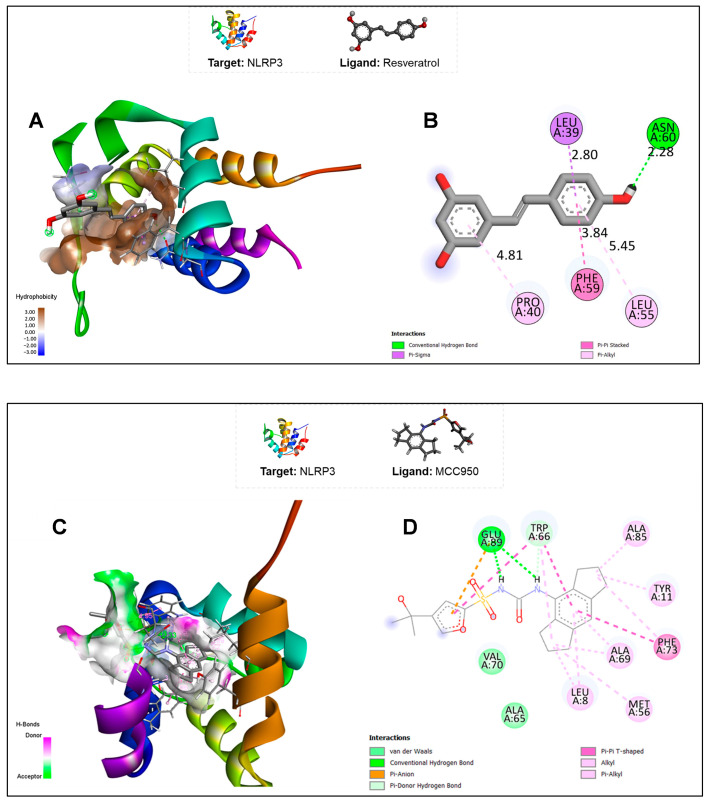
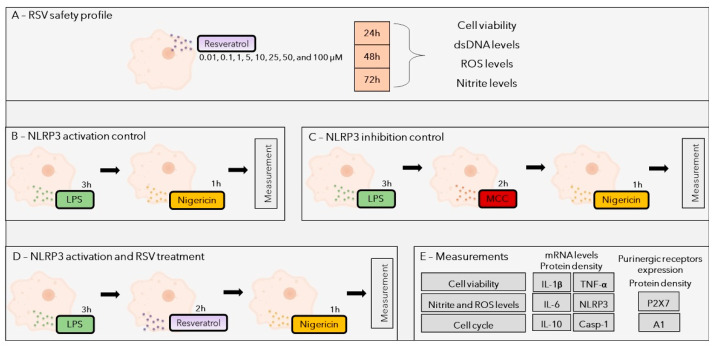
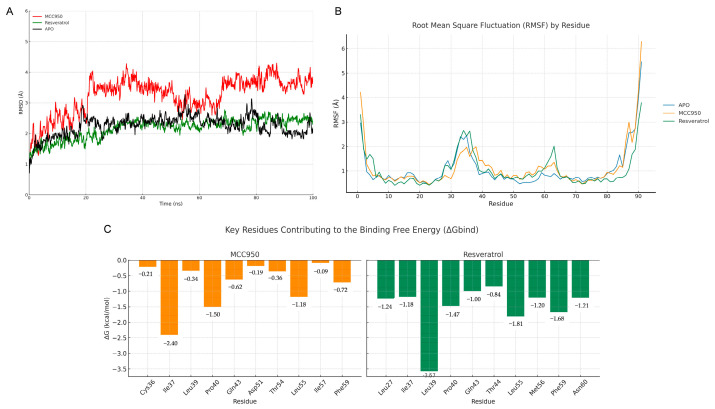
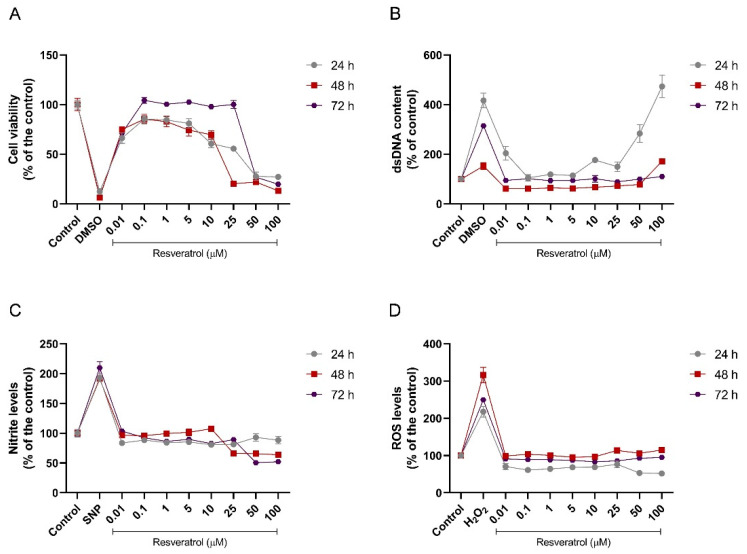
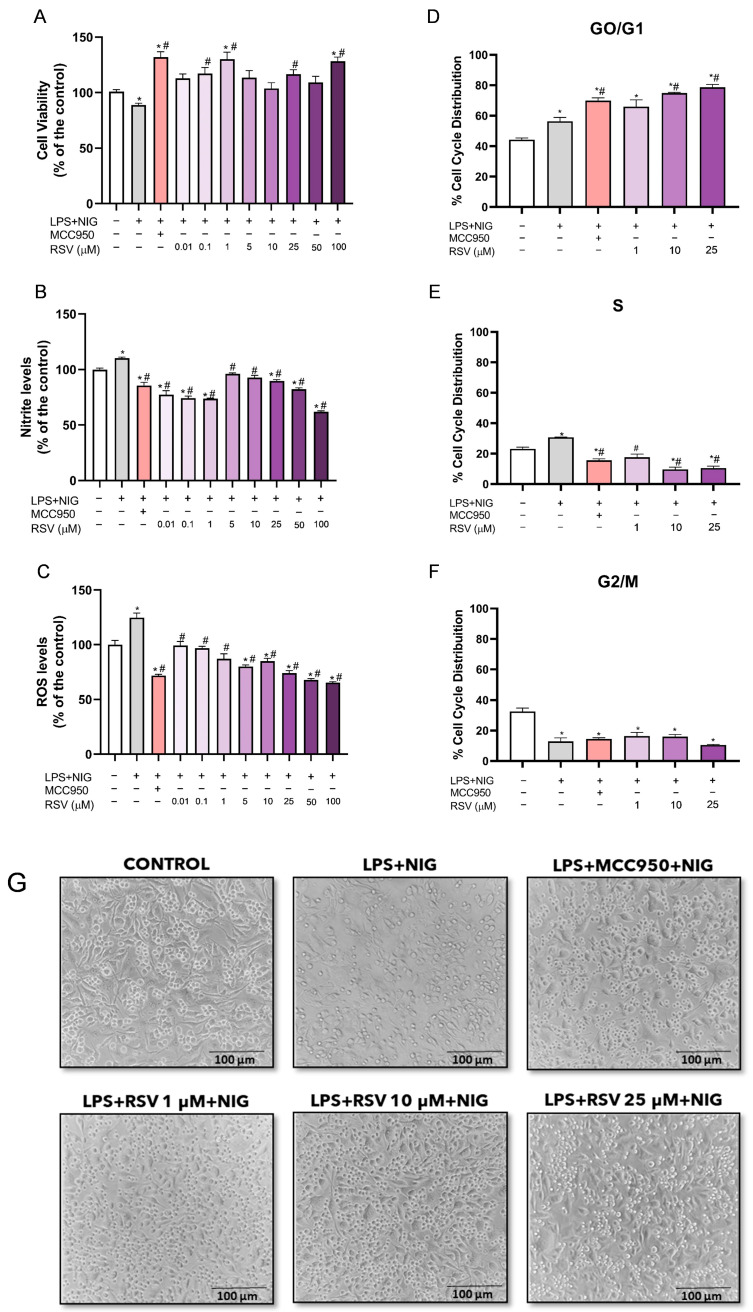
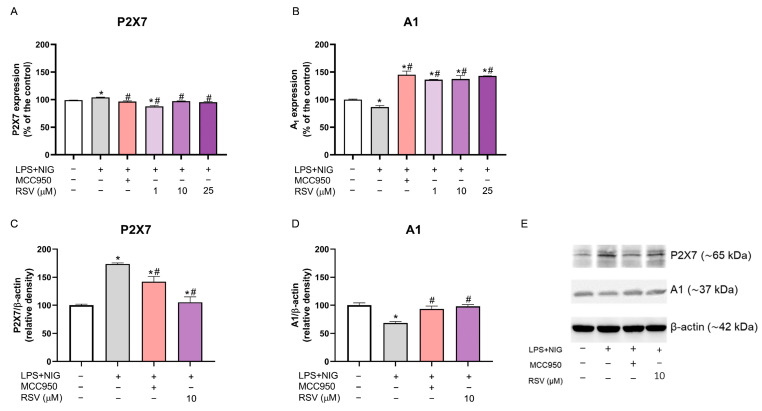
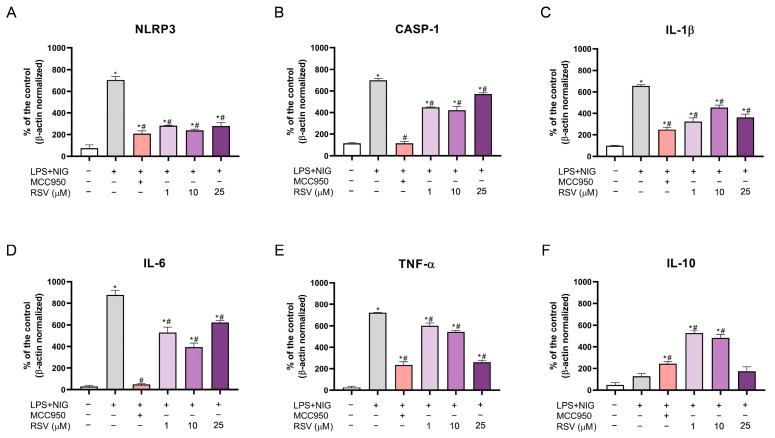
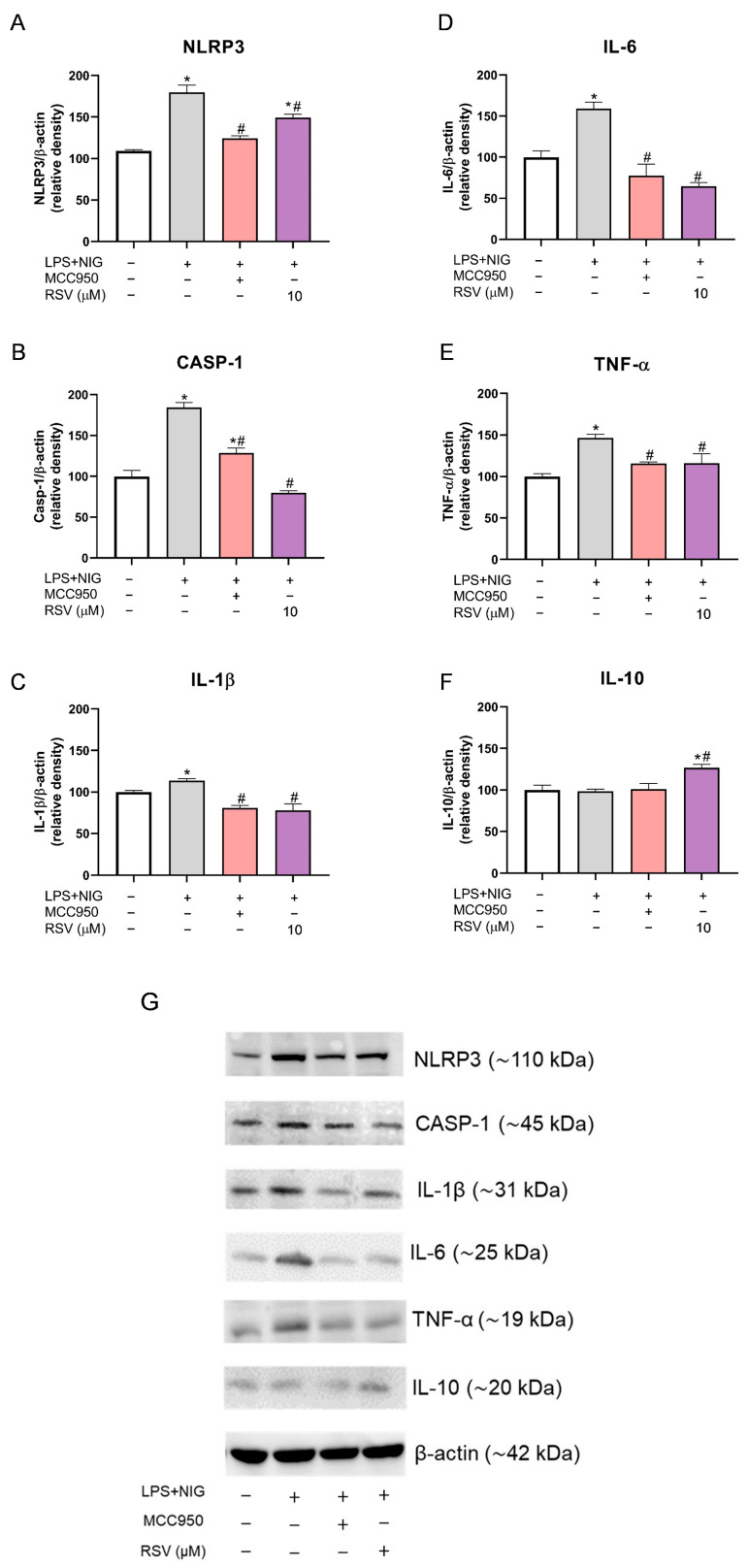
: Chronic inflammation and inappropriate NLRP3 inflammasome regulation are related to many brain diseases. Purinergic mediators may play an important role in inflammation regulation and could be targeted for effective therapies for these illnesses. We evaluated resveratrol's anti-neuroinflammatory potential in BV-2 microglia cells using an innovative in vitro method of NLRP3 inflammasome activation, correlating with the P2X7 purinergic receptor. : In silico analyses were used to estimate resveratrol's interaction with NLRP3, and its cytotoxicity was measured for 24, 48, and 72 h. Moreover, microglia were exposed to lipopolysaccharide and nigericin to activate the NLRP3 inflammasome and treated with resveratrol between these inflammatory agents. : It was found that resveratrol has binding compatible with modulating NLRP3. Specifically, 0.1-25 µM of resveratrol presented a favorable safety profile in BV-2 cells. Microglia exposed to the inflammatory agents had increased levels of oxidative species, the P2X7 receptor, and pro-inflammatory cytokines. However, resveratrol decreased the NLRP3, caspase-1, IL-1β, IL-6, and TNF-α mRNA levels and protein density; on the other hand, IL-10 was increased, acting as a protector, preventing exacerbated inflammation. Under resveratrol exposure, P2X7 was negatively expressed, regulating inflammation to establish homeostasis and microglial proliferation. Additionally, resveratrol activates the A1 adenosine receptor, possibly correlated with neuroprotective effects. : We confirmed the anti-neuroinflammatory action of resveratrol via the P2X7 receptor and NLRP3's combined modulation, regulating the cell cycle and reducing pro-inflammatory and oxidant agents. Considering this pathway, resveratrol could be a candidate for further investigations as a potential treatment against neuroinflammatory diseases.
慢性炎症和不适当的NLRP3炎性小体调节与许多脑部疾病有关。嘌呤能介质可能在炎症调节中起重要作用,并且可能成为这些疾病有效治疗的靶点。我们使用一种创新的体外NLRP3炎性小体激活方法,该方法与P2X7嘌呤能受体相关,评估了白藜芦醇在BV-2小胶质细胞中的抗神经炎症潜力。:通过计算机分析来估计白藜芦醇与NLRP3的相互作用,并测量其在24、48和72小时的细胞毒性。此外,将小胶质细胞暴露于脂多糖和尼日利亚菌素以激活NLRP3炎性小体,并在这些炎症介质之间用白藜芦醇进行处理。:发现白藜芦醇具有与调节NLRP3相容的结合。具体而言,0.1-25μM的白藜芦醇在BV-2细胞中呈现出良好的安全性。暴露于炎症介质的小胶质细胞中氧化物质、P2X7受体和促炎细胞因子的水平升高。然而,白藜芦醇降低了NLRP3、半胱天冬酶-1、白细胞介素-1β、白细胞介素-6和肿瘤坏死因子-α的mRNA水平和蛋白密度;另一方面,白细胞介素-10增加,起到保护作用,防止炎症加剧。在白藜芦醇暴露下,P2X7呈负表达,调节炎症以建立内环境稳态和小胶质细胞增殖。此外,白藜芦醇激活A1腺苷受体,可能与神经保护作用相关。:我们通过P2X7受体和NLRP3的联合调节证实了白藜芦醇的抗神经炎症作用,调节细胞周期并减少促炎和氧化剂。考虑到这一途径,白藜芦醇可能作为治疗神经炎症性疾病的潜在药物进行进一步研究。