Zhang Yuxin, Wang Tong-Yun, Yan Huihui, Guo Zhoule, Lian Zhonghao, Yao Hailan, Yuan Shuofeng, Ge Xing-Yi, Qiu Ye
Hunan Provincial Key Laboratory of Medical Virology and Hunan Research Center of the Basic Discipline for Cell Signaling, College of Biology, Hunan University, 27 Tianma Rd, Changsha, 410082, Hunan, China.
Division of Genetics, Department of Pediatrics, Program in Immunology, Bioinformatics and Systems Biology Program, Institute for Genomic Medicine, University of California San Diego, 9500 Gilman Drive MC 0762, La Jolla, CA, 92093, USA.
Cell Mol Life Sci. 2025 Jul 30;82(1):293. doi: 10.1007/s00018-025-05822-6.
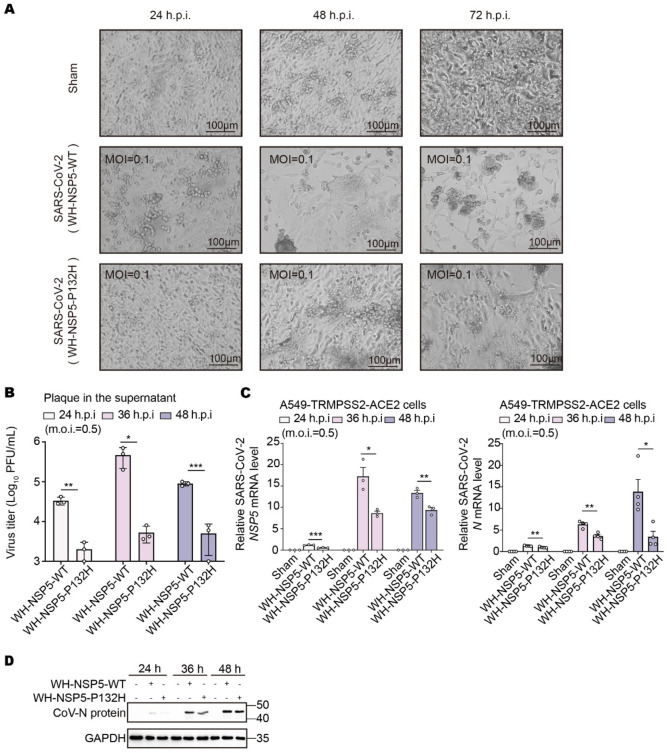
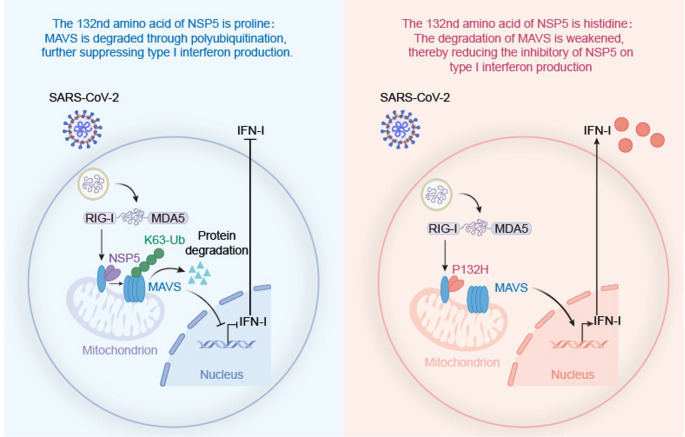
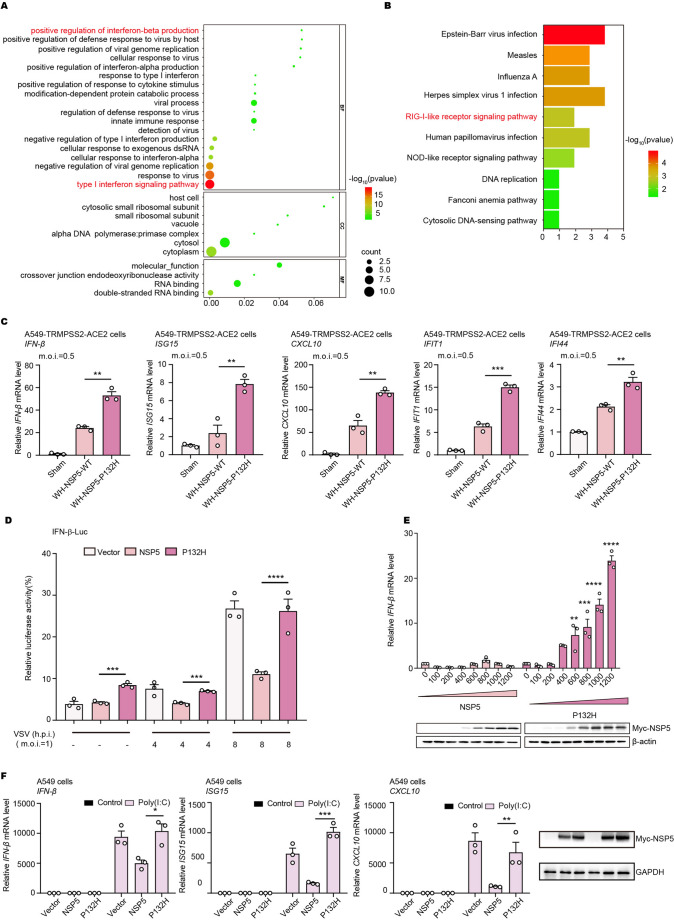
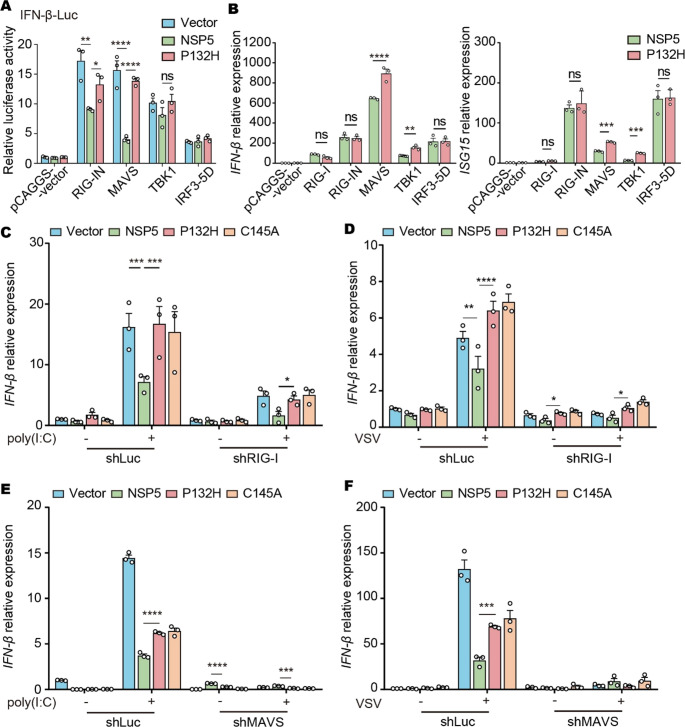
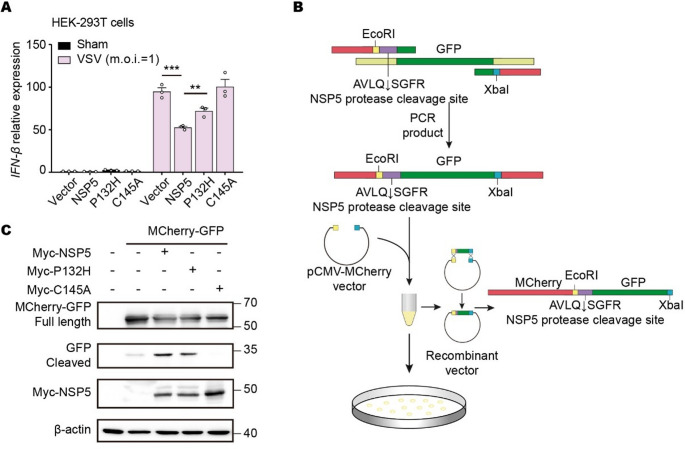
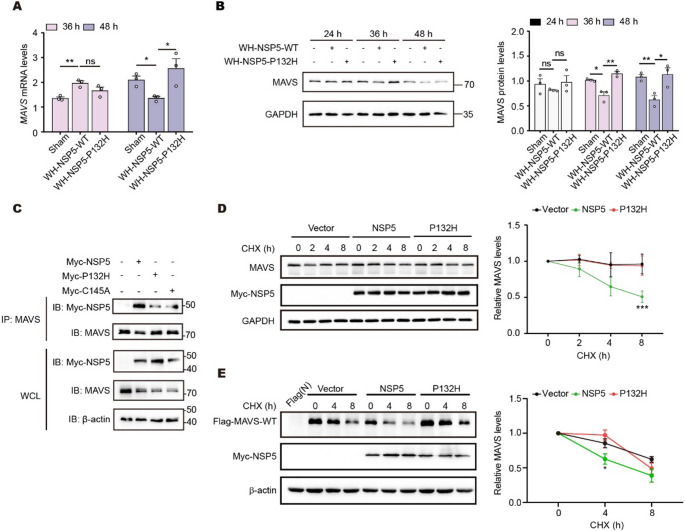
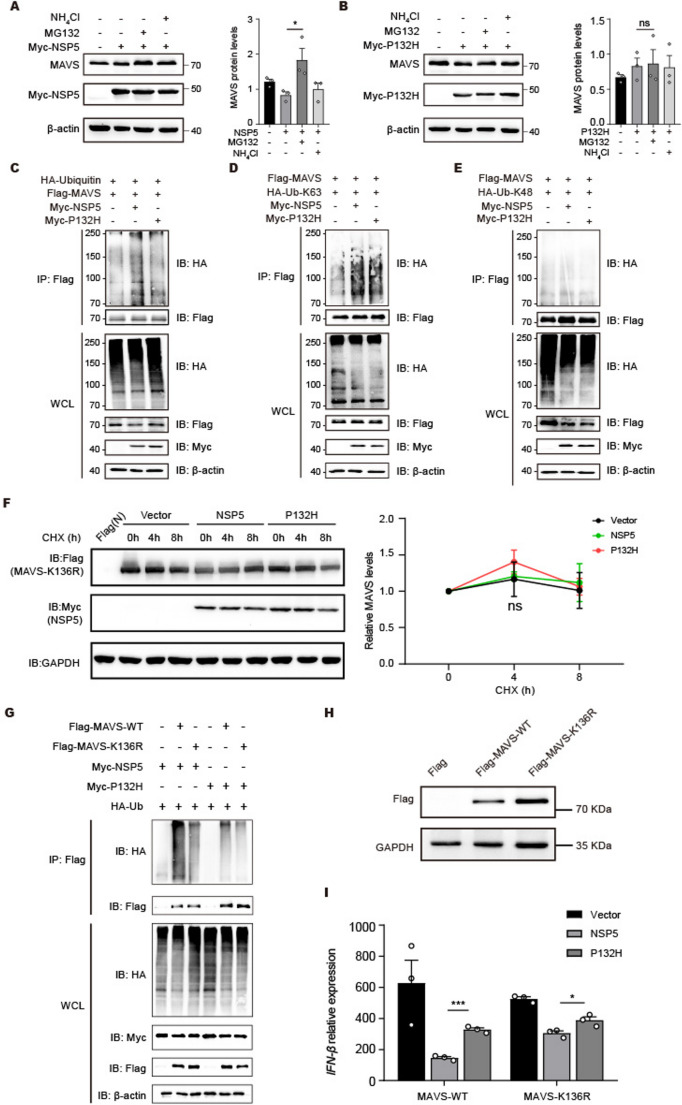
The prevalence of the Omicron variant of severe acute respiratory syndrome coronavirus 2 (SARS-CoV-2) is an important transition in the epidemic of coronavirus disease 2019 (COVID-19). Compared with other SARS-CoV-2 variants, Omicron and its subvariants exhibit decreased pathogenicity, thus contributing to the moderation of the epidemic. However, the mechanism underlying such changes is not fully understood. NSP5 is a SARS-CoV-2-encoded protease that counteracts antiviral immunity, and the P132H mutation of NSP5 is present exclusively in Omicron and its subvariants. In this study, we found that this mutation solely relieved cytopathogenicity and reduced the viral replication during SARS-CoV-2 infection. Further studies suggested that P132H blocked the NSP5-mediated degradation of MAVS by impairing the K136-linked ubiquitination of MAVS, thus restoring the IFN-β activation inhibited by NSP5. Structural analysis in silico suggested that P132H disrupted multiple hydrogen bonds between NSP5 and UbcH5b, an E2 ubiquitin-conjugating enzyme required for K136 ubiquitination. In summary, our results provide a potential mechanism explaining the decreased pathogenicity of the Omicron variant of SARS-CoV-2.
严重急性呼吸综合征冠状病毒2(SARS-CoV-2)奥密克戎变异株的流行是2019冠状病毒病(COVID-19)疫情中的一个重要转变。与其他SARS-CoV-2变异株相比,奥密克戎及其亚变体的致病性降低,从而导致疫情缓和。然而,这种变化背后的机制尚未完全明确。NSP5是一种由SARS-CoV-2编码的蛋白酶,可对抗抗病毒免疫,而NSP5的P132H突变仅存在于奥密克戎及其亚变体中。在本研究中,我们发现该突变单独即可减轻细胞病变效应,并减少SARS-CoV-2感染期间的病毒复制。进一步研究表明,P132H通过损害MAVS的K136连接的泛素化,阻断了NSP5介导的MAVS降解,从而恢复了被NSP5抑制的IFN-β激活。计算机模拟结构分析表明,P132H破坏了NSP5与UbcH5b之间的多个氢键,UbcH5b是K136泛素化所需的E2泛素结合酶。总之,我们的结果提供了一种潜在机制,解释了SARS-CoV-2奥密克戎变异株致病性降低的原因。