Batac Ayel Luis R, Merrill Kaitlyn A, Golding Michael A, Harbottle Zoe, Askin Nicole, Bégin Philippe, Ben-Shoshan Moshe, Ladouceur Erika, Protudjer Vladan, Protudjer Jennifer L P
Faculty of Public Health and Policy, London School of Hygiene and Tropical Medicine, London, United Kingdom.
Centres for Epidemic Preparedness and Response, London School of Hygiene and Tropical Medicine, London, United Kingdom.
J Allergy Clin Immunol Glob. 2025 Jun 23;4(4):100522. doi: 10.1016/j.jacig.2025.100522. eCollection 2025 Nov.
Despite the low incidence of coronavirus disease 2019 (COVID-19) vaccine-induced allergic reactions reported to date, concerns of such reactions have been reported in the literature among individuals with and without a history of allergic disease.
Herein, we provide an update to a previous scoping review published by our group, focusing on COVID-19 vaccine hesitancy in relation to allergy and the incidence of anaphylactic reactions to COVID-19 vaccines.
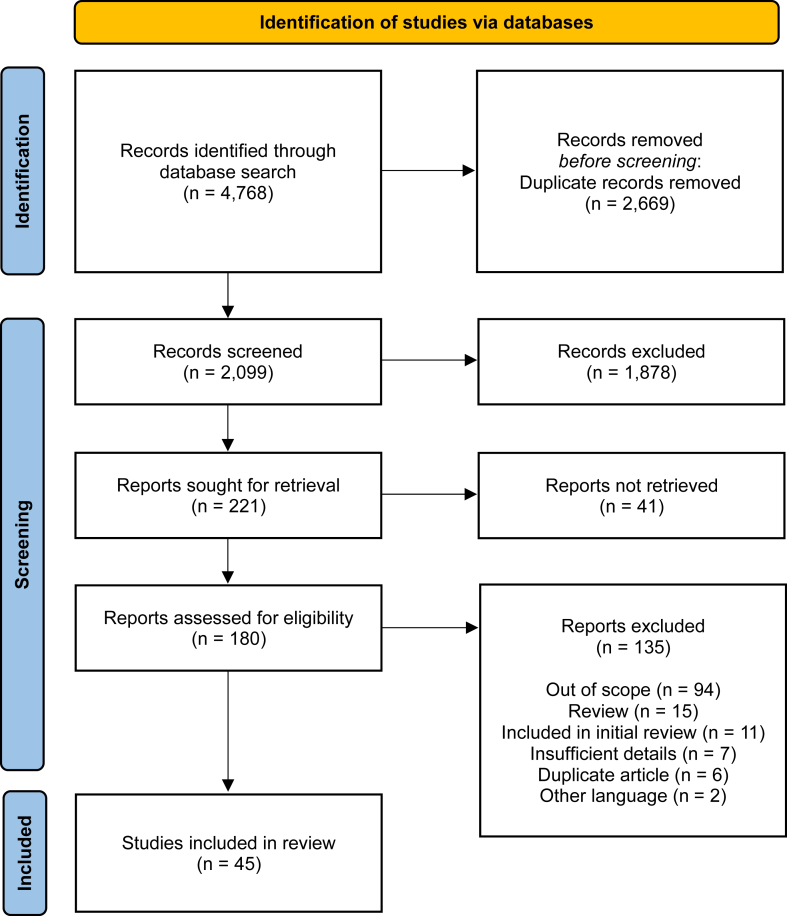
The current review follows an protocol drafted in accordance with Arksey and O'Malley's framework for methodological reviews. A comprehensive search was conducted on 4 scientific databases (CINAHL, PsycINFO, MEDLINE, Embase) to identify eligible studies published since our initial review. Eligible articles included those published between February 12, 2022, and November 10, 2023, and were retrieved using an established search process developed by content and methodological experts. Among the 2,099 unique citations, 45 articles (2.1%) were included.
Consistent with previously reviewed literature, COVID-19 vaccine-induced anaphylaxis remains rare among both those with allergies and the general population. Despite the rarity of anaphylaxis, hesitancy persists among individuals with and without allergies.
To prepare for future pandemics, it is evident that more efforts are needed to address concerns regarding the potential for allergic reactions following vaccination. As part of this process, it is important to ensure medical professionals are updated as new information becomes available and that evidence-based risk communication is accurate, accessible, and culturally appropriate.
尽管迄今为止报告的2019冠状病毒病(COVID-19)疫苗引起的过敏反应发生率较低,但文献中已报道有过敏疾病史和无过敏疾病史的个体都存在对此类反应的担忧。
在此,我们对我们小组之前发表的一项范围综述进行更新,重点关注与过敏相关的COVID-19疫苗犹豫情况以及COVID-19疫苗过敏反应的发生率。
本次综述遵循根据阿克西和奥马利的方法学综述框架起草的方案。对4个科学数据库(CINAHL、PsycINFO、MEDLINE、Embase)进行了全面检索,以识别自我们最初综述以来发表的符合条件的研究。符合条件的文章包括2022年2月12日至2023年11月10日期间发表的文章,并使用由内容和方法学专家制定的既定检索流程进行检索。在2099条独特的文献引用中,纳入了45篇文章(2.1%)。
与之前综述的文献一致,COVID-19疫苗引起的过敏反应在有过敏史者和普通人群中仍然很少见。尽管过敏反应罕见,但有过敏史和无过敏史的个体中都存在犹豫情绪。
为应对未来的大流行,显然需要做出更多努力来解决对疫苗接种后可能发生过敏反应的担忧。作为这一过程的一部分,重要的是要确保随着新信息的出现,医学专业人员能够及时了解,并且基于证据的风险沟通准确、易懂且符合文化背景。