Liu Yan, Jiang Tao, Li Rui, Yuan Lingling, Grzegorzek Marcin, Li Chen, Li Xiaoyan
College of Medicine and Biological Informaton Engineering, Northeastern University, Shenyang, China.
College of Intelligent Medicine, Chengdu University of Traditional Chinese Medicine, Chengdu, China.
Front Med (Lausanne). 2025 Jul 16;12:1551894. doi: 10.3389/fmed.2025.1551894. eCollection 2025.
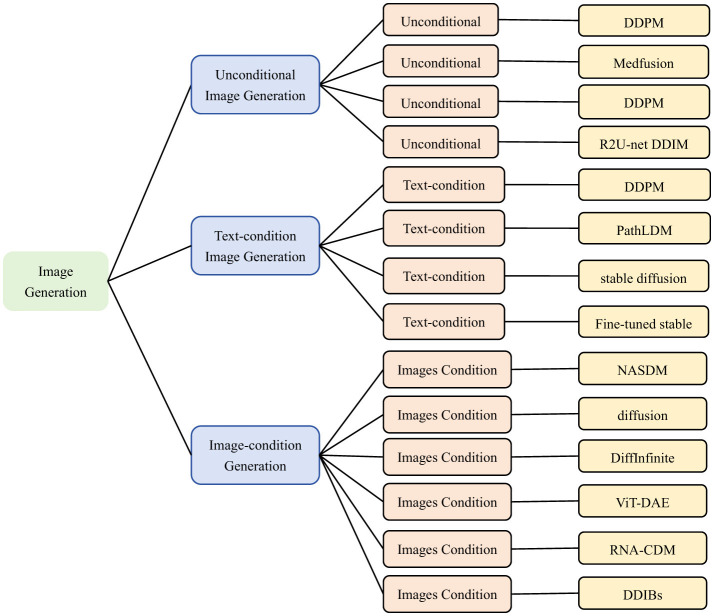
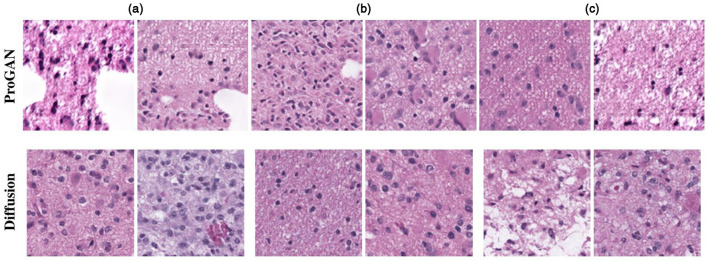
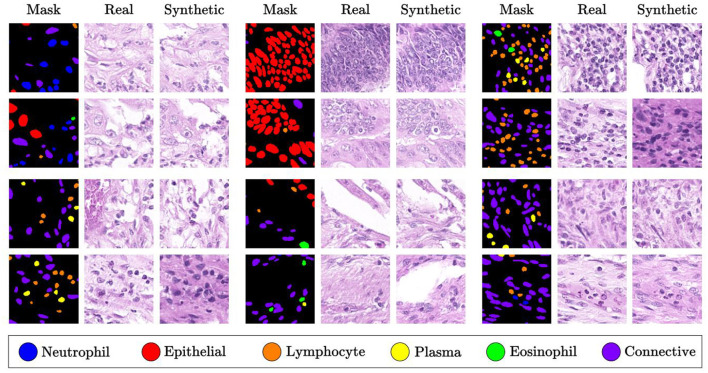
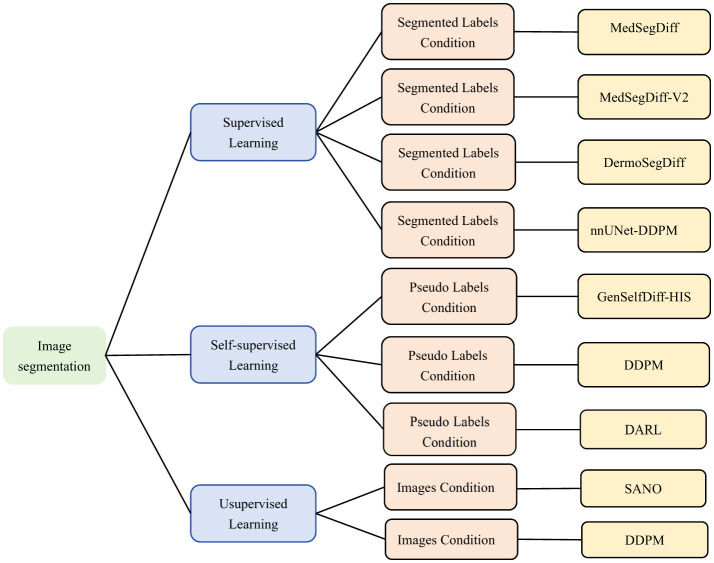
Diffusion models, a class of deep learning models based on probabilistic generative processes, progressively transform data into noise and then reconstruct the original data through an inverse process. Recently, diffusion models have gained attention in microscopic image analysis for their ability to process complex data, extract valuable information, and enhance image quality. This review provides an overview of diffusion models in microscopic images and micro-alike images, focusing on three commonly used models: DDPM, DDIM, and SDEs. We explore their applications in image generation, segmentation, denoising, classification, reconstruction and super-resolution. It shows their notable advantages, particularly in image generation and segmentation. Through simulating the imaging process of biological samples under the microscope, diffusion model can generate high-quality synthetic microscopic images. The generated images serve as a powerful tool for data augmentation when training deep learning models. Diffusion model also excels in microscopic image segmentation. It enables to accurately segment different cellular regions and tissue structures by simulating the interactions between pixels in an image. The review includes 31 papers, with 13 on image generation, nine on segmentation, and the remainder on other applications. We also discuss the strengths, limitations, and future directions for diffusion models in biomedical image processing.
扩散模型是一类基于概率生成过程的深度学习模型,它逐步将数据转换为噪声,然后通过逆过程重建原始数据。近年来,扩散模型因其处理复杂数据、提取有价值信息以及提高图像质量的能力而在微观图像分析中受到关注。本文综述了扩散模型在微观图像和类微观图像中的应用,重点介绍了三种常用模型:DDPM、DDIM和SDEs。我们探讨了它们在图像生成、分割、去噪、分类、重建和超分辨率方面的应用。结果表明,它们具有显著优势,尤其是在图像生成和分割方面。通过模拟生物样本在显微镜下的成像过程,扩散模型可以生成高质量的合成微观图像。生成的图像在训练深度学习模型时可作为强大的数据增强工具。扩散模型在微观图像分割方面也表现出色。它能够通过模拟图像中像素之间的相互作用,准确分割不同的细胞区域和组织结构。该综述包含31篇论文,其中13篇关于图像生成,9篇关于分割,其余涉及其他应用。我们还讨论了扩散模型在生物医学图像处理中的优势、局限性和未来发展方向。