Hamel Jean-François, Saint-Dizier Chloé, Lamer Antoine, Allard Dune, Bienvenu Tino, Levaillant Mathieu, Venara Aurélien
Département de biostatistique, CHU Angers, Angers, France.
Faculté de Santé, Département de médecine, Université d'Angers, Angers, France.
Environ Epidemiol. 2025 Jul 29;9(4):e412. doi: 10.1097/EE9.0000000000000412. eCollection 2025 Aug.
Recent reports indicate that the occurrence of appendicitis follows a seasonal pattern and that there is an association between increased incidence and warmer weather. It is noteworthy that a reduction in the incidence of appendicitis has been observed in the Northern Hemisphere. The objective of this study is to present the epidemiological profile of appendicitis at the national level in France.
This retrospective observational study, based on data from the French National Discharge Database, encompasses all hospitalizations for appendicitis diagnosis between 2013 and 2022. The progression of appendicitis over time was assessed through time-series models. The incidence of appendicitis was also compared depending on year, gender, age, and latitude.
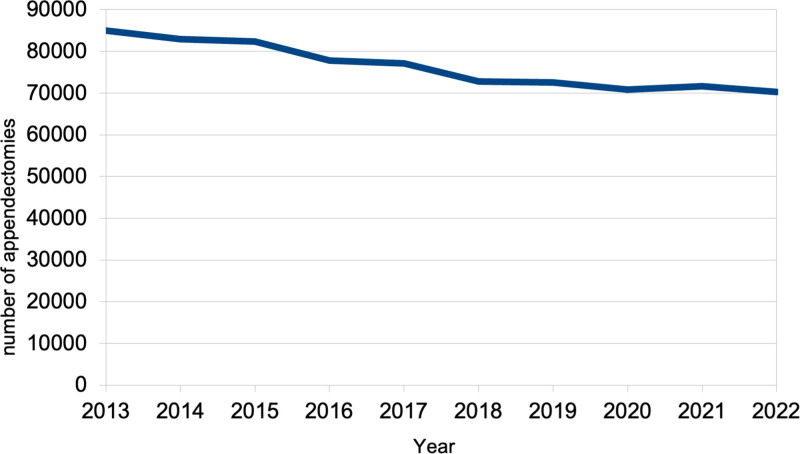
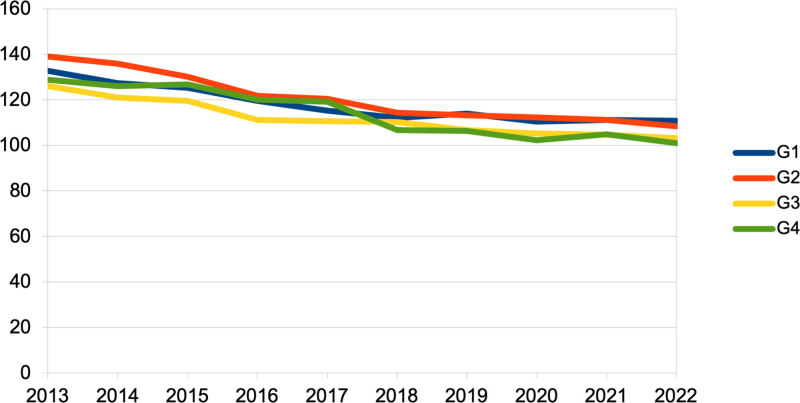
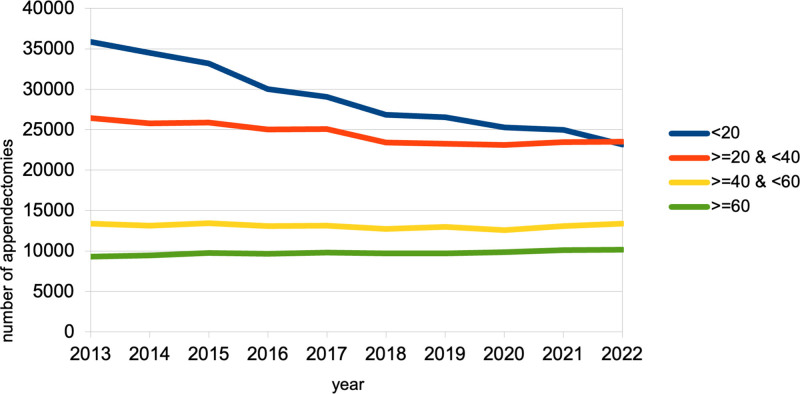
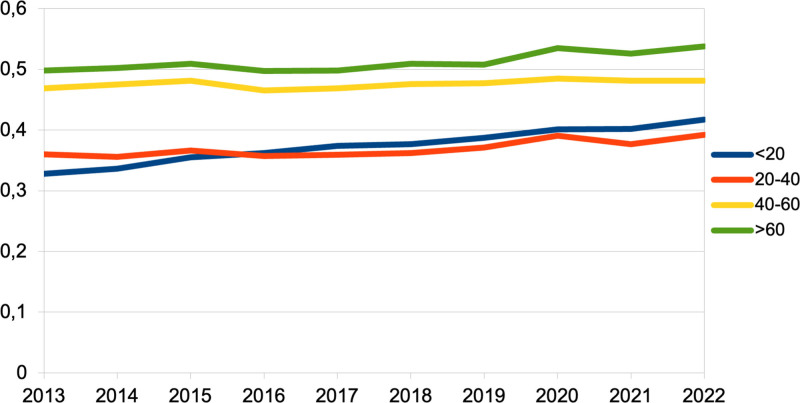
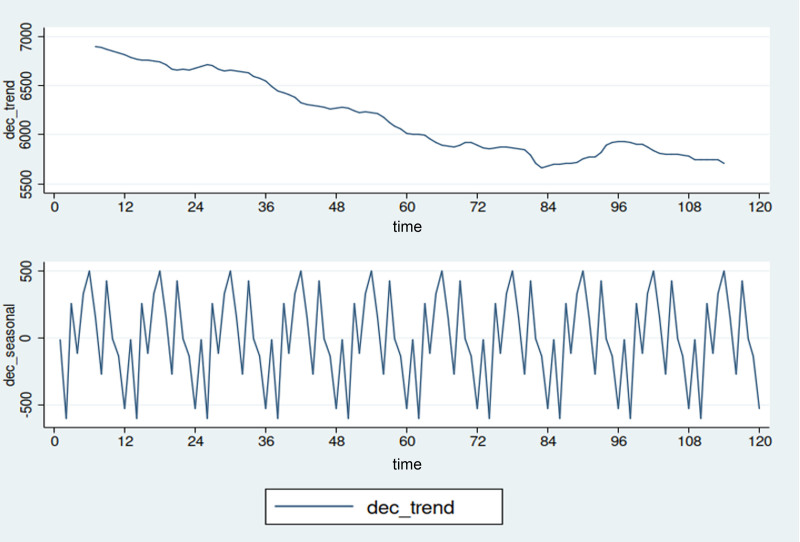
It is noteworthy that the incidence of appendectomy in France exhibited a significant decrease between 2013 and 2022, with an average reduction of 2.1% annually. There was a significant decrease in the number of appendectomies performed on patients ≤20, while there was an increase in those >60. Furthermore, there was a seasonal pattern in the incidence of appendicitis, with a peak during the summer months. The seasonality remained consistent over time. Furthermore, there was a south-north gradient, with a higher number of appendectomies performed in the south.
Seasonality (summer vs. winter) and latitude (south vs. north) could be considered as a proxy for temperature. However, temperature alone cannot explain the observed variations in appendicitis occurrence, since the latter decreases over time, in parallel with global warming. It is likely that other environmental and ecological parameters may be responsible for these variations.
最近的报告表明,阑尾炎的发生呈现季节性模式,且发病率增加与天气变暖之间存在关联。值得注意的是,在北半球已观察到阑尾炎发病率有所下降。本研究的目的是展示法国全国范围内阑尾炎的流行病学概况。
这项回顾性观察研究基于法国国家出院数据库的数据,涵盖了2013年至2022年间所有因阑尾炎诊断而住院的病例。通过时间序列模型评估阑尾炎随时间的变化情况。还根据年份、性别、年龄和纬度对阑尾炎发病率进行了比较。
值得注意的是,2013年至2022年间法国阑尾切除术的发病率显著下降,平均每年下降2.1%。≤20岁患者的阑尾切除数量显著减少,而>60岁患者的阑尾切除数量有所增加。此外,阑尾炎发病率存在季节性模式,夏季为发病高峰。这种季节性随时间保持一致。此外,存在南北梯度差异,南部进行的阑尾切除术数量更多。
季节性(夏季与冬季)和纬度(南部与北部)可被视为温度的替代指标。然而,仅温度无法解释观察到的阑尾炎发病差异,因为随着时间推移,阑尾炎发病率与全球变暖同时下降。其他环境和生态参数可能是导致这些差异的原因。