Harraz Osama F, Hashad Ahmed M
Department of Pharmacology, Larner College of Medicine, Vermont Center for Cardiovascular and Brain Health, University of Vermont, Burlington, Vermont.
Physiology (Bethesda). 2025 Aug 1. doi: 10.1152/physiol.00015.2025.
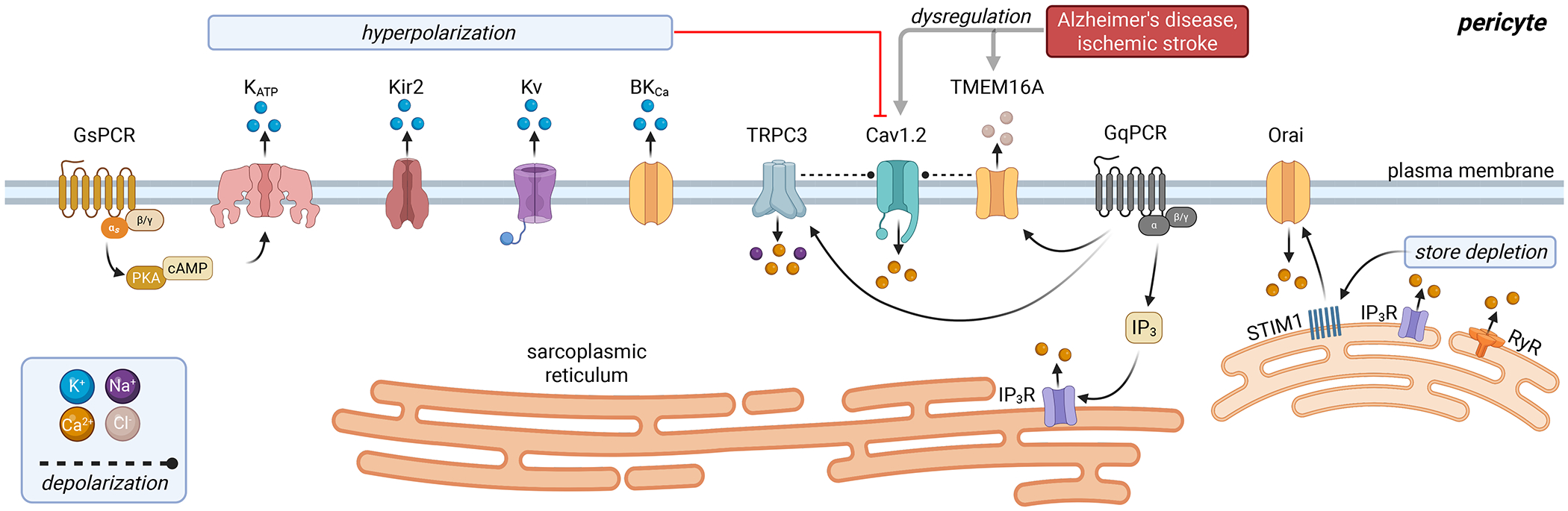
The brain relies on an intricate vascular network to deliver oxygen and nutrients through functional hyperemia, a process critical for matching blood flow to neuronal activity. This review explores the roles of ion channels in brain capillary endothelial cells and pericytes, focusing on their contributions to neurovascular coupling. Key endothelial ion channels, including Kir2.1, K, TRPV4, TRPA1, and Piezo1, regulate membrane potential and calcium dynamics, facilitating rapid electrical and chemical signaling that modulates blood flow. Pericytes, categorized as ensheathing and thin-strand, express ion channels such as K, voltage-gated calcium channels, TRPC, and TMEM16A, which govern contractility and orchestrate blood flow responses. Additionally, we discuss channelopathies in conditions like Alzheimer's disease, cerebral small vessel diseases, hypertension, and ischemic stroke, where ion channel dysfunction impairs brain blood flow regulation. Emerging evidence underscores the therapeutic potential of targeting capillary ion channels to restore neurovascular function in these disorders.
大脑依赖于一个复杂的血管网络,通过功能性充血来输送氧气和营养物质,这一过程对于使血流与神经元活动相匹配至关重要。本综述探讨了离子通道在脑毛细血管内皮细胞和周细胞中的作用,重点关注它们对神经血管耦合的贡献。关键的内皮离子通道,包括Kir2.1、K、TRPV4、TRPA1和Piezo1,调节膜电位和钙动力学,促进快速的电信号和化学信号传递,从而调节血流。周细胞分为包绕型和细索型,表达如K、电压门控钙通道、TRPC和TMEM16A等离子通道,这些通道控制收缩性并协调血流反应。此外,我们还讨论了阿尔茨海默病、脑小血管疾病、高血压和缺血性中风等疾病中的通道病,其中离子通道功能障碍会损害脑血流调节。新出现的证据强调了靶向毛细血管离子通道以恢复这些疾病中神经血管功能的治疗潜力。