Department of Neuroscience, Physiology & Pharmacology, University College London, London, UK.
Department of Neurology, Boston Children's Hospital, Harvard Medical School, Boston, MA, USA.
Nat Neurosci. 2024 Nov;27(11):2086-2100. doi: 10.1038/s41593-024-01753-w. Epub 2024 Sep 18.
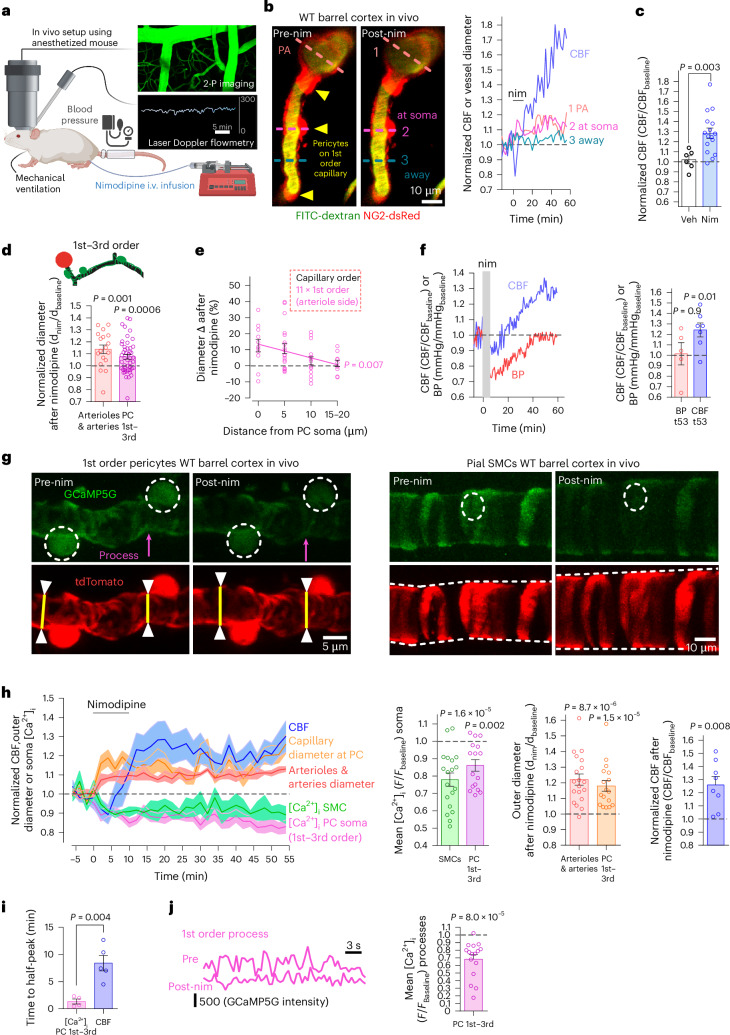
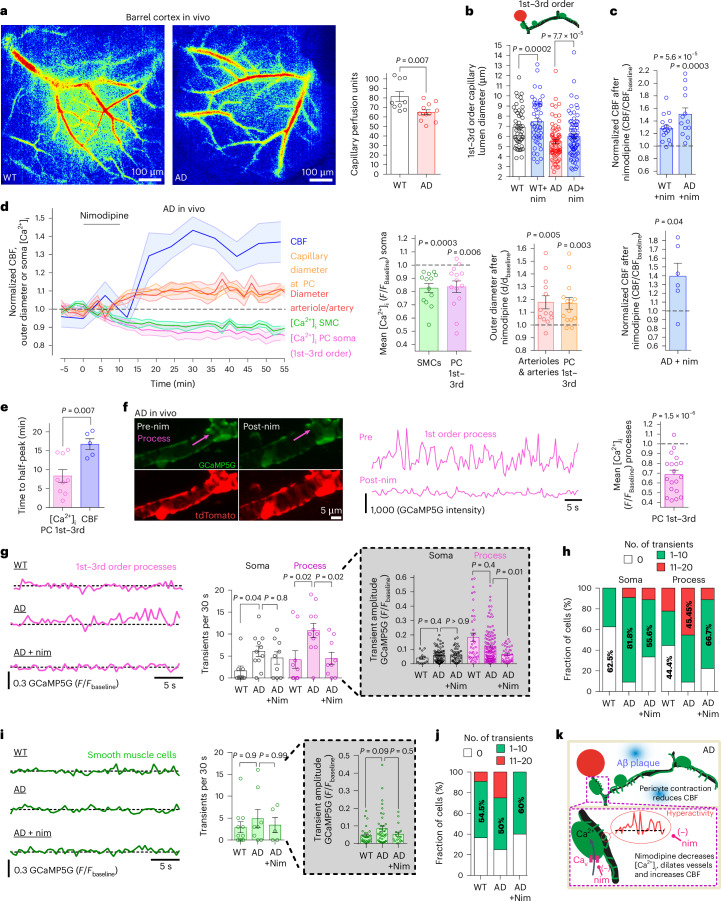
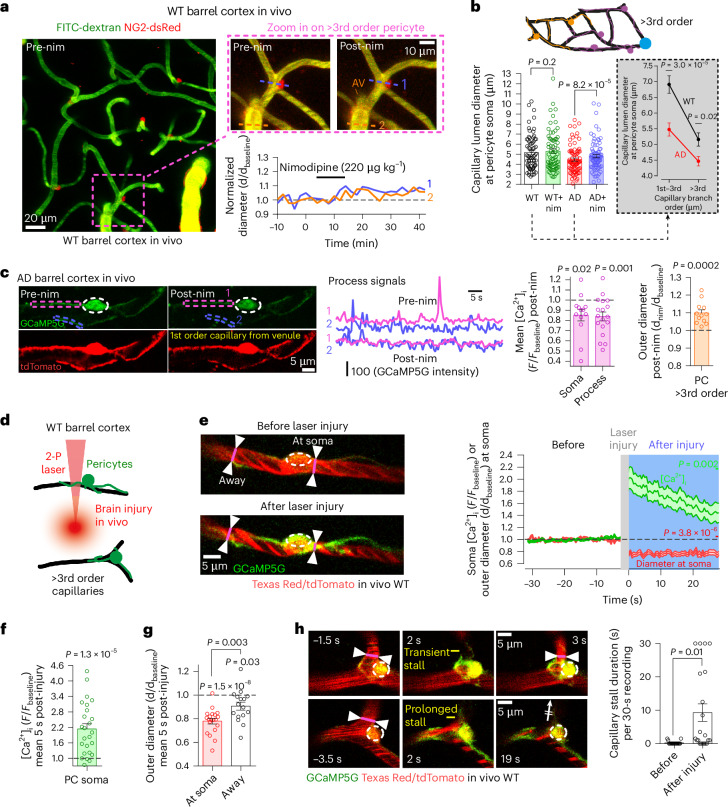
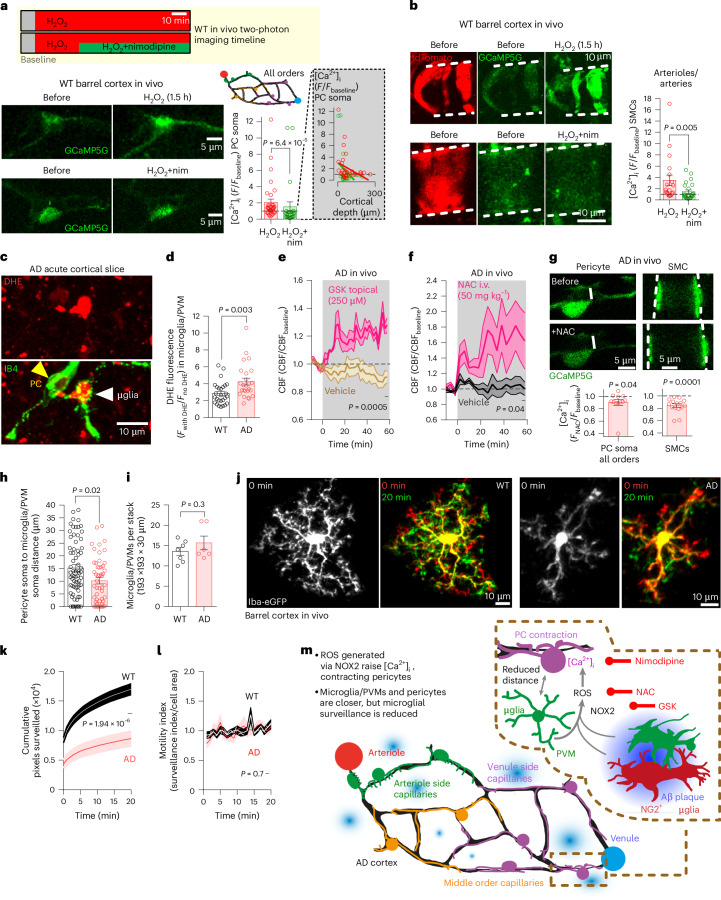
Early in Alzheimer's disease (AD), pericytes constrict capillaries, increasing their hydraulic resistance and trapping of immune cells and, thus, decreasing cerebral blood flow (CBF). Therapeutic approaches to attenuate pericyte-mediated constriction in AD are lacking. Here, using in vivo two-photon imaging with laser Doppler and speckle flowmetry and magnetic resonance imaging, we show that Ca entry via L-type voltage-gated calcium channels (CaVs) controls the contractile tone of pericytes. In AD model mice, we identifed pericytes throughout the capillary bed as key drivers of an immune reactive oxygen species (ROS)-evoked and pericyte intracellular calcium concentration ([Ca])-mediated decrease in microvascular flow. Blocking CaVs with nimodipine early in disease progression improved CBF, reduced leukocyte stalling at pericyte somata and attenuated brain hypoxia. Amyloid β (Aβ)-evoked pericyte contraction in human cortical tissue was also greatly reduced by CaV block. Lowering pericyte [Ca] early in AD may, thus, offer a therapeutic strategy to enhance brain energy supply and possibly cognitive function in AD.
在阿尔茨海默病(AD)早期,周细胞收缩毛细血管,增加其液压阻力并捕获免疫细胞,从而降低脑血流量(CBF)。目前缺乏用于减轻 AD 中周细胞介导的收缩的治疗方法。在这里,我们使用体内双光子成像结合激光多普勒和散斑流量测量以及磁共振成像,显示通过 L 型电压门控钙通道(CaVs)的 Ca 内流控制周细胞的收缩张力。在 AD 模型小鼠中,我们确定了整个毛细血管床中的周细胞是免疫反应性活性氧物种(ROS)引发的和周细胞内钙浓度([Ca])介导的微血管流量下降的关键驱动因素。在疾病进展早期用尼莫地平阻断 CaVs 可改善 CBF,减少白细胞在周细胞质体处的停滞,并减轻脑缺氧。Aβ 引发的人皮质组织中周细胞收缩也被 CaV 阻断大大降低。因此,在 AD 早期降低周细胞[Ca]可能提供一种治疗策略,以增强大脑的能量供应,并可能改善 AD 的认知功能。