Menascu Shay, Drori Tali, Kalron Alon
Multiple Sclerosis Center, Sheba Medical Center, 2 Derech Sheba Street, Tel Hashomer, Israel.
Department of Physical Therapy, Stanley Steyer School of Health Professions, Gray Faculty of Medical and Health Sciences, Tel-Aviv University, Tel-Aviv, Israel.
J Neurol. 2025 Aug 2;272(8):552. doi: 10.1007/s00415-025-13287-7.
Concern of falling (CoF) affects approximately 50-60% of people with MS (pwMS) and is associated with physical and cognitive deficits. Despite its functional impact, CoF's neuroanatomical correlates in pwMS are poorly understood.
Using structural MRI, we investigated associations between subcortical brain volumes and CoF in a large pwMS cohort.
This study involved 407 pwMS that were divided into three groups based on their CoF, as assessed by the Falls Efficacy Scale-International (FES-I). Volumetric MRI analysis was performed using FreeSurfer to assess subcortical brain structures, including the basal ganglia, hippocampus, and corpus callosum. Analyses were adjusted for age, sex, intracranial volume, scanner type, and magnetic field strength.
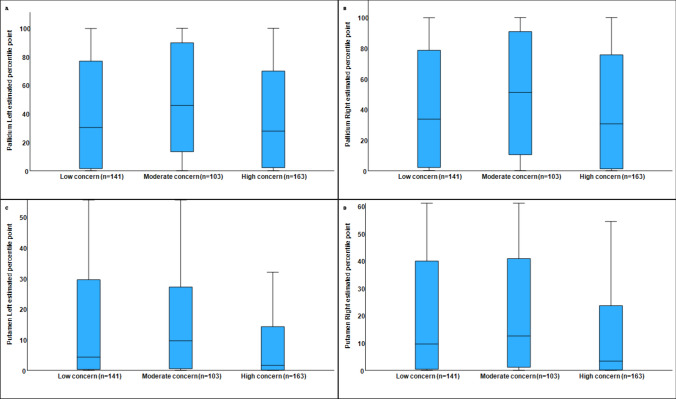
Significant differences in brain volume were found between groups with low, moderate, and high CoF. PwMS with high CoF exhibited reduced volumes in the pallidum, putamen, and corpus callosum compared to those with low CoF (p < 0.05). Regression analysis revealed that subcortical volume reductions, particularly in the basal ganglia, were significantly associated with higher CoF scores, even after controlling for disability.
CoF in pwMS is associated with structural brain changes in areas related to motor control and emotional regulation. This may indicate that CoF reflects both psychological and neuroanatomical factors.
跌倒担忧(CoF)影响着约50%-60%的多发性硬化症患者(pwMS),并与身体和认知缺陷相关。尽管其具有功能影响,但pwMS中CoF的神经解剖学相关性仍知之甚少。
我们使用结构磁共振成像(MRI),在一个大型pwMS队列中研究了皮质下脑容量与CoF之间的关联。
本研究纳入了407例pwMS患者,根据国际跌倒效能量表(FES-I)评估的CoF将其分为三组。使用FreeSurfer进行容积MRI分析,以评估包括基底神经节、海马体和胼胝体在内的皮质下脑结构。分析针对年龄、性别、颅内体积、扫描仪类型和磁场强度进行了调整。
低、中、高CoF组之间的脑容量存在显著差异。与低CoF的pwMS相比,高CoF的pwMS苍白球、壳核和胼胝体的体积减小(p < 0.05)。回归分析显示,即使在控制了残疾因素后,皮质下体积减小,尤其是基底神经节的体积减小,与更高的CoF评分显著相关。
pwMS中的CoF与运动控制和情绪调节相关区域的脑结构变化有关。这可能表明CoF反映了心理和神经解剖学因素。