Fathy Mohamed, Sayed Emad A
Basic and Applied Science Department, College of Engineering and Technology, Arab Academy for Science, Technology and Maritime Transport, Cairo, Egypt.
Department of Physics and Engineering Mathematics, Faculty of Engineering-Mattaria, Helwan University, Cairo, Egypt.
Sci Rep. 2025 Aug 4;15(1):28390. doi: 10.1038/s41598-025-10554-5.
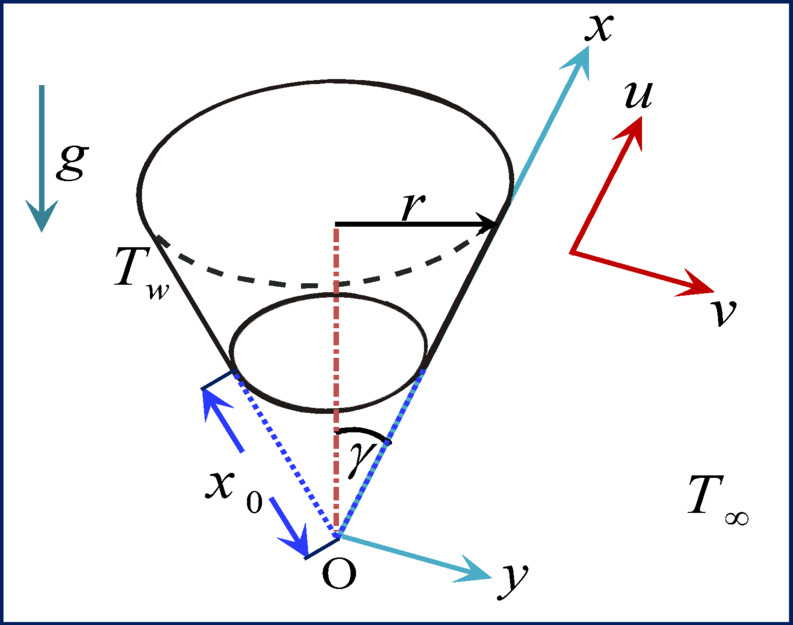
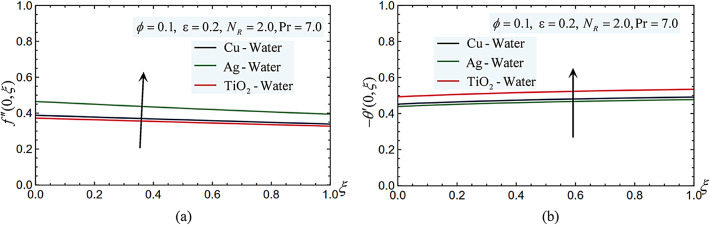
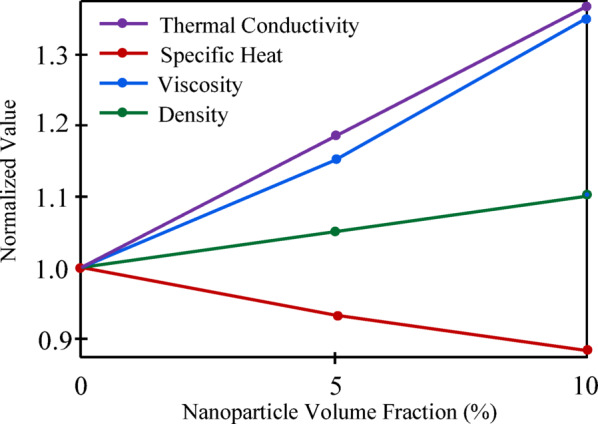
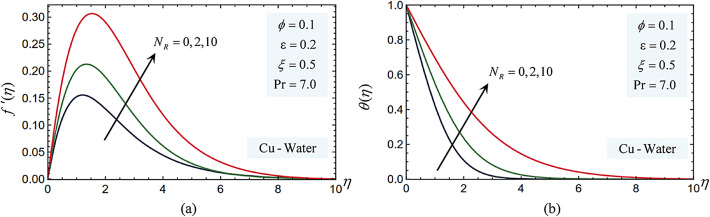
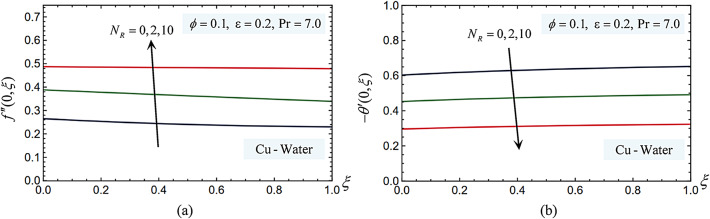
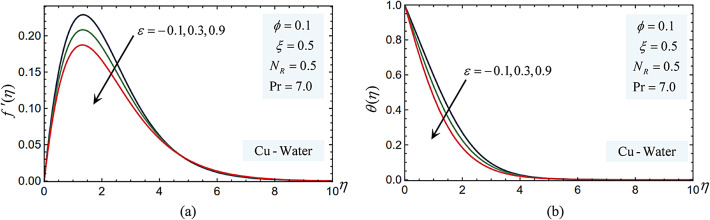
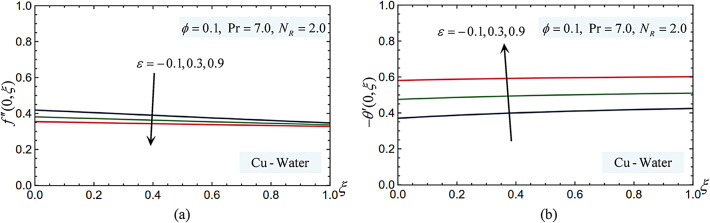
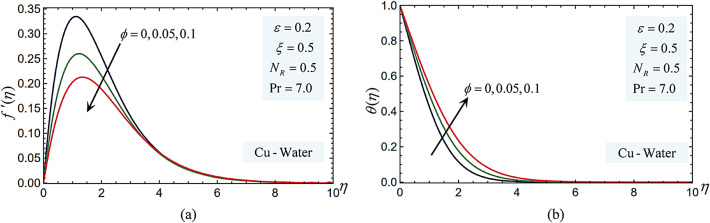
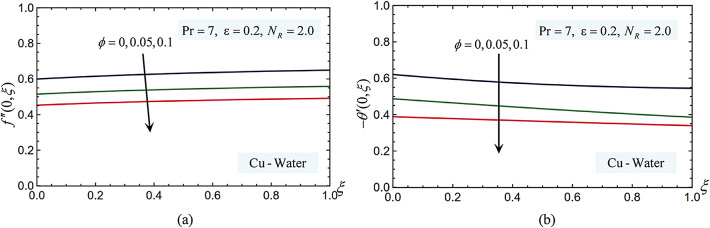
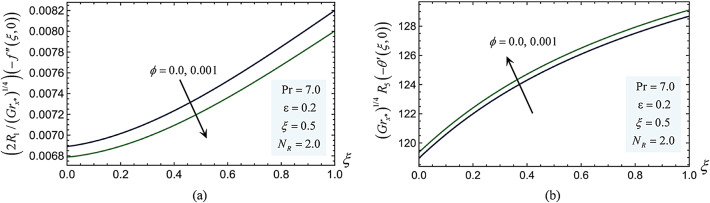
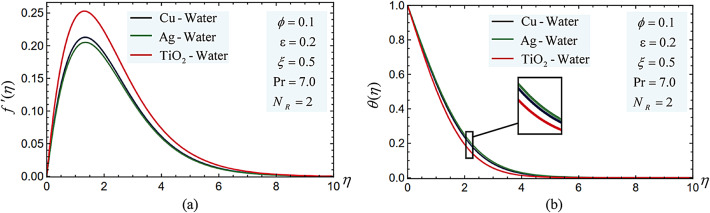
This study examines the effect of thermal radiation on nanofluid flow and heat transfer over a truncated cone in the presence of pressure work, a problem critical for thermal management and industrial cooling systems. Using similarity transformations, the governing equations are converted into coupled nonlinear partial differential equations and solved numerically via the Legendre collocation method. It gives a high degree of consistency between the proposed numerical solutions and the results previously reported under specific cases. The Prandtl number, pressure work parameter, radiation parameter, and nanoparticle volume fraction all have a major impact on flow and thermal behavior, according to the main results. Nanofluids enhance the transfer of heat by 10-40% when compared to pure fluid, cooling speeds up, and surface strength and hardness improve. Also, the kinds of nanofluid and the parameters related to the volume percentage of nanoparticles are crucial in determining the flow behavior. The surface mechanical properties are advanced by using 10% nanoparticle nanofluid rather than 5%. It has been discovered that the strength and hardness of the surface will enhance with an increase in the pressure work parameter when employing Cu-water nanofluid, but they will decrease with an increase in the thermal radiation parameter values. The novelty of this work lies in the application of the Legendre collocation method to this problem, along with new quantitative insights into how pressure work and radiation interact with nanofluids, providing practical guidelines for optimizing thermal and mechanical performance in industrial systems.
本研究考察了在存在压力功的情况下,热辐射对截锥上纳米流体流动和传热的影响,这一问题对热管理和工业冷却系统至关重要。通过相似变换,将控制方程转化为耦合非线性偏微分方程,并采用勒让德配置法进行数值求解。结果表明,所提出的数值解与先前在特定情况下报道的结果具有高度一致性。主要结果表明,普朗特数、压力功参数、辐射参数和纳米颗粒体积分数对流动和热行为均有重大影响。与纯流体相比,纳米流体可使热传递提高10%-40%,冷却速度加快,表面强度和硬度提高。此外,纳米流体的种类以及与纳米颗粒体积百分比相关的参数对于确定流动行为至关重要。使用10%纳米颗粒的纳米流体比5%的纳米流体更能提高表面机械性能。研究发现,使用铜-水纳米流体时,表面强度和硬度会随着压力功参数的增加而提高,但会随着热辐射参数值的增加而降低。这项工作的新颖之处在于将勒让德配置法应用于该问题,以及对压力功和辐射如何与纳米流体相互作用的新定量见解,为优化工业系统中的热性能和机械性能提供了实用指南。