Pérez-Baena Alba Virtudes, Rudolphi-Solero Teodoro, Lorenzo-Álvarez Rocío, Ruiz-Gómez Miguel José, Sendra-Portero Francisco
Department of Radiology, Hospital Comarcal de Antequera, Antequera, Spain.
Department of Radiology and Physical Medicine, Facultad de Medicina, Universidad de Málaga, Bvd. Luis Pasteur, 32., Málaga, 29071, Spain, 34 606266461.
JMIR Med Educ. 2025 Aug 5;11:e68518. doi: 10.2196/68518.
Emergency radiology is essential for future doctors, who will face urgent cases requiring radiologic diagnosis. Using virtual simulations, gamified clinical scenarios, and case-based learning enhances practical understanding, develops technical and communication skills, and fosters educational innovation.
This study aimed to assess the feasibility of learning emergency radiology in the virtual world Second Life (Linden Lab) through a gamified experience by evaluating team performance in clinical case resolution, individual performance on seminar assessments, and students' perceptions of the activity.
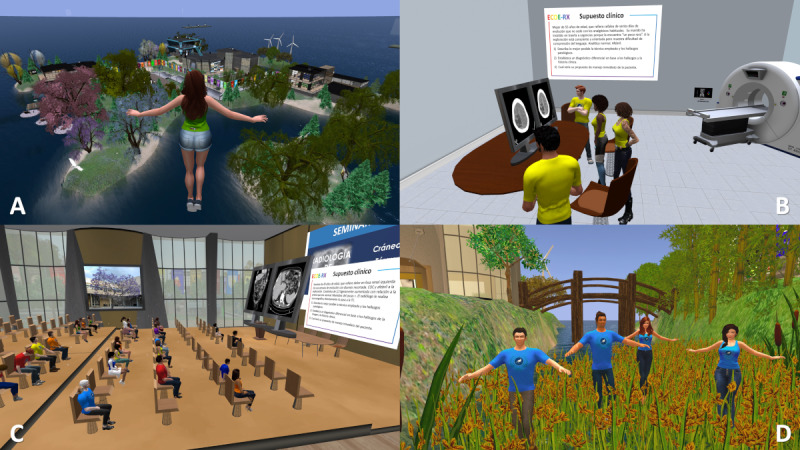
Teams of 3-4 final-year medical students, during a 2-week radiology clerkship, had access to 7 clinical cases in virtual clinical stations and were randomly assigned 2 to solve and submit. They later discussed the cases in a synchronous virtual meeting and attended an emergency radiology seminar. The experience was repeated over 2 consecutive years to assess reproducibility through comparison of learning outcomes and students' perceptions. Learning outcomes were evaluated through team-based case resolution and individual seminar assessments. Students' perceptions were gathered via a voluntary questionnaire including 5-point Likert scale items, cognitive load ratings, 10-point evaluations, and open-ended comments.
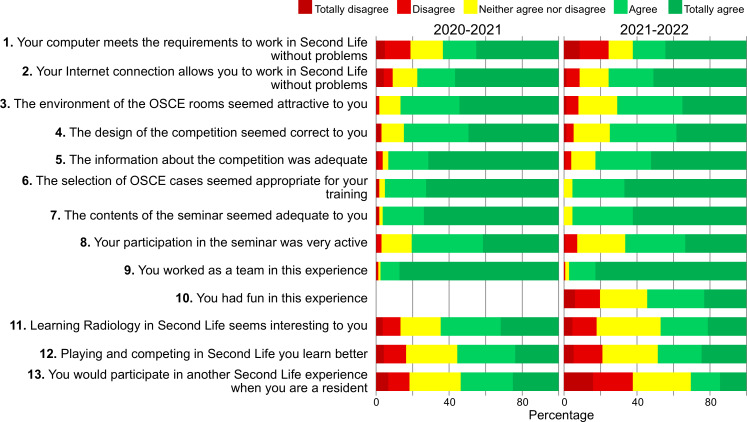
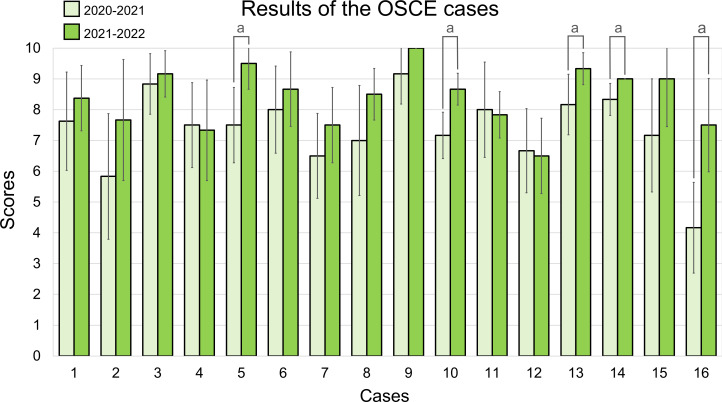
In total, 182 students participated in 2020-2021 and 170 in 2021-2022, demonstrating strong team-based case resolution skills with mean scores of 7.36 (SD 1.35) and 8.41 (SD 0.99), respectively (P<.001). The perception questionnaire had a 90.6% response rate. The highest cognitive load was observed in avatar editing (median 7, 95% CI 6.56-6.96). Case-solving cognitive load was significantly lower in 2021-2022 compared with 2020-2021 (median 6, 95% CI 5.69-6.21 vs 5.10-5.66; P<.001). The students rated the experience highly, with average scores exceeding 8.0 out of 10 across various aspects. Notably, the highest-rated aspects were the teaching staff (9.13, SD 1.15), cases (8.60, SD 1.31), project organization (8.42, SD 1.67), and virtual rooms (8.36, SD 1.62). The lowest-rated aspect was internet connectivity (6.68, SD 2.53). Despite the positive scores, all aspects were rated significantly lower in 2021-2022 compared with 2020-2021. These year-to-year comparisons in performance and perception support the reproducibility of the experience.
This study demonstrates that a game-based learning experience in the Second Life virtual world, combining virtual clinical scenarios and team-based tasks, is feasible and reproducible within a radiology clerkship. Students showed strong performance in case resolution and rated the experience highly, within a playful context that integrated asynchronous and synchronous activities. Lower ratings in the second year may reflect contextual differences, such as changes in COVID-19 pandemic restrictions.
急诊放射学对未来的医生至关重要,他们将面临需要放射学诊断的紧急病例。使用虚拟模拟、游戏化临床场景和基于案例的学习可增强实践理解,培养技术和沟通技能,并促进教育创新。
本研究旨在通过评估临床病例解决中的团队表现、研讨会评估中的个人表现以及学生对该活动的看法,来评估在虚拟世界“第二人生”(林登实验室)中通过游戏化体验学习急诊放射学的可行性。
在为期2周的放射学实习期间,3 - 4名医学专业最后一年的学生组成的团队,可在虚拟临床站点接触7个临床病例,并被随机分配2个病例进行解决和提交。随后,他们在同步虚拟会议中讨论这些病例,并参加急诊放射学研讨会。连续两年重复该体验,通过比较学习成果和学生看法来评估可重复性。学习成果通过基于团队的病例解决和个人研讨会评估进行评估。学生的看法通过一份自愿问卷收集,问卷包括5点李克特量表项目、认知负荷评级、10分制评价和开放式评论。
2020 - 2021年共有182名学生参与,2021 - 2022年有170名学生参与,团队在临床病例解决方面表现出色,平均得分分别为7.36(标准差1.35)和8.41(标准差0.99)(P <.001)。感知问卷的回复率为90.6%。在虚拟形象编辑中观察到最高的认知负荷(中位数7,95%置信区间6.56 - 6.96)。与2020 - 2021年相比,2021 - 2022年病例解决的认知负荷显著降低(中位数6,95%置信区间5.69 - 6.21对5.10 - 5.66;P <.001)。学生对该体验评价很高,各方面平均得分超过8.0分(满分10分)。值得注意的是,评价最高的方面是教师(9.13,标准差1.15)、病例(8.60,标准差1.31)、项目组织(8.42,标准差1.67)和虚拟房间(8.36,标准差1.62)。评价最低的方面是网络连接(6.68,标准差2.53)。尽管得分呈阳性,但与2020 - 2021年相比,2021 - 2022年所有方面的评分均显著降低。这些在表现和感知方面的逐年比较支持了该体验的可重复性。
本研究表明,在“第二人生”虚拟世界中基于游戏的学习体验,结合虚拟临床场景和基于团队的任务,在放射学实习中是可行且可重复的。在整合了异步和同步活动的趣味性背景下,学生在病例解决方面表现出色,并对该体验评价很高。第二年评分较低可能反映了背景差异,如新冠疫情限制的变化。