Ostenrath Anna Maria, Faturos Nicholas, Çiftci Çobanoğlu Yağnur Işık, Serneels Bram, Jeong Inyoung, Dongel Dayanc Ekin, Enz Anja, Hinrichsen Francisca, Mutlu Aytac Kadir, Bardenhewer Ricarda, Jetti Suresh Kumar, Neuhauss Stephan C F, Jurisch-Yaksi Nathalie, Yaksi Emre
Kavli Institute for Systems Neuroscience and Center for Algorithms in the Cortex, Norwegian University of Science and Technology, Trondheim, Norway.
Medical Scientist Training Program, University of Minnesota School of Medicine, Minneapolis, MN, USA.
Nat Commun. 2025 Aug 5;16(1):7187. doi: 10.1038/s41467-025-62115-z.
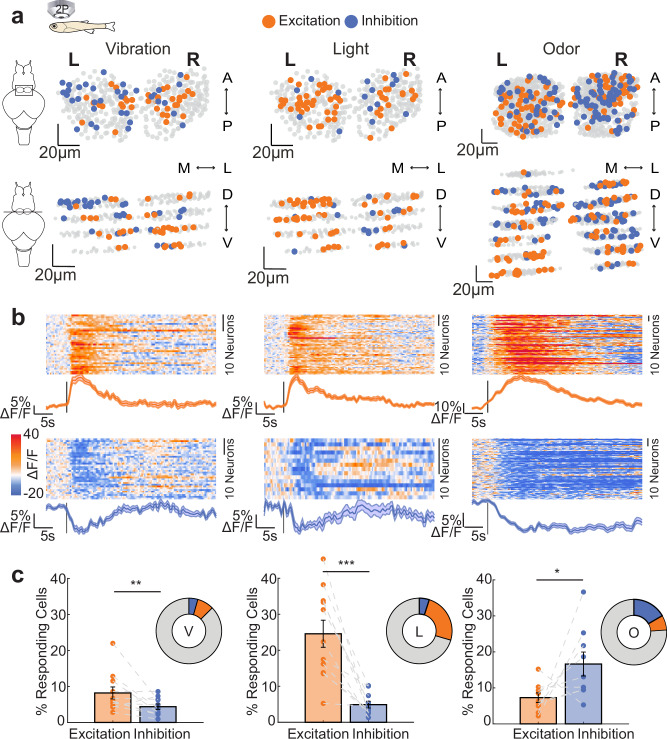
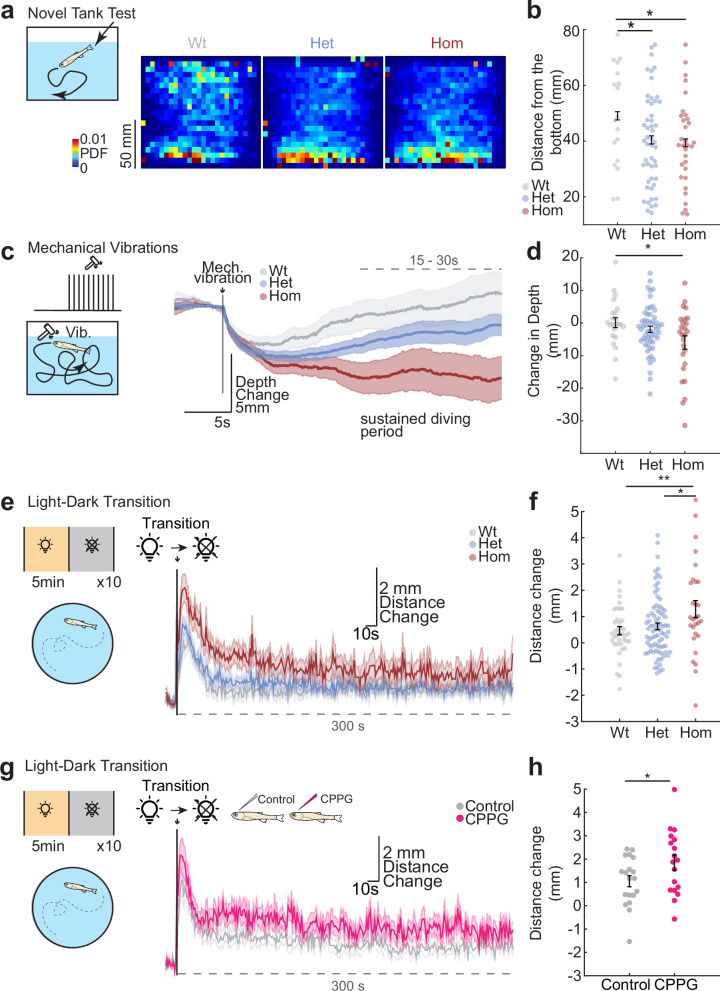
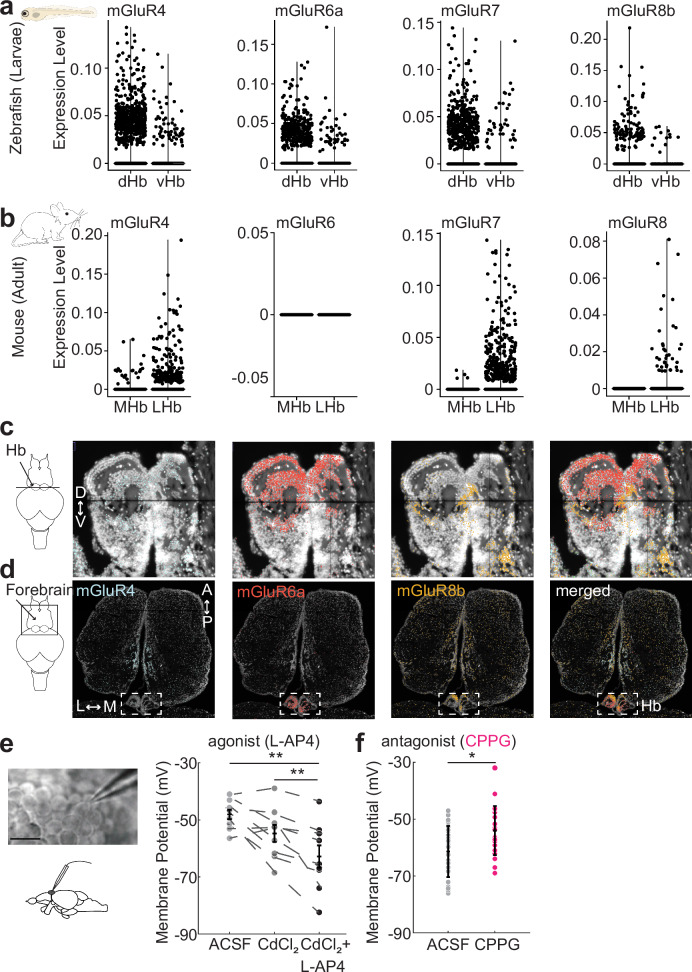
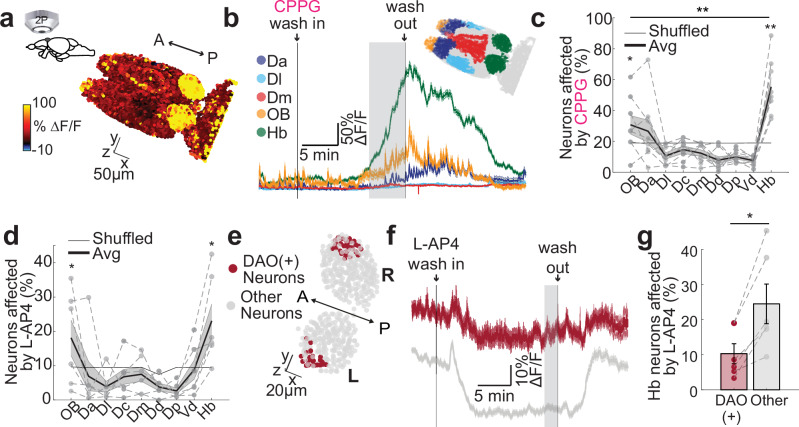
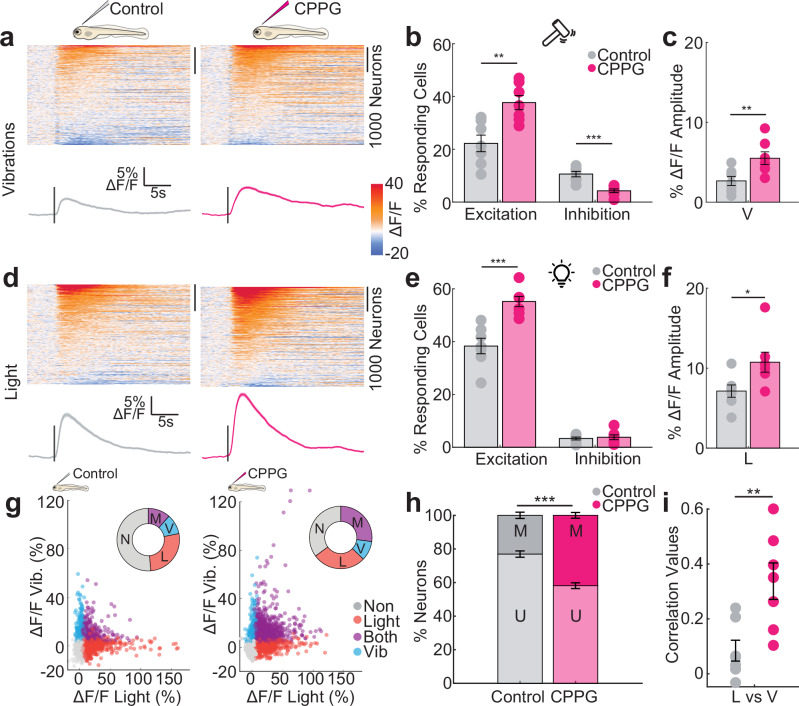
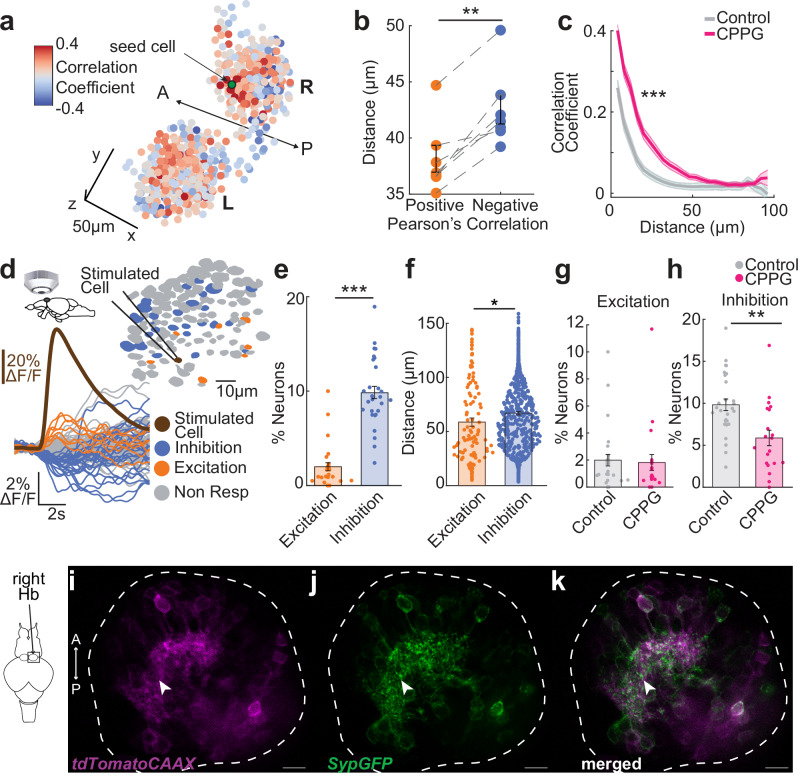
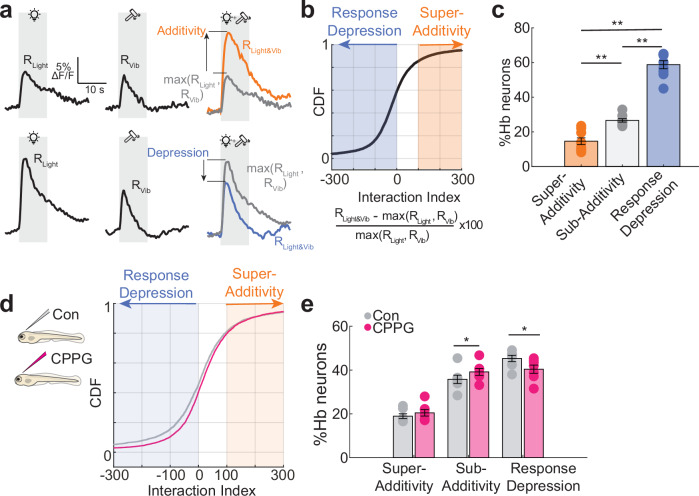
Inhibition plays a key role in brain functions. While typically linked to GABA, inhibition can be induced by glutamate via metabotropic glutamate receptors (mGluRs). Here, we investigated the role of mGluR-mediated inhibition in the habenula, a conserved, glutamatergic brain hub involved in adaptive and defensive behaviors. We found that zebrafish and mice habenula express group III mGluRs. We showed that group III mGluRs regulate membrane potential and calcium activity of zebrafish habenula. Perturbing group III mGluRs increased sensory-evoked excitation and reduced selectivity. We identified inhibition as the primary communication mode among habenula neurons. Blocking group III mGluRs reduces this inhibition and increases neural synchrony. Consistently, we demonstrated that multisensory integration in the habenula relies on competitive suppression, that partly depends on group III mGluRs. Genetic and pharmacological perturbation of group III mGluRs amplified neural responses and defensive behaviors. Our findings highlight an essential role for mGluR-driven inhibition in encoding information and regulating defensive behaviors.
抑制作用在大脑功能中起着关键作用。虽然抑制作用通常与γ-氨基丁酸(GABA)相关,但谷氨酸可通过代谢型谷氨酸受体(mGluRs)诱导抑制作用。在此,我们研究了mGluR介导的抑制作用在缰核中的作用,缰核是一个保守的、参与适应性和防御性行为的谷氨酸能脑枢纽。我们发现斑马鱼和小鼠的缰核表达III组mGluRs。我们表明,III组mGluRs调节斑马鱼缰核的膜电位和钙活性。干扰III组mGluRs会增加感觉诱发的兴奋并降低选择性。我们确定抑制作用是缰核神经元之间的主要通信模式。阻断III组mGluRs会减少这种抑制作用并增加神经同步性。一致地,我们证明缰核中的多感觉整合依赖于竞争性抑制,这部分取决于III组mGluRs。III组mGluRs的基因和药理学干扰会放大神经反应和防御行为。我们的研究结果突出了mGluR驱动的抑制作用在编码信息和调节防御行为中的重要作用。