Departmento de Fisiología, Facultad de Medicina, Universidad Nacional Autónoma de México, Mexico City, Mexico.
Section on Molecular Neuroscience, National Institute of Mental Health (NIH), Bethesda, USA.
Transl Psychiatry. 2018 Feb 26;8(1):50. doi: 10.1038/s41398-018-0099-5.
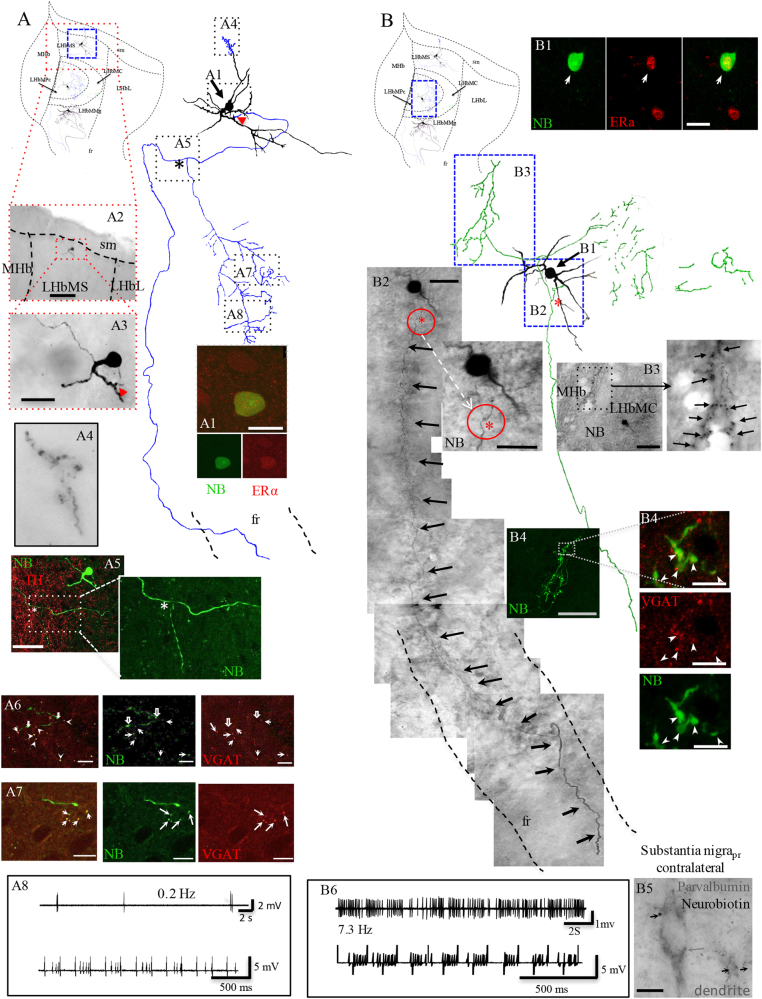
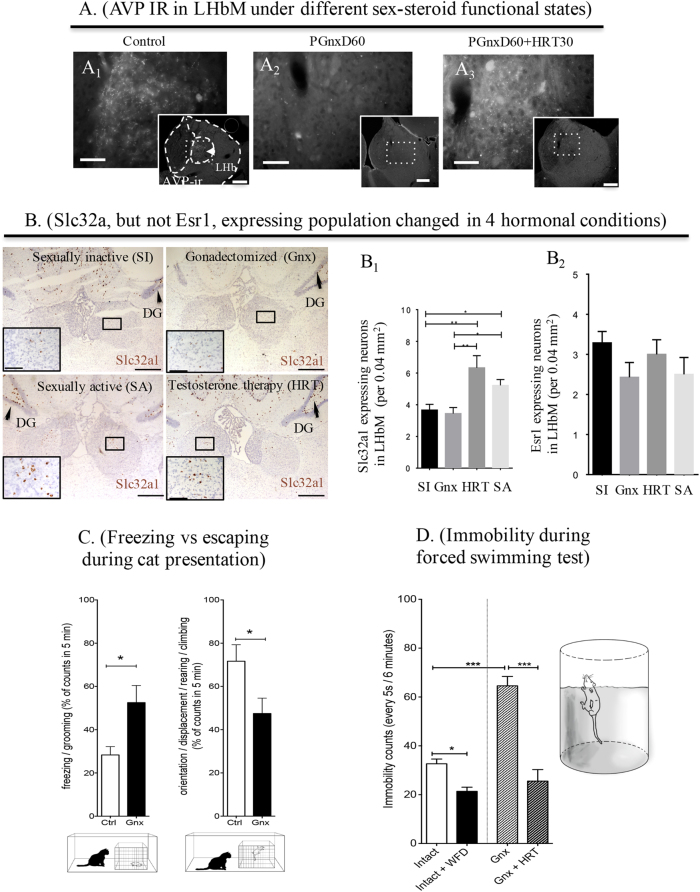
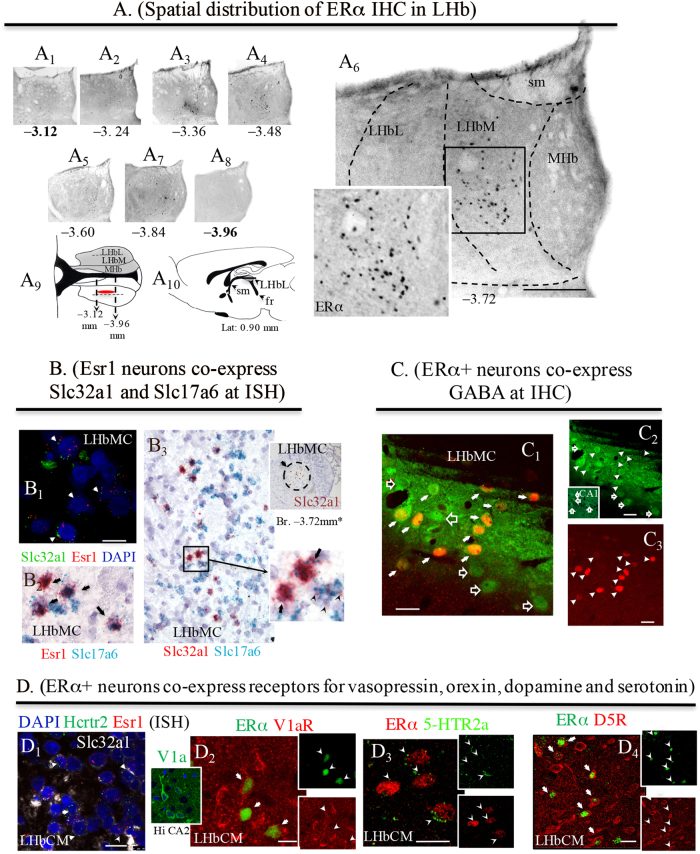
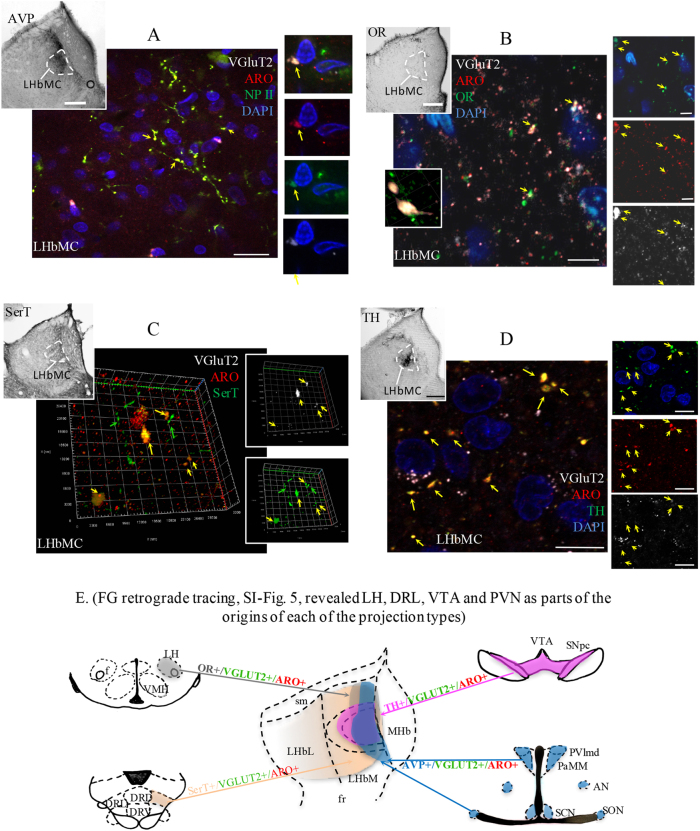
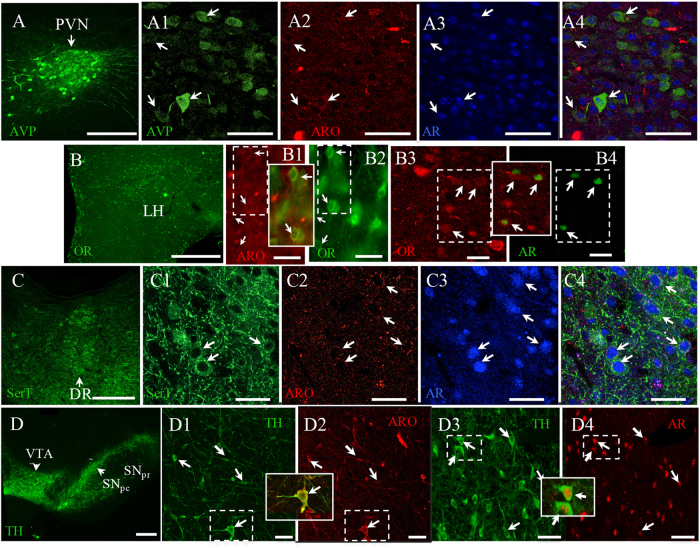
The lateral habenula (LHb) has a key role in integrating a variety of neural circuits associated with reward and aversive behaviors. There is limited information about how the different cell types and neuronal circuits within the LHb coordinate physiological and motivational states. Here, we report a cell type in the medial division of the LHb (LHbM) in male rats that is distinguished by: (1) a molecular signature for GABAergic neurotransmission (Slc32a1/VGAT) and estrogen receptor (Esr1/ERα) expression, at both mRNA and protein levels, as well as the mRNA for vesicular glutamate transporter Slc17a6/VGLUT2, which we term the GABAergic estrogen-receptive neuron (GERN); (2) its axonal projection patterns, identified by in vivo juxtacellular labeling, to both local LHb and to midbrain modulatory systems; and (3) its somatic expression of receptors for vasopressin, serotonin and dopamine, and mRNA for orexin receptor 2. This cell type is anatomically located to receive afferents from midbrain reward (dopamine and serotonin) and hypothalamic water and energy homeostasis (vasopressin and orexin) circuits. These afferents shared the expression of estrogen synthase (aromatase) and VGLUT2, both in their somata and axon terminals. We demonstrate dynamic changes in LHbM VGAT+ cell density, dependent upon gonadal functional status, that closely correlate with motivational behavior in response to predator and forced swim stressors. The findings suggest that the homeostasis and reward-related glutamatergic convergent projecting pathways to LHbMC employ a localized neurosteroid signaling mechanism via axonal expression of aromatase, to act as a switch for GERN excitation/inhibition output prevalence, influencing depressive or motivated behavior.
外侧缰核(LHb)在整合与奖励和厌恶行为相关的各种神经回路方面起着关键作用。关于 LHb 内的不同细胞类型和神经元回路如何协调生理和动机状态的信息有限。在这里,我们报告了雄性大鼠 LHb 内侧部(LHbM)中的一种细胞类型,其特征在于:(1)GABA 能神经传递(Slc32a1/VGAT)和雌激素受体(Esr1/ERα)表达的分子特征,以及囊泡谷氨酸转运体 Slc17a6/VGLUT2 的 mRNA,我们将其称为 GABA 能雌激素反应神经元(GERN);(2)通过活体共聚焦标记鉴定的其轴突投射模式,投射到 LHb 局部和中脑调节系统;(3)其体细胞表达血管加压素、血清素和多巴胺受体以及食欲素受体 2 的 mRNA。这种细胞类型在解剖学上位于接收来自中脑奖励(多巴胺和血清素)和下丘脑水和能量稳态(血管加压素和食欲素)回路的传入。这些传入具有雌激素合酶(芳香酶)和 VGLUT2 的共表达,无论是在它们的体部还是轴突末端。我们证明了 LHbM VGAT+细胞密度的动态变化,这取决于性腺功能状态,并与对捕食者和强迫游泳应激源的动机行为密切相关。这些发现表明,LHbMC 的稳态和与奖励相关的谷氨酸能会聚投射途径采用局部神经甾体信号机制,通过轴突表达芳香酶,作为 GERN 兴奋/抑制输出优势的开关,影响抑郁或动机行为。