
提取物的植物化学特征与生物活性:综述
Phytochemical profile and biological activities of extract: a review.
作者信息
Cipriano-Salazar Moises, Salem Mohamed Z M, Elghandour Mona M M Y, Selim Shady, Lackner Maximilian, Salem Abdelfattah Z M
机构信息
Facultad de Medicina Veterinaria y Zootecnia No. 1, Universidad Autónoma de Guerrero, Chilpancingo, Mexico.
Forestry and Wood Technology Department, Faculty of Agriculture (El-Shatby), Alexandria University, Alexandria, Egypt.
出版信息
Front Vet Sci. 2025 Jul 22;12:1629447. doi: 10.3389/fvets.2025.1629447. eCollection 2025.
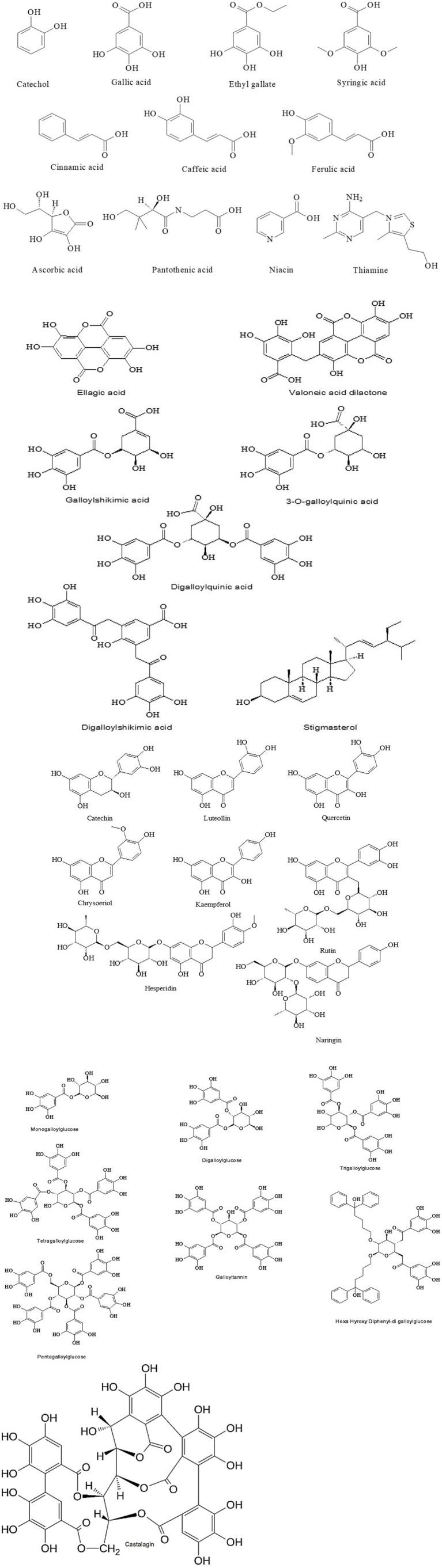
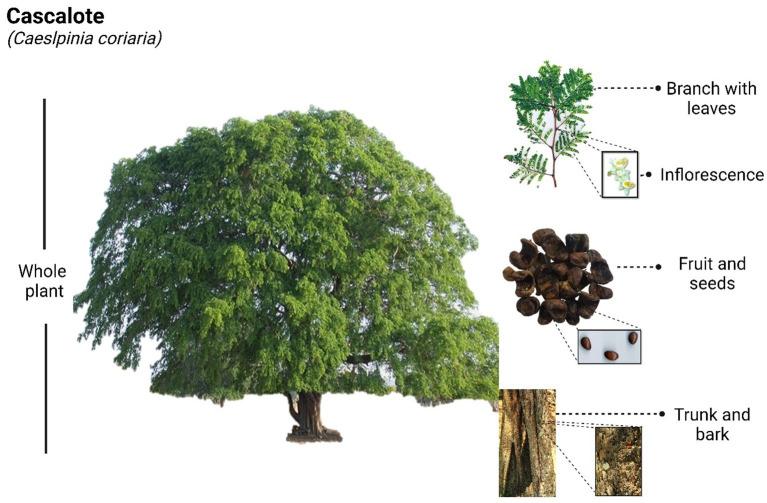
(Jacq.) Willd [syn.: (Jacq.) Schltdl.], a member of the Fabaceae family and the Caesalpinioideae subfamily, is commonly known in Mexican vernacular as "cascalote". Various botanical parts of this tree, such as leaves, pods, flowers, seeds, branches, and bark, have been studied due to their bioactivity and their astringent, antiparasitic, antiseptic, and anti-inflammatory properties. Extracts obtained from contain a wide range of bioactive compounds, including tannins, terpenoids, phenols, coumarins, quinones, flavonoids, saponins, carbohydrates, proteins, glycosides, cardiac glycosides, anthraquinones, steroids, and polyphenols. During the fattening phase in ruminants, these plant extracts may be used to reduce gastrointestinal parasitism, promote growth, and decrease drug residues in animal-derived products. This review aims to highlight the importance of the bioactivities of extracts and their active compounds. studies have demonstrated that the phenolic and flavonoid compounds present in this species inhibit bacterial growth by disrupting membrane integrity and enzymatic activity, often outperforming conventional antibiotics. In livestock production systems, the presence of pathogenic bacteria leads to significant economic losses; in this context, the use of polyphenolic compounds derived from may have a positive effect on animal productivity. Moreover, the extracts from this tree represent a promising source of bioactive compounds for various industrial applications.
(雅克)威尔德[同义词:(雅克)施利德尔],豆科云实亚科成员,在墨西哥方言中通常被称为“卡斯卡洛特”。由于其生物活性以及收敛、抗寄生虫、防腐和抗炎特性,这种树的各种植物部位,如叶子、豆荚、花朵、种子、树枝和树皮,都已得到研究。从[具体植物名称缺失]中提取的提取物含有多种生物活性化合物,包括单宁、萜类化合物、酚类、香豆素、醌类、黄酮类、皂苷、碳水化合物、蛋白质、糖苷、强心苷、蒽醌、类固醇和多酚。在反刍动物育肥阶段,这些植物提取物可用于减少胃肠道寄生虫感染、促进生长并减少动物源性产品中的药物残留。本综述旨在强调[具体植物名称缺失]提取物及其活性化合物生物活性的重要性。[具体植物名称缺失]的研究表明,该物种中存在的酚类和黄酮类化合物通过破坏膜完整性和酶活性来抑制细菌生长,其效果往往优于传统抗生素。在畜牧生产系统中,病原菌的存在会导致重大经济损失;在此背景下,使用源自[具体植物名称缺失]的多酚类化合物可能对动物生产力产生积极影响。此外,这种树的提取物是各种工业应用中生物活性化合物的一个有前景的来源。
 Zotero 插件