Campisi Susan, Perquier Florence, Wasan Yaqub, Soofi Sajid, Korczak Daphne, Monga Suneeta, Szatmari Peter, Bhutta Zulfiqar
Cundill Centre for Child and Youth Depression, Centre for Addiction and Mental Health, Toronto, ON, Canada.
Department of Psychiatry, Hospital for Sick Children, Toronto, ON, Canada.
Glob Ment Health (Camb). 2025 Jul 10;12:e79. doi: 10.1017/gmh.2025.10006. eCollection 2025.
This study investigates the links between dietary diversity, food insecurity and mental health (depression and anxiety) in adolescents from rural Pakistan. Adolescence is a critical time for developing mental health disorders, yet limited research exists on these issues in low- and middle-income countries (LMICs).
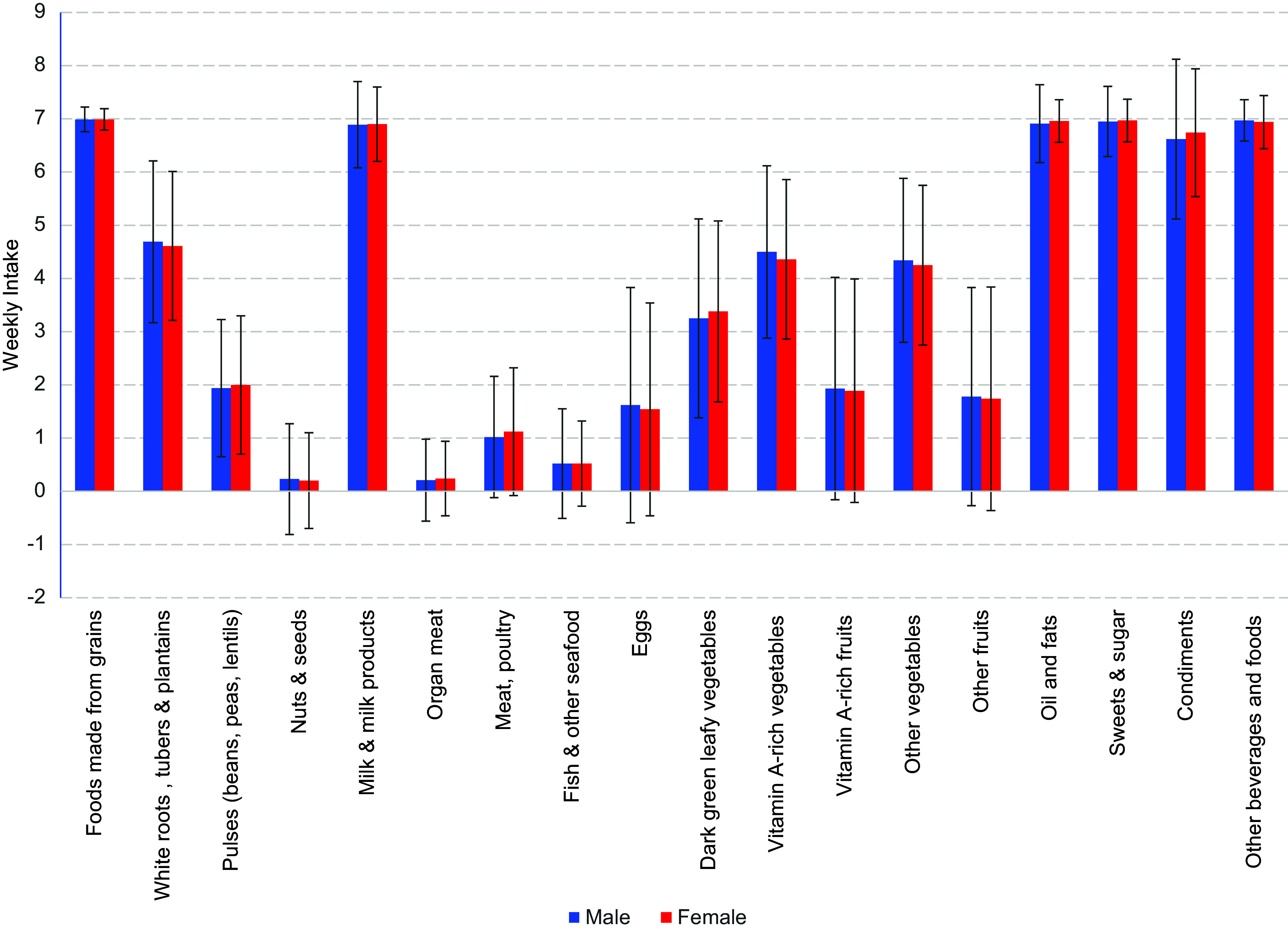
The study included 1,396 adolescents (ages 9-15) and assessed their mental health, nutrition and maternal well-being. Depression and anxiety were measured using standardized questionnaires, while dietary diversity and food insecurity were evaluated through household assessments. Incidence rate ratios assessed the relationship between nutrition and mental health.
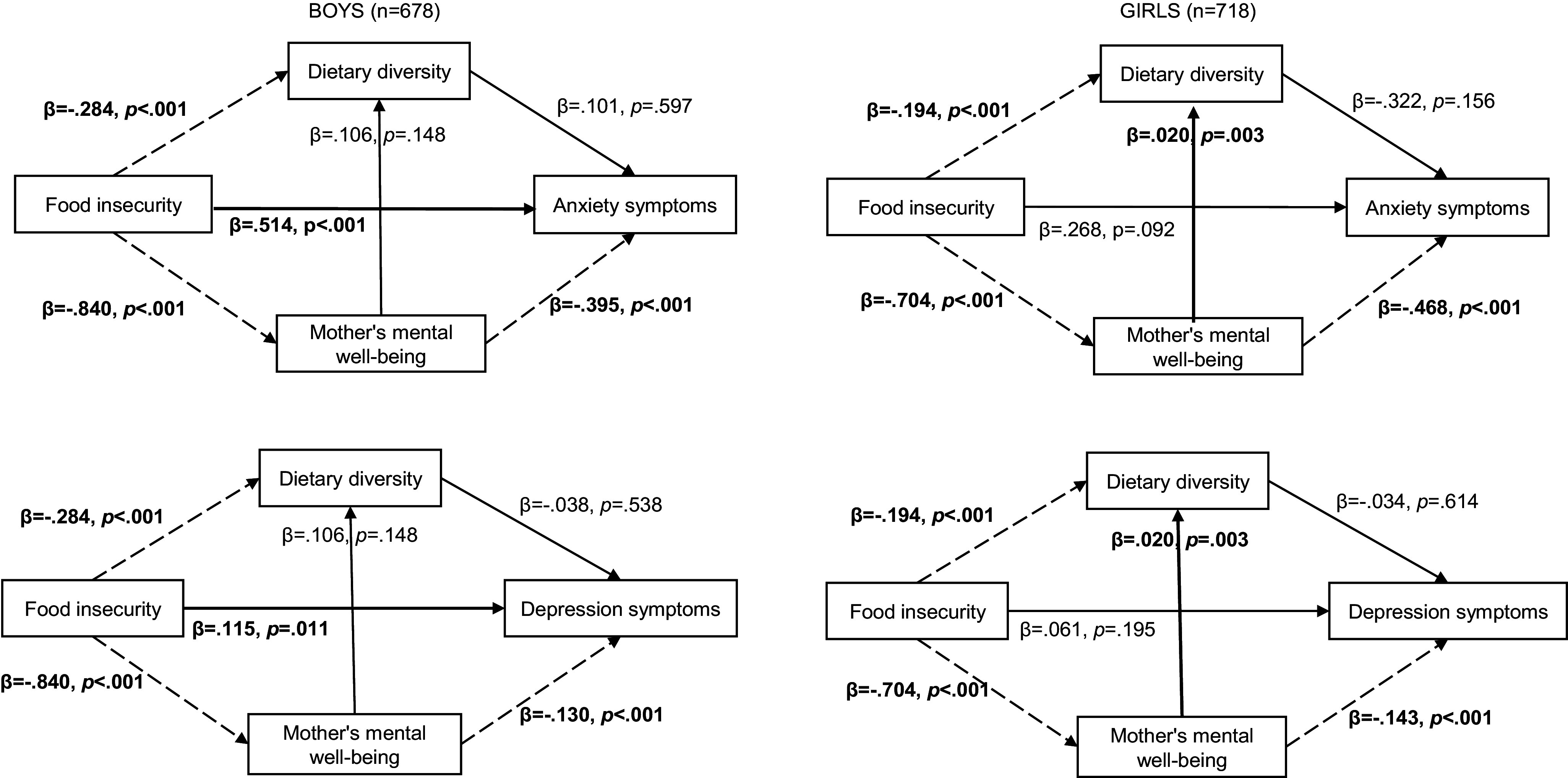
Results showed that 8.1% of boys and 10.2% of girls experienced depression, with anxiety rates ranging from 5.8% to 39.1%. Adolescents from households with higher dietary diversity had lower symptoms of depression and anxiety (IRRs:0.91-0.96), while those with higher food insecurity had increased symptoms (IRRs:1.24-1.86). Folate deficiency was associated with depressive symptoms, particularly in boys. Maternal mental health was observed to mediate the relationship between food insecurity and adolescent depression and anxiety.
The study highlights that improving maternal mental health and addressing nutritional deficiencies, particularly folate, may benefit adolescent well-being. Further research in other LMICs is needed to explore these associations and their mechanisms.
本研究调查了巴基斯坦农村青少年的饮食多样性、粮食不安全与心理健康(抑郁和焦虑)之间的联系。青春期是心理健康障碍形成的关键时期,但在低收入和中等收入国家(LMICs),关于这些问题的研究有限。
该研究纳入了1396名青少年(9至15岁),并评估了他们的心理健康、营养状况和母亲的幸福感。使用标准化问卷测量抑郁和焦虑,通过家庭评估来评估饮食多样性和粮食不安全状况。发病率比评估了营养与心理健康之间的关系。
结果显示,8.1%的男孩和10.2%的女孩患有抑郁症,焦虑症发病率在5.8%至39.1%之间。饮食多样性较高家庭的青少年抑郁和焦虑症状较少(发病率比:0.91 - 0.96),而粮食不安全程度较高的青少年症状增加(发病率比:1.24 - 1.86)。叶酸缺乏与抑郁症状有关,尤其是在男孩中。观察到母亲的心理健康在粮食不安全与青少年抑郁和焦虑之间起中介作用。
该研究强调,改善母亲的心理健康和解决营养缺乏问题,特别是叶酸缺乏问题,可能有益于青少年的幸福感。需要在其他低收入和中等收入国家进行进一步研究,以探索这些关联及其机制。