
先天性心室憩室与胸腹部中线缺损综合征。
Syndrome of congenital ventricular diverticulum and midline thoraco-abdominal defects.
作者信息
Gula G, Yacoub M
出版信息
Thorax. 1977 Jun;32(3):365-9. doi: 10.1136/thx.32.3.365.
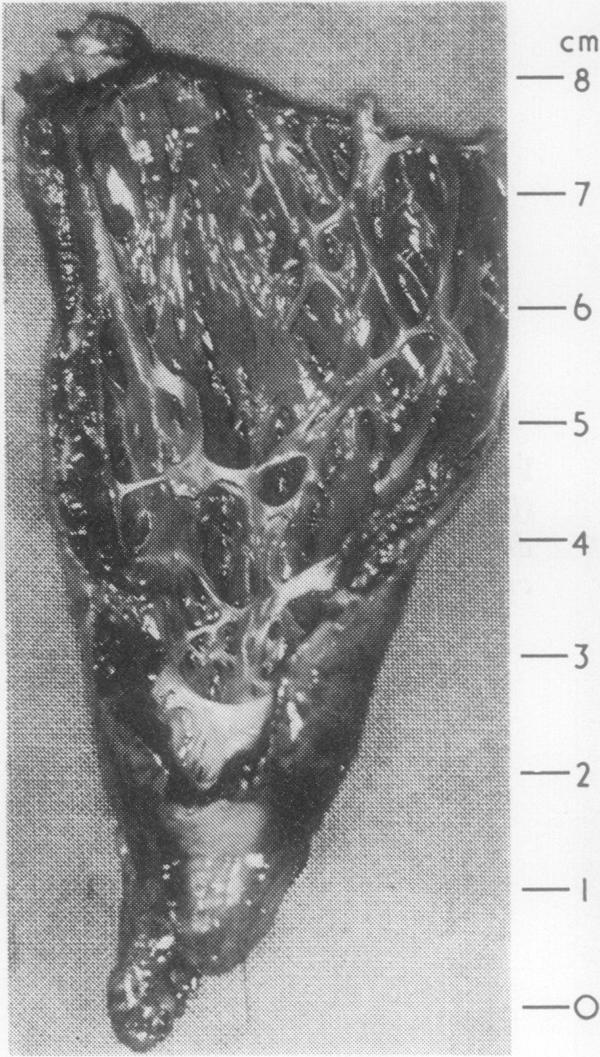
The long-term follow-up of a 30-year-old patient who had a correction of the syndrome of left ventricular diverticulum and thoraco-abdominal defects is presented. The main features of the syndrome include a diverticulum of the left ventricle, a ventricular septal defect, and sometimes other cardiac anomalies. The thoraco-abdominal defects consist of foreshortened sternum, pericardial and diaphragmatic defects, and umbilical hernia. The association of these anomalies is thought to be due to a developmental failure of the primitive paramidline mesoderm. The diagnosis can be made clinically by the presence of a pulsatile, epigastric mass associated with signs of cardiac septal defects and dextrocardia. The prognosis of patients with this syndrome depends mainly on the associated abnormalities although rupture of the diverticulum can be a fatal complication. The treatment of choice is resection of the diverticulum combined with repair of associated anomalies which can give good early and late results.
本文介绍了一名30岁患者左心室憩室综合征及胸腹缺损矫正后的长期随访情况。该综合征的主要特征包括左心室憩室、室间隔缺损,有时还伴有其他心脏异常。胸腹缺损包括胸骨缩短、心包和膈肌缺损以及脐疝。这些异常的关联被认为是由于原始旁中线中胚层发育失败所致。临床上可通过触及搏动性上腹部肿块并伴有心脏间隔缺损和右位心体征来做出诊断。该综合征患者的预后主要取决于相关异常情况,尽管憩室破裂可能是致命的并发症。首选治疗方法是切除憩室并修复相关异常,早期和晚期效果均良好。


 Zotero 插件