Piatti Livia, Batzilla Alina, Nakaki Fumio, Fleckenstein Hannah, Korbmacher François, Long Rory K M, Schraivogel Daniel, Hawkins John A, Romero-Uruñuela Tais, López-Gutiérrez Borja, Sanz Sender Silvia, Schwab Yannick, Steinmetz Lars M, Sharpe James, Bernabeu Maria
European Molecular Biology Laboratory (EMBL) Barcelona, Barcelona, Spain.
Collaboration for joint PhD degree between EMBL and Heidelberg University, Faculty of Biosciences, Heidelberg, Germany.
Nat Commun. 2025 Aug 6;16(1):7262. doi: 10.1038/s41467-025-62514-2.
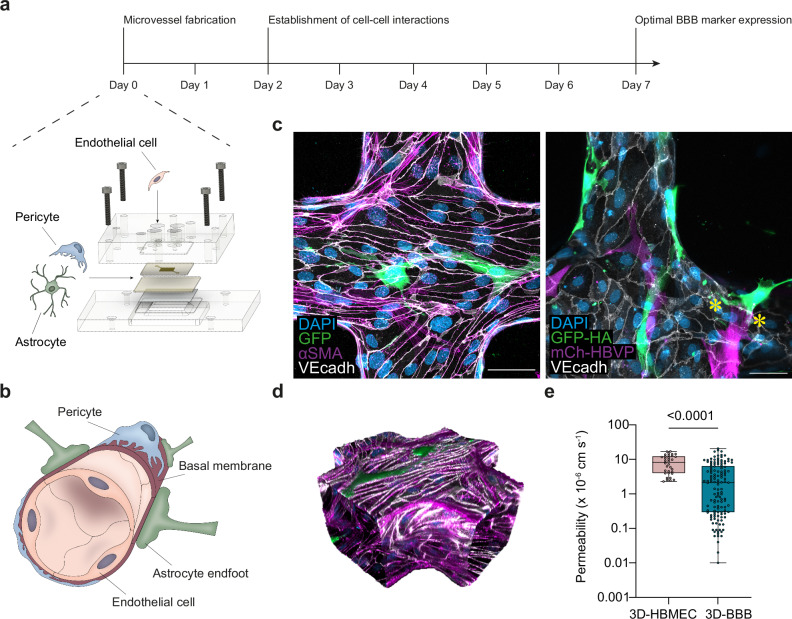
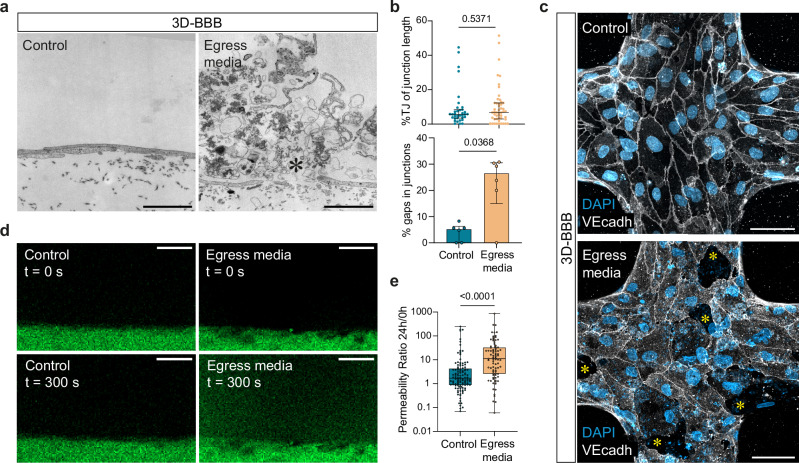
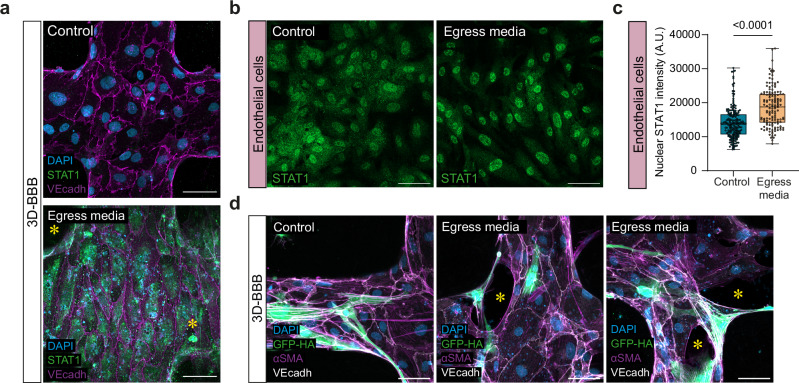
Cerebral malaria is a severe neurovascular complication of Plasmodium falciparum infection, with high mortality rates even after treatment with effective antimalarials. Limitations in current experimental models have hindered our knowledge of the disease. We developed a 3D blood-brain barrier (BBB) model with enhanced barrier properties using primary brain endothelial cells, astrocytes, and pericytes. Exposure to parasite egress products increases microvascular permeability, likely due to transcriptional downregulation of junctional and vascular development genes in endothelial cells. In addition, it increases the expression of ferroptosis markers, antigen presentation and type I interferon genes and upregulates the JAK-STAT pathway across all BBB cell types. Incubation with cytoadherent schizont-stage P. falciparum-infected erythrocytes induces a similar, but highly localized transcriptional shift, along with inter-endothelial gaps at sites of parasite egress, leading to enhanced permeability. Treatment with the JAK-STAT inhibitor Ruxolitinib prevents the increase in permeability induced by P. falciparum egress products. These findings provide key insights into the parasite-mediated mechanisms driving brain microvascular pathogenesis in cerebral malaria and suggest potential avenues for adjunctive therapies.
脑型疟疾是恶性疟原虫感染引起的一种严重神经血管并发症,即使在使用有效的抗疟药物治疗后死亡率仍很高。当前实验模型的局限性阻碍了我们对该疾病的了解。我们使用原代脑内皮细胞、星形胶质细胞和周细胞构建了一种具有增强屏障特性的三维血脑屏障(BBB)模型。暴露于寄生虫逸出产物会增加微血管通透性,这可能是由于内皮细胞中连接和血管发育基因的转录下调所致。此外,它会增加铁死亡标志物、抗原呈递和I型干扰素基因的表达,并上调所有血脑屏障细胞类型中的JAK-STAT通路。与细胞黏附的裂殖体期恶性疟原虫感染的红细胞孵育会诱导类似但高度局部化的转录变化,同时在寄生虫逸出部位出现内皮间隙,导致通透性增强。使用JAK-STAT抑制剂鲁索替尼治疗可防止恶性疟原虫逸出产物诱导的通透性增加。这些发现为寄生虫介导的脑型疟疾脑微血管发病机制提供了关键见解,并为辅助治疗提出了潜在途径。