Kang Erin, Rosen Tamara E, Keifer Cara M, Gerber Alan H, Lerner Matthew D
Psychology Department, Montclair State University, Montclair, USA.
Department of Psychiatry, Drexel University College of Medicine, Philadelphia, USA.
Sci Rep. 2025 Aug 7;15(1):28872. doi: 10.1038/s41598-025-12876-w.
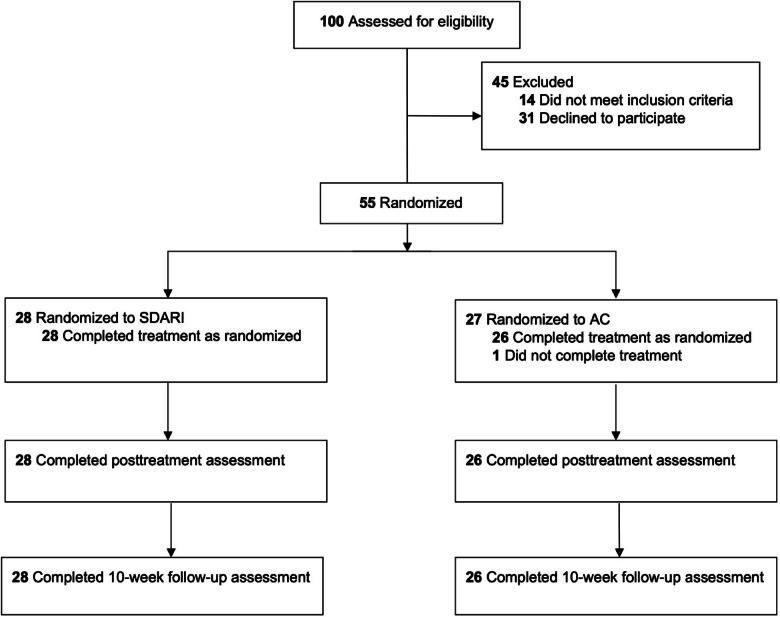
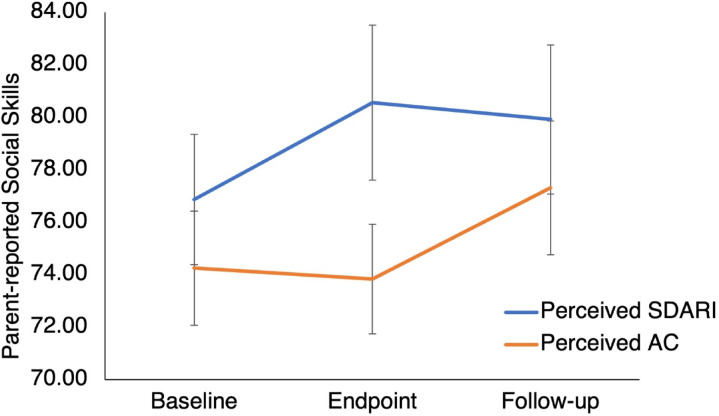
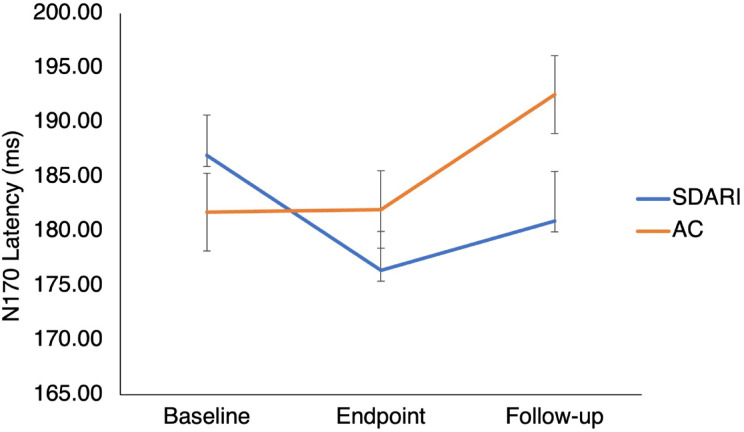
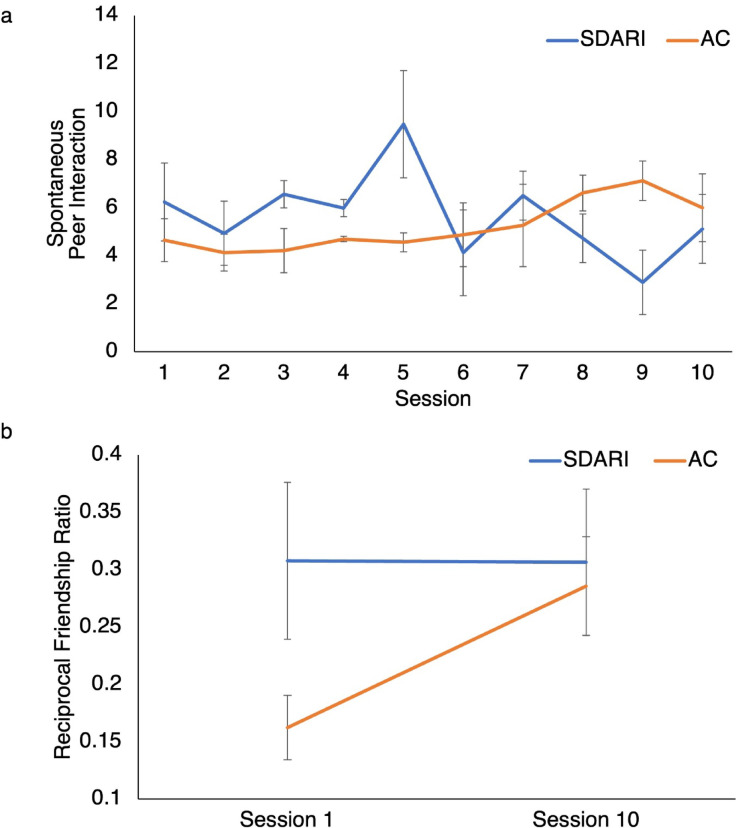
This study evaluated specific effects of a blinded randomized controlled trial of a group-based social skills intervention, Socio-Dramatic Affective-Relational Intervention (SDARI), against an active attention control (AC) intervention. Fifty-five autistic youth (M=12.40; SD=2.92; 73% boys) were randomly allocated to either the SDARI or the AC condition. Both interventions comprised 10 weekly sessions and were tightly matched for structure, participant age, IQ, and gender, such that the specific activities of SDARI were directly examined. Multimethod assessments at pre-, post-treatment, and 10-week follow-up included informant-reported social skills and autism-related behaviors, observer-rated spontaneous peer interaction, peer-rated friendships, and a metric of social information processing (the N170 event-related potential). Parent expectancy effect was also explored by examining perceived conditions by parents/caregivers, who were blinded to the condition assignment. Compared to the AC condition, the SDARI group evinced improvements in the N170 latency, rapid peer-liking, and reciprocal friendships at endpoint and follow-up. While the conditions did not differ on parent-reported social skills or autism-related behaviors, a parental expectancy effect was found where parent-rated social skills improvements were related to parents' perceived conditions. These results provide support for the efficacy of the specific SDARI activities on several objective, reliable outcomes of social functioning in autistic youth.
本研究评估了一项基于小组的社交技能干预——社会戏剧情感关系干预(SDARI)的双盲随机对照试验相对于积极注意力控制(AC)干预的特定效果。55名自闭症青少年(M = 12.40;SD = 2.92;73%为男孩)被随机分配到SDARI组或AC组。两种干预均包括每周10次的课程,在结构、参与者年龄、智商和性别方面进行了严格匹配,以便直接考察SDARI的特定活动。在治疗前、治疗后和10周随访时进行的多方法评估包括信息提供者报告的社交技能和自闭症相关行为、观察者评定的自发同伴互动、同伴评定的友谊以及社会信息处理指标(N170事件相关电位)。还通过检查父母/照顾者对治疗分配不知情情况下的感知状况来探讨父母期望效应。与AC组相比,SDARI组在终点和随访时N170潜伏期、快速同伴喜爱度和互惠友谊方面有改善。虽然在父母报告的社交技能或自闭症相关行为方面两组没有差异,但发现了一种父母期望效应,即父母评定的社交技能改善与父母的感知状况有关。这些结果为SDARI特定活动对自闭症青少年社交功能的几个客观、可靠结果的有效性提供了支持。