Si Nannan, Chang Wei, Cheng Fengli, Wang Yanjie, Suo Limin, Zhao Changqing
Department of Otolaryngology Head and Neck Surgery, Second Hospital of Shanxi Medical University, Taiyuan, Shanxi, 030001, China.
Department of Otolaryngology, Heping Hospital Affiliated to Changzhi Medical College, Changzhi, Shanxi, 046000, China.
BMC Pediatr. 2025 Aug 7;25(1):611. doi: 10.1186/s12887-025-05906-z.
Allergic rhinitis (AR) is a common disease in preschool children and seriously affects their quality of life. Defining the risk factors of AR can help early diagnosis and prevention. The aim of this meta-analysis was to identify and summarizes the risk factors associated with allergic rhinitis in preschool children.
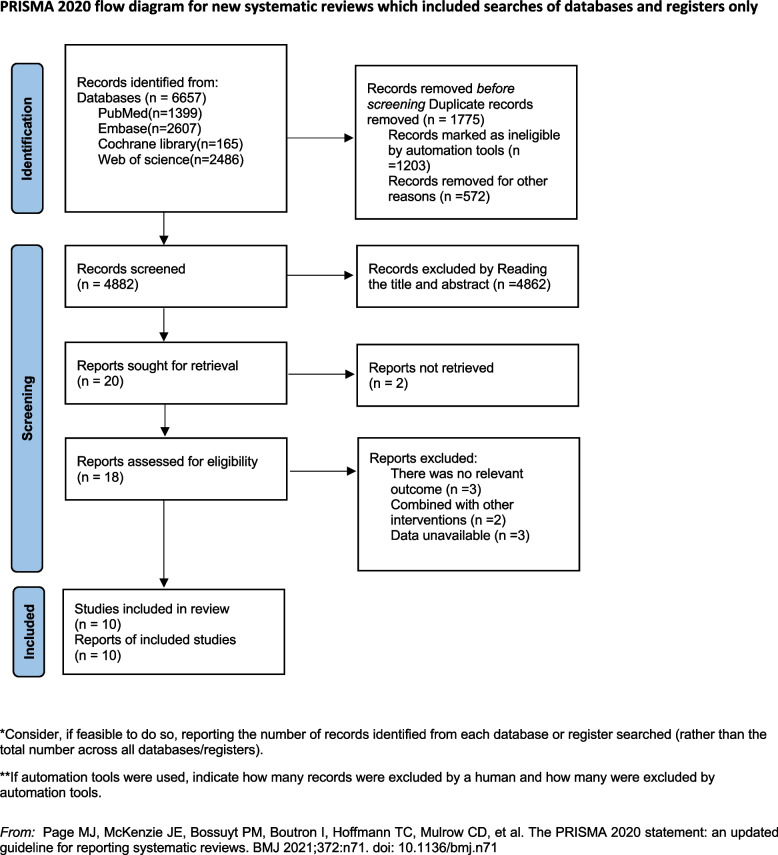
A systematic search of PubMed, Embase, Cochrane library, Web of Science, built up to 20 January 2025 was performed. Studies were included if they reported risk factors for AR in preschool children. A random-effects model was used to calculate the combined odd ratio (OR) and 95% confidence interval (CI).
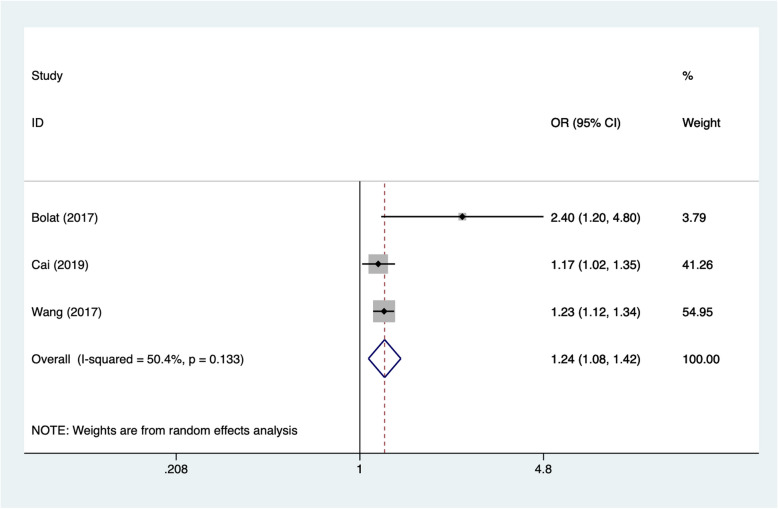
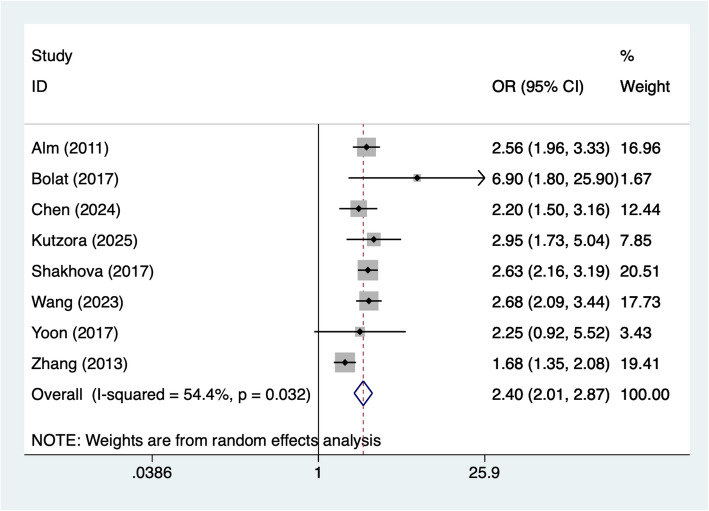
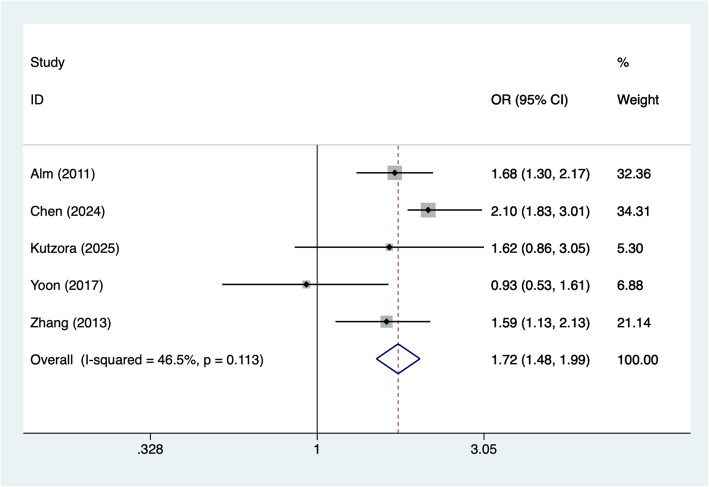
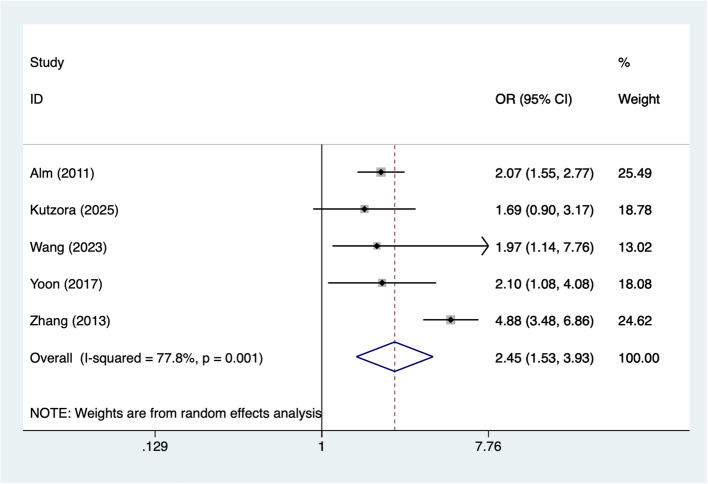
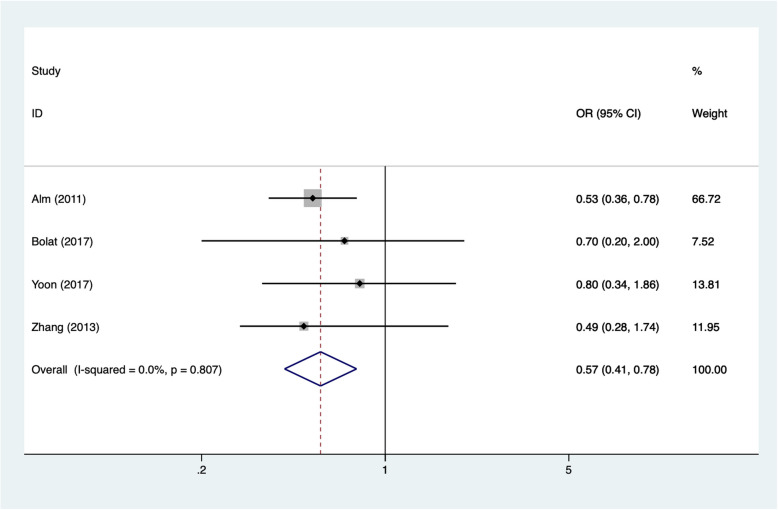
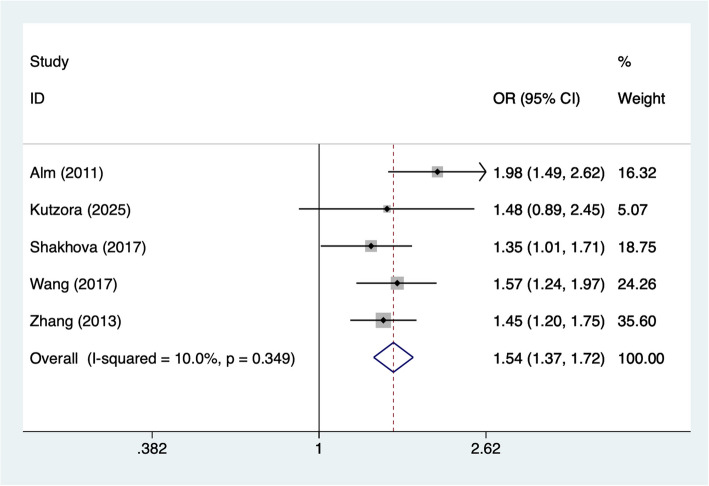
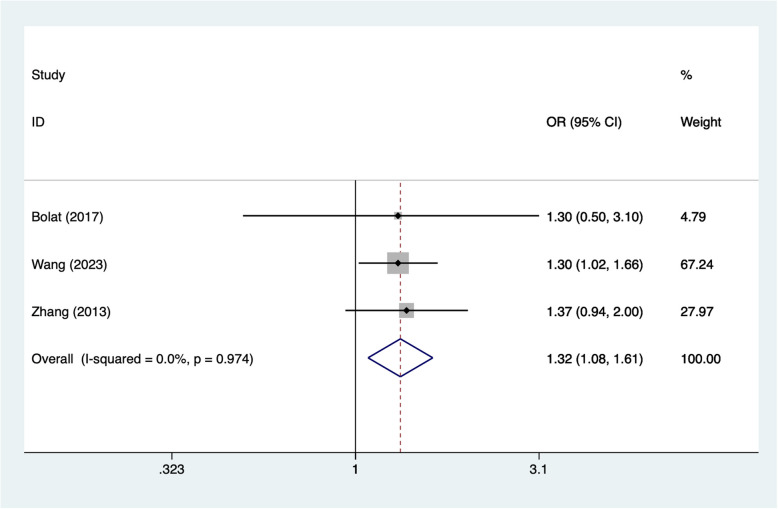
A total of 10 cohort studies involving 94,774 preschool children were included in this meta-analysis. The results suggested that several factors may associated with higher odds of allergic rhinitis in preschool children. These factors include parental allergic rhinitis (OR = 2.4, 95% CI: 2.01-2.87), parental eczema (OR = 1.72, 95% CI: 1.48-1.99), parental asthma (OR = 2.45, 95% CI: 1.53-3.93), male (OR = 1.54, 95% CI: 1.37-1.72), caesarean birth (OR = 1.32, 95% CI: 1.08-1.61), and dampness at home (OR = 1.24, 95% CI: 1.08-1.42). On the other hand, the presence of pets at home was found to be protective, with a reduced risk of allergic rhinitis (OR = 0.57, 95% CI: 0.41-0.78).
This study suggests that factors such as parental history of allergy, boys, caesarean section and damp environment at home may increase the risk of allergic rhinitis in preschool children, whereas pets may have a protective role. These findings emphasize the influence of genetic and environmental factors on allergic rhinitis in children.
变应性鼻炎(AR)是学龄前儿童的常见疾病,严重影响其生活质量。明确AR的危险因素有助于早期诊断和预防。本荟萃分析的目的是识别和总结与学龄前儿童变应性鼻炎相关的危险因素。
对截至2025年1月20日的PubMed、Embase、Cochrane图书馆、Web of Science进行系统检索。纳入报告学龄前儿童AR危险因素的研究。采用随机效应模型计算合并比值比(OR)和95%置信区间(CI)。
本荟萃分析共纳入10项队列研究,涉及94774名学龄前儿童。结果表明,几个因素可能与学龄前儿童患变应性鼻炎的较高几率相关。这些因素包括父母患变应性鼻炎(OR = 2.4,95% CI:2.01 - 2.87)、父母患湿疹(OR = 1.72,95% CI:1.48 - 1.99)、父母患哮喘(OR = 2.45,95% CI:1.53 - 3.93)、男性(OR = 1.54,95% CI:1.37 - 1.72)、剖宫产(OR = 1.32,95% CI:1.08 - 1.61)以及家中潮湿(OR = 1.24,95% CI:1.08 - 1.42)。另一方面,发现家中有宠物具有保护作用,可降低变应性鼻炎风险(OR = 0.57,95% CI:0.41 - 0.78)。
本研究表明,父母过敏史、男孩、剖宫产和家中潮湿环境等因素可能增加学龄前儿童患变应性鼻炎的风险,而宠物可能具有保护作用。这些发现强调了遗传和环境因素对儿童变应性鼻炎的影响。