Huang Xufeng, Gu Rui, Chen Guopeng, Wang Chenhui, Li Yuan, Liang Xiaofeng, Dimg Rong, Zhong Shihong
School of Pharmacy, Sichuan College of Traditional Chinese Medicine, Mianyang, China.
Northwest Sichuan Laboratory of Traditional Chinese Medicine Resources Research and Development Utilization, Mianyang, China.
PLoS One. 2025 Aug 8;20(8):e0327332. doi: 10.1371/journal.pone.0327332. eCollection 2025.
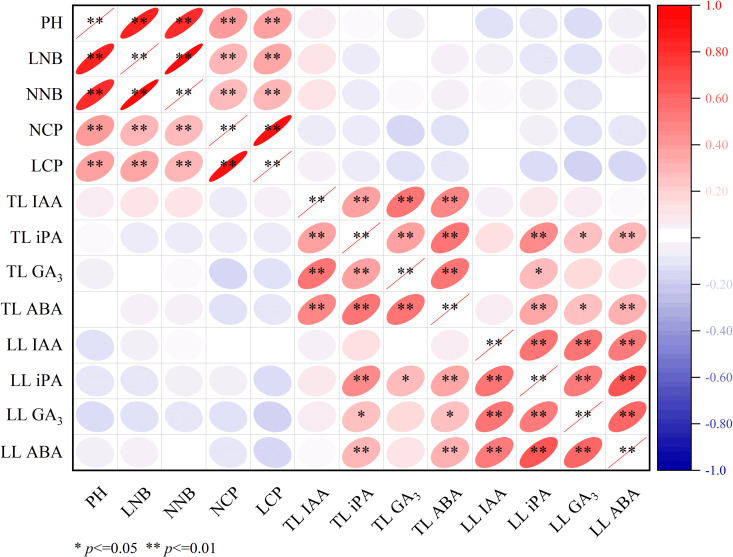
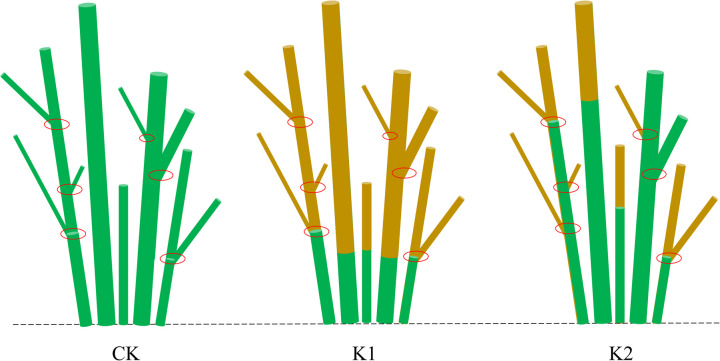
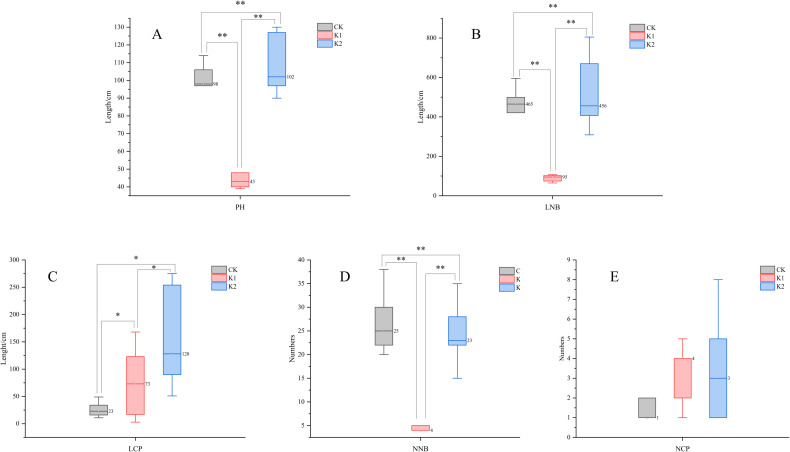
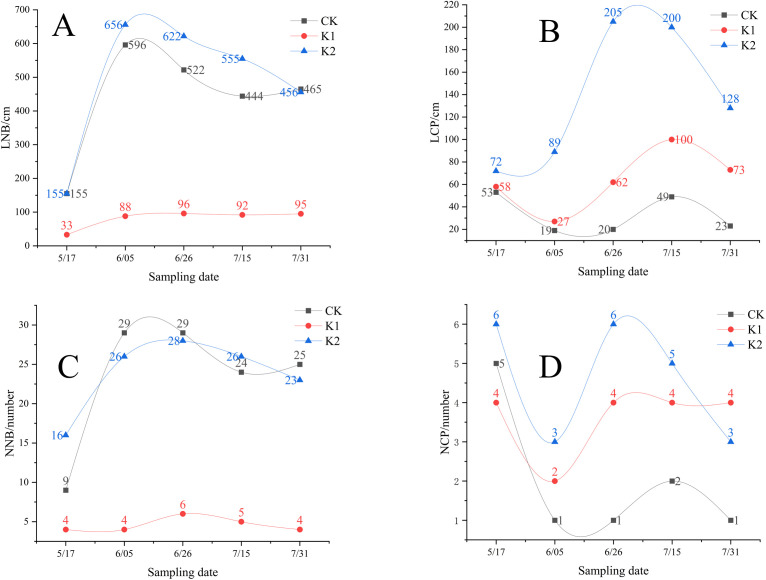
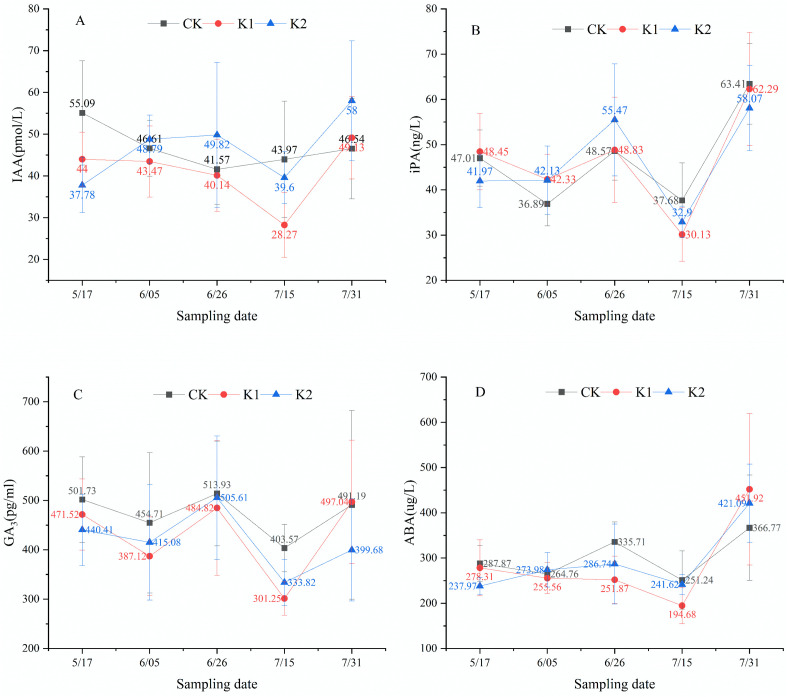
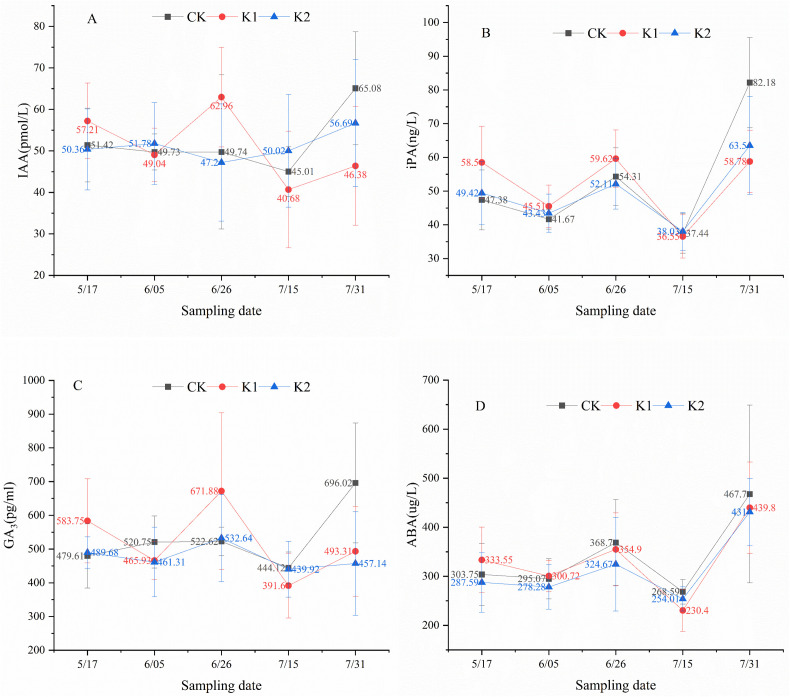
Eleutherococcus giraldii (E. giraldii) is a quintessential medicinal plant in traditional Chinese medicine. This study established control, heavy pruning, and light pruning groups to reveal growth indexes and endogenous phytohormones in cultivated E. giraldii using enzyme-linked immunosorbent assay (ELISA). Results indicated that light pruning significantly promoted length of new branch elongation, thereby increasing E. giraldii branch bark yield. In contrast, heavy pruning inhibited length of new branch elongation and reduced branch bark production. Both pruning intensities enhanced the number and length of newly sprouted clonal plants, facilitating population expansion of E. giraldii. The heavy pruning altered the trends of indoleacetic acid (IAA) and abscisic acid (ABA) in apical leaves, as well as IAA and gibberellic acid 3 (GA3) in lateral leaves. The light pruning modified the trends of IAA, ABA, and isopentenyl adenine nucleoside (iPA) in apical leaves, as well as IAA and GA3 in lateral leaves. Apical leaf IAA promoted new branch growth in E. giraldii, while lateral leaf IAA exhibited the opposite effect. iPA played a significant role in eliminating apical dominance and enhancing stress resistance in E. giraldii. GA3 inhibited new branch growth while delaying leaf senescence. Apical leaf ABA was closely associated with improved stress resistance, whereas lateral leaf ABA primarily inhibited new branch growth. This study provides valuable insights for establishing sustainable logging strategies for E. giraldii, protecting wild resources, and offers reference for research on endogenous hormone responses in shrubs under logging interventions.
太白五加是传统中药中的一种典型药用植物。本研究设立了对照、重度修剪和轻度修剪组,采用酶联免疫吸附测定法(ELISA)揭示栽培太白五加的生长指标和内源植物激素。结果表明,轻度修剪显著促进了新枝伸长长度,从而提高了太白五加的枝条皮产量。相反,重度修剪抑制了新枝伸长长度,降低了枝条皮产量。两种修剪强度均增加了新萌生克隆植株的数量和长度,有利于太白五加种群的扩张。重度修剪改变了顶叶中吲哚乙酸(IAA)和脱落酸(ABA)以及侧叶中IAA和赤霉素3(GA3)的变化趋势。轻度修剪改变了顶叶中IAA、ABA和异戊烯腺嘌呤核苷(iPA)以及侧叶中IAA和GA3的变化趋势。顶叶IAA促进了太白五加新枝的生长,而侧叶IAA则表现出相反的效果。iPA在消除太白五加的顶端优势和增强抗逆性方面发挥了重要作用。GA3抑制新枝生长,同时延缓叶片衰老。顶叶ABA与抗逆性的提高密切相关,而侧叶ABA主要抑制新枝生长。本研究为制定太白五加可持续采伐策略、保护野生资源提供了有价值的见解,并为采伐干预下灌木内源激素响应的研究提供了参考。