Curry Emily, Tack David, Rodriguez Jessica, Brehm-Lowe Danielle, Letherer John, Lineberry Megan, Prichard Roger, Clark Tobias
Zoetis, Veterinary Medicine Research and Development, 300 Portage Street, Kalamazoo, MI, 49007, USA.
Eurofins Lancaster Laboratories, 300 Portage Street, Kalamazoo, MI, 49007, USA.
Int J Parasitol Drugs Drug Resist. 2025 Aug 5;29:100604. doi: 10.1016/j.ijpddr.2025.100604.
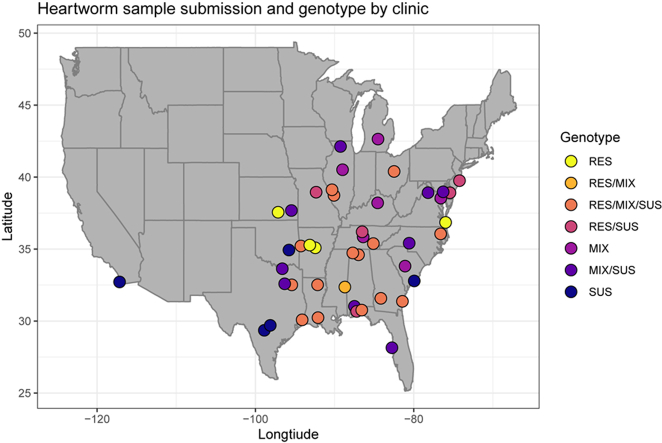
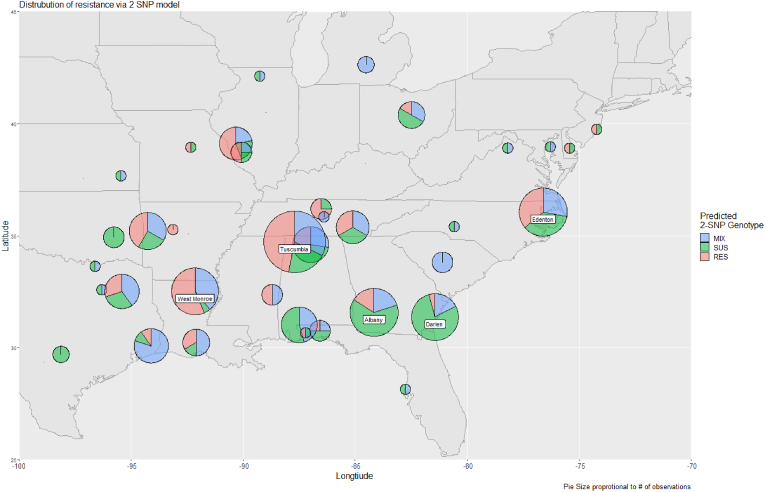
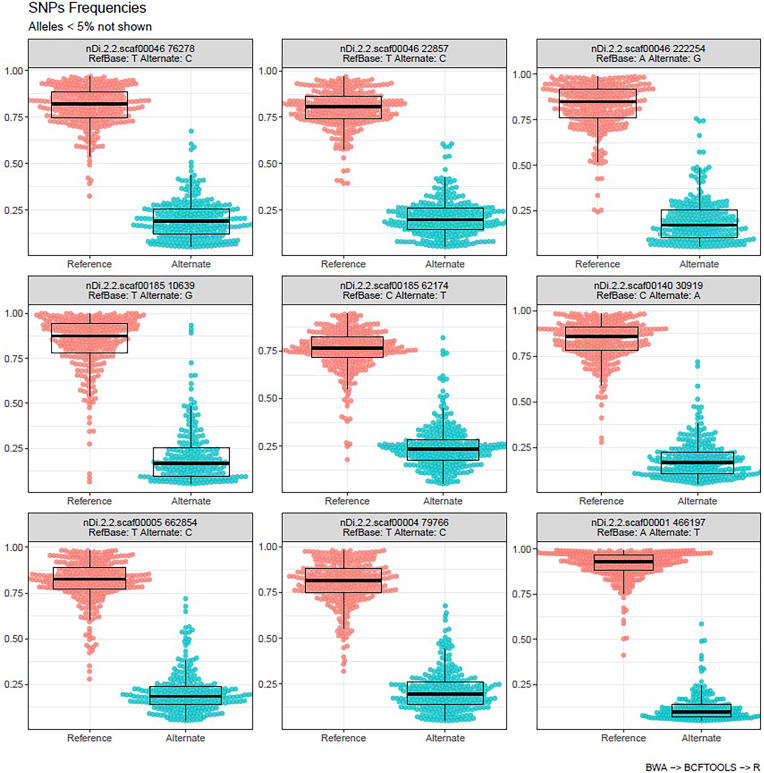
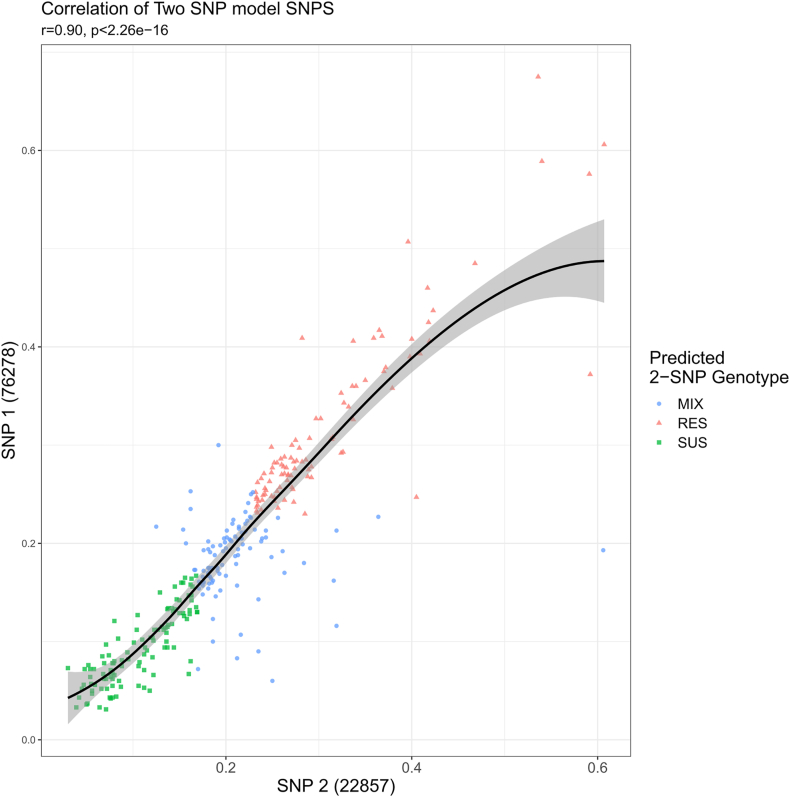
Dirofilaria immitis is a parasitic filarial nematode and the causative agent of heartworm disease in canids and other species. Heartworm disease is predominantly managed via macrocyclic lactone (ML) - based chemoprophylactics. Through opportunistic sampling, genotypically and phenotypically confirmed ML-resistant D. immitis isolates have been isolated in the Lower Mississippi River Valley region (LMRV); however, the pervasiveness of resistant isolates in the USA has not been evaluated. This study aimed to evaluate the geographic distribution and prevalence of genotypically ML-resistant heartworms in client-owned dogs across the USA over a 3-year period. Owner consent was obtained to collect microfilaremic blood samples from heartworm-positive dogs from participating clinics. Veterinarians completed a questionnaire on the known history of each dog, including treatment and travel history. A total of 310 microfilaremic blood samples were collected from 45 geographically diverse veterinary clinics located in 22 states. Microfilariae were filtered from blood, DNA extracted utilizing the QIAGEN QIAamp DNA Micro Kit and samples sequenced by the Génome Québec Innovation Centre to determine allele frequencies at nine SNP sites previously correlated with ML resistance. The highly predictive 2-SNP model was used to identify genotypically susceptible, mixed, and resistant populations. Computational analysis indicated 111 (35.8 %) were genotypically susceptible, 96 (31.0 %) were genotypically resistant, and 103 (33.2 %) were genotypically mixed. The genotypically mixed and ML-resistant infections were located within and outside of the endemic LMRV, as far north as Michigan, which indicates canine populations outside of the LMRV are at increased risk for transmission of potentially ML-resistant heartworm infections than previously hypothesized. Veterinary practitioners across the USA need to be aware of the potential risks of ML resistance heartworm infections and ensure patient compliance with recommended prevention protocols.
犬恶丝虫是一种寄生性丝虫线虫,是犬科动物和其他物种心丝虫病的病原体。心丝虫病主要通过基于大环内酯(ML)的化学预防措施进行管理。通过机会性采样,在下密西西比河谷地区(LMRV)分离出了基因型和表型均证实对ML耐药的犬恶丝虫分离株;然而,美国耐药分离株的普遍性尚未得到评估。本研究旨在评估美国客户拥有的犬在3年期间基因型对ML耐药的心丝虫的地理分布和流行情况。获得了主人的同意,从参与诊所的心丝虫阳性犬中采集微丝血症血样。兽医完成了一份关于每只犬已知病史的问卷,包括治疗和旅行史。总共从位于22个州的45个地理位置不同的兽医诊所收集了310份微丝血症血样。从血液中过滤出微丝蚴,使用QIAGEN QIAamp DNA Micro试剂盒提取DNA,并由魁北克基因组创新中心对样本进行测序,以确定先前与ML耐药性相关的9个单核苷酸多态性(SNP)位点的等位基因频率。使用高度预测性的双SNP模型来识别基因型易感、混合和耐药群体。计算分析表明,111只(35.8%)基因型易感,96只(31.0%)基因型耐药,103只(33.2%)基因型混合。基因型混合和对ML耐药的感染位于地方性LMRV的内部和外部,最北到密歇根州,这表明LMRV以外的犬群感染潜在对ML耐药的心丝虫的传播风险比先前假设的更高。美国各地的兽医从业者需要意识到对ML耐药的心丝虫感染的潜在风险,并确保患者遵守推荐的预防方案。