Zhao Rui, Gao Yong
Institute of Remote Sensing and Geographic Information Systems, School of Earth and Space Sciences, Peking University, Beijing, China.
Sci Rep. 2025 Aug 8;15(1):29030. doi: 10.1038/s41598-025-14843-x.
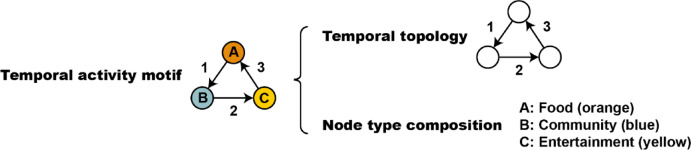
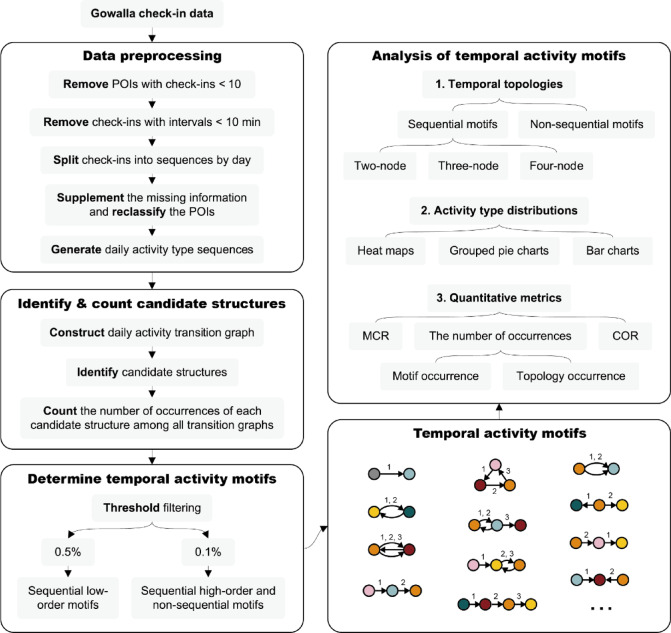
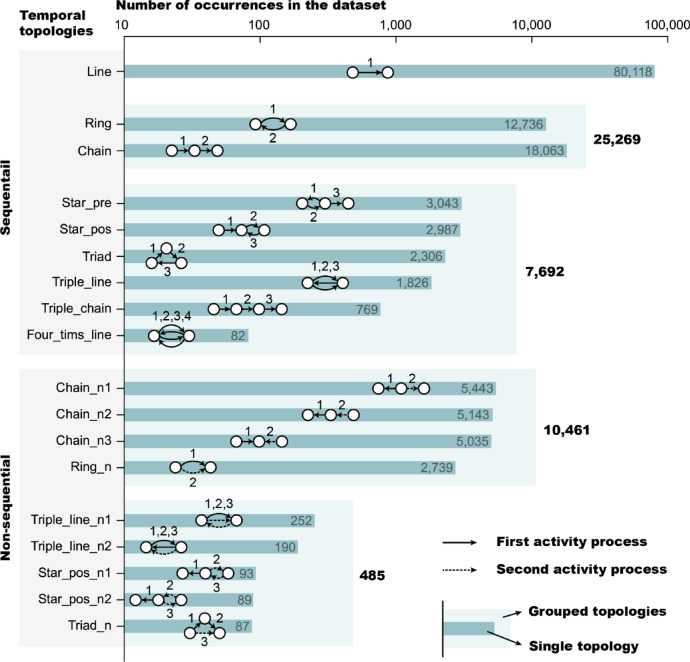
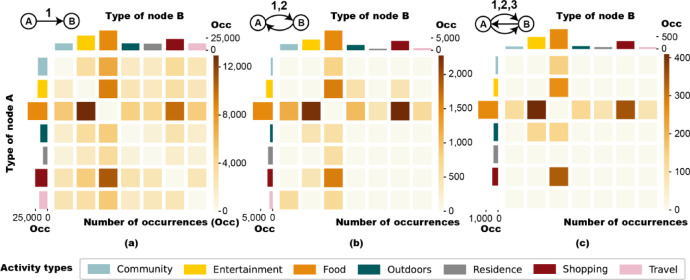
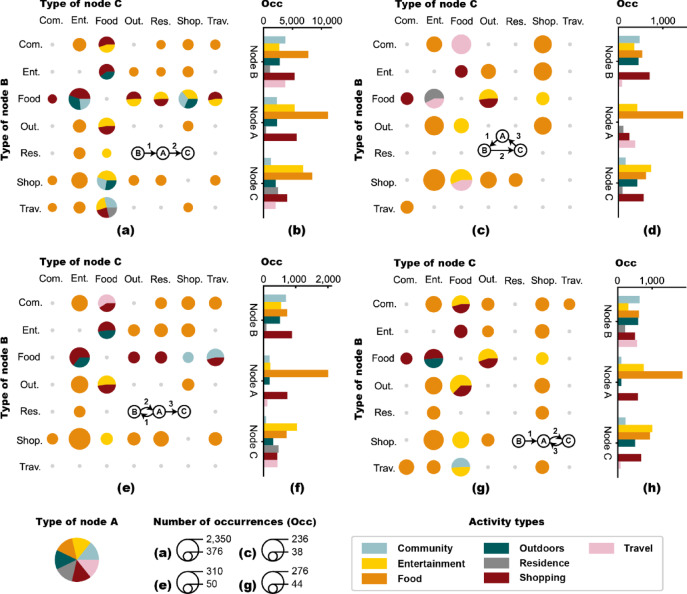
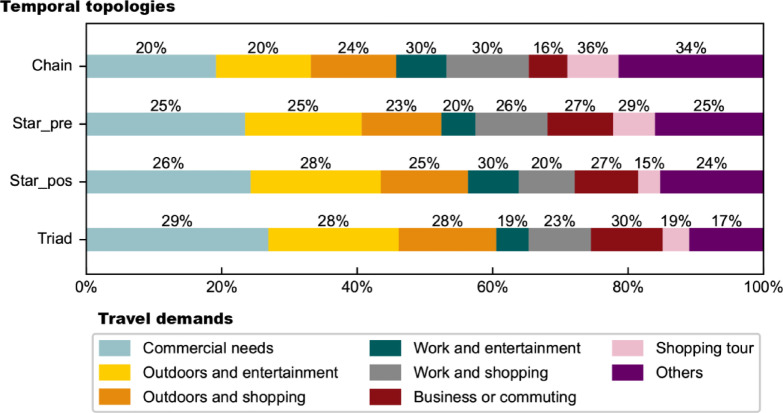
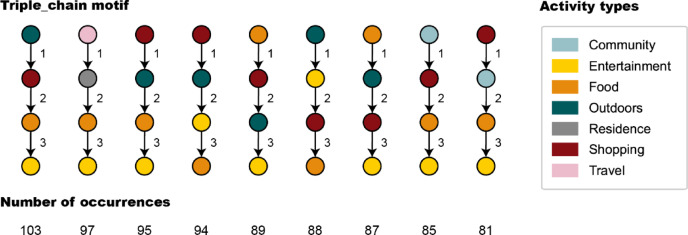
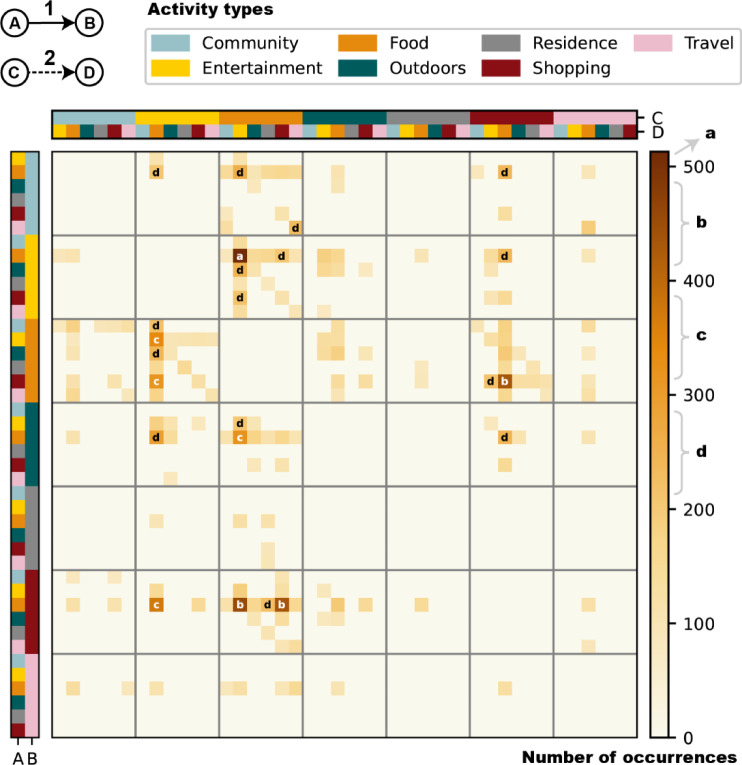
Location-Based Social Network (LBSN) has produced a large quantity of user check-in data. A profound understanding of user behavior and intrinsic needs can be achieved by identifying patterns in activity type transitions, thereby enabling more intelligent location-based services. We proposed temporal activity motif and used this structure to identify frequent activity type transition patterns from check-in sequences, discovering the relationship and interaction between different activity types. 383 temporal activity motifs of 17 temporal topologies were extracted from the two-year Gowalla dataset of New York-Newark-Jersey City, NY-NJ-PA Metropolitan Statistical Area (MSA). These motifs are categorized into two groups: one is sequential motifs representing a complete activity process, while the other is non-sequential motifs representing the co-occurrence of two separate processes. They provide evidence of activity type recurrence, particularly in longer activity processes, highlights the cyclical nature of human mobility. Additionally, various activity types exhibit different influences on others and occupy different positions in activity processes. Furthermore, by leveraging non-sequential motifs, we specifically uncovered the co-occurrence patterns between two separate activity process. These findings bring new insights to optimize recommendation system and urban planning.
基于位置的社交网络(LBSN)产生了大量的用户签到数据。通过识别活动类型转换中的模式,可以深入了解用户行为和内在需求,从而实现更智能的基于位置的服务。我们提出了时间活动模式,并使用这种结构从签到序列中识别频繁的活动类型转换模式,发现不同活动类型之间的关系和相互作用。从纽约-新泽西-宾夕法尼亚州大都会统计区(MSA)的纽约-纽瓦克-泽西城两年Gowalla数据集中提取了17种时间拓扑结构的383个时间活动模式。这些模式分为两组:一组是表示完整活动过程的顺序模式,另一组是非顺序模式,表示两个独立过程的共现。它们为活动类型的重现提供了证据,特别是在较长的活动过程中,突出了人类移动的周期性。此外,各种活动类型对其他类型表现出不同的影响,并在活动过程中占据不同的位置。此外,通过利用非顺序模式,我们特别发现了两个独立活动过程之间的共现模式。这些发现为优化推荐系统和城市规划带来了新的见解。