Wang Meng, Xie Zhibin, Tan Yuanyuan, Zhou Yan, Zhang Tingting, Du Yuqing, Wu Huan, Zhou Lili, Ge Jian
Department of Hematology, The First Affiliated Hospital of Anhui Medical University, Anhui, Hefei, China.
Department of Hematology, First Affiliated Hospital of Bengbu Medical University, Anhui, BengBu, China.
Front Oncol. 2025 Jul 25;15:1617564. doi: 10.3389/fonc.2025.1617564. eCollection 2025.
Nucleosome assembly protein 1-like 5 (NAP1L5), a critical regulator of gene transcription and nucleosome assembly, has been implicated in the progression and poor prognosis of various cancers. However, its specific role and molecular mechanisms in acute myeloid leukemia (AML) remain largely unexplored.
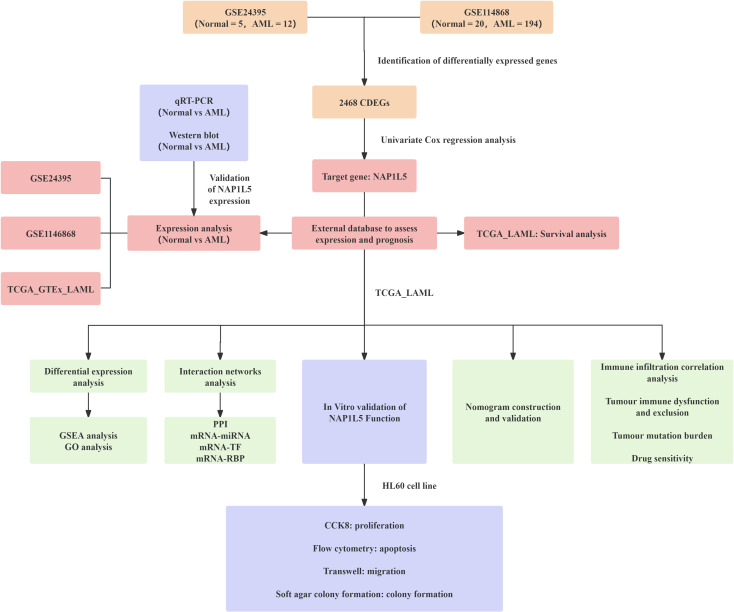
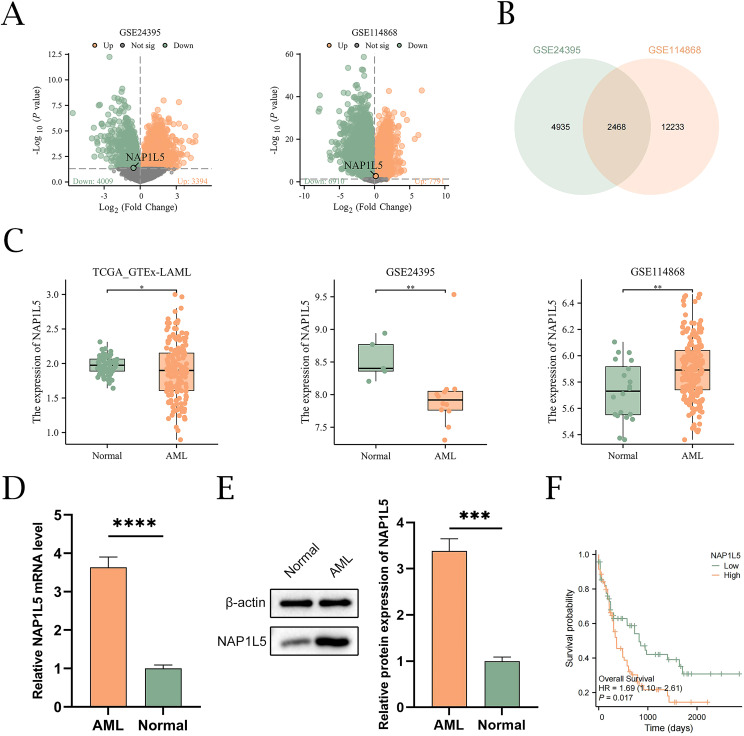
To identify key genes associated with AML, we analyzed gene expression profiles from AML patients and healthy controls using microarray datasets obtained from the GEO database. Differential expression analysis was performed to identify differentially expressed genes (DEGs), among which NAP1L5 emerged as a critical candidate based on its expression patterns and prognostic relevance, and we validated NAP1L5 expression in clinical AML samples. To elucidate the functional role of NAP1L5, we conducted Gene Set Enrichment Analysis (GSEA) and Gene Ontology (GO) analysis, which revealed its involvement in specific signaling pathways and biological processes. Furthermore, we constructed an interaction network and predictive model for NAP1L5, complemented by an assessment of its role in immune infiltration and drug sensitivity. Finally, we conducted experiments to explore its biological functions and underlying molecular mechanisms.
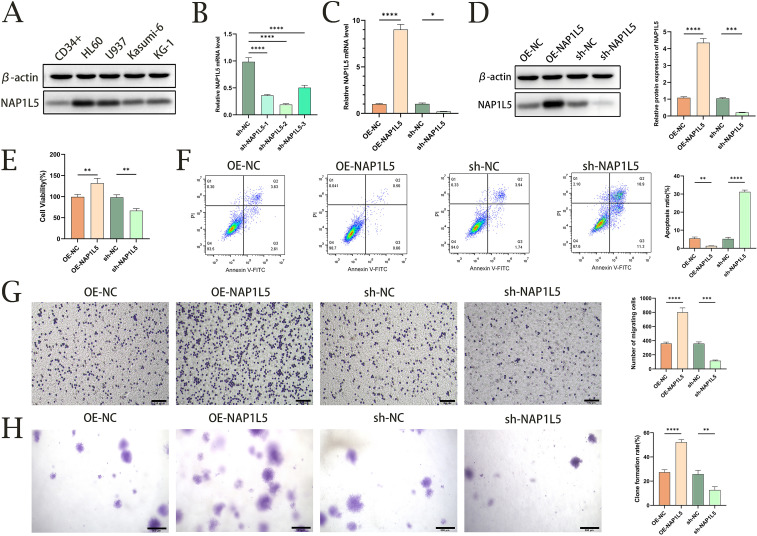
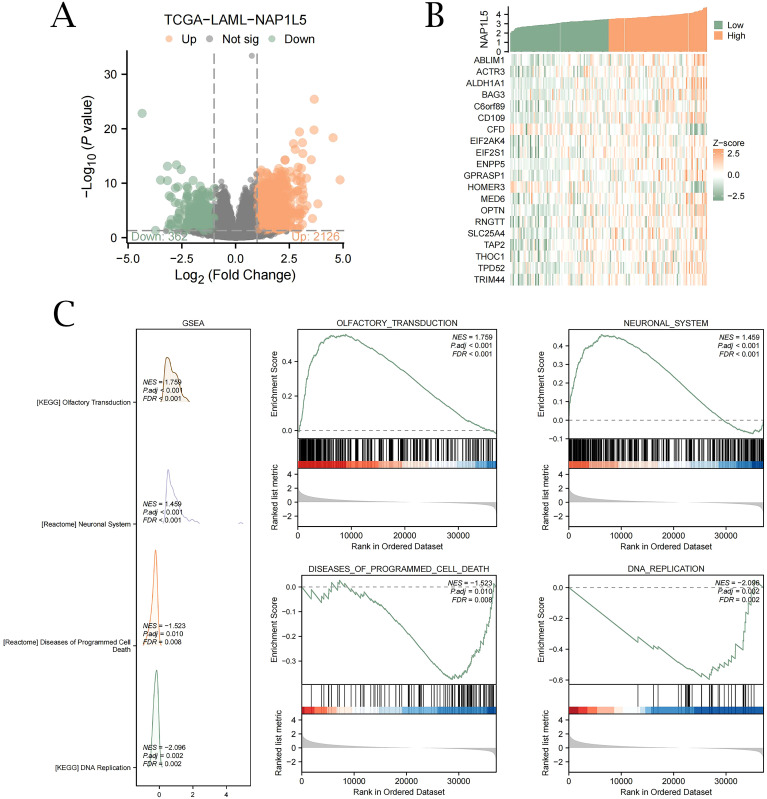
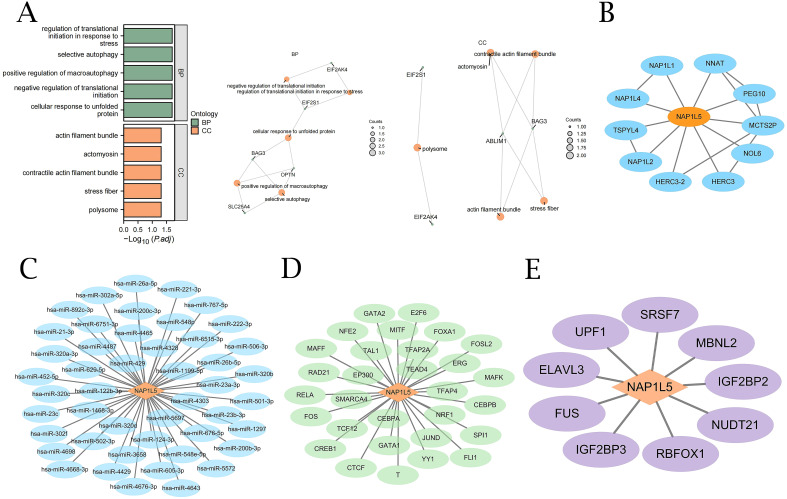
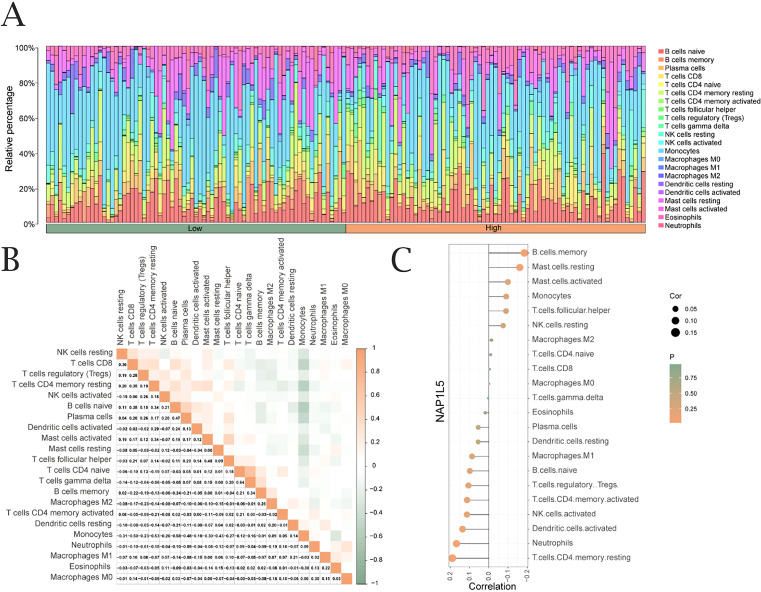
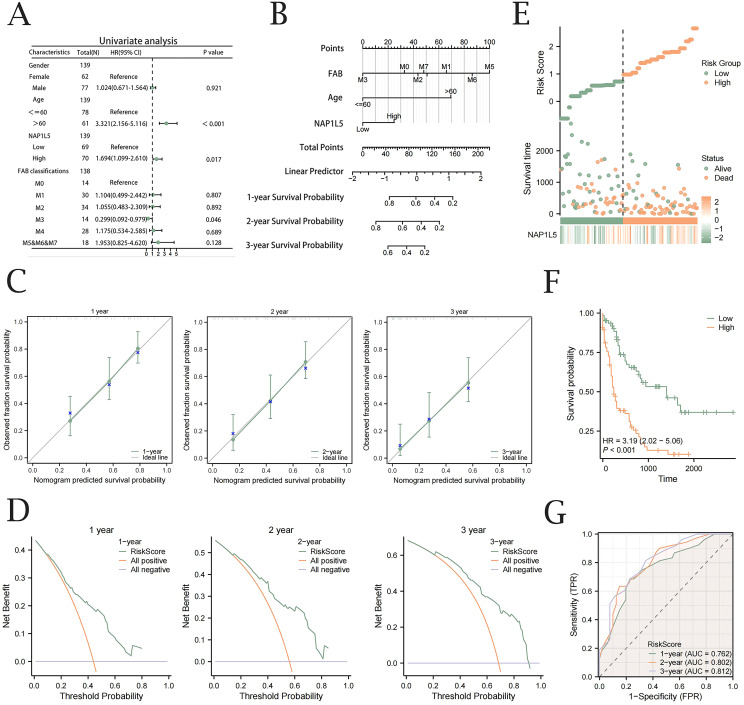
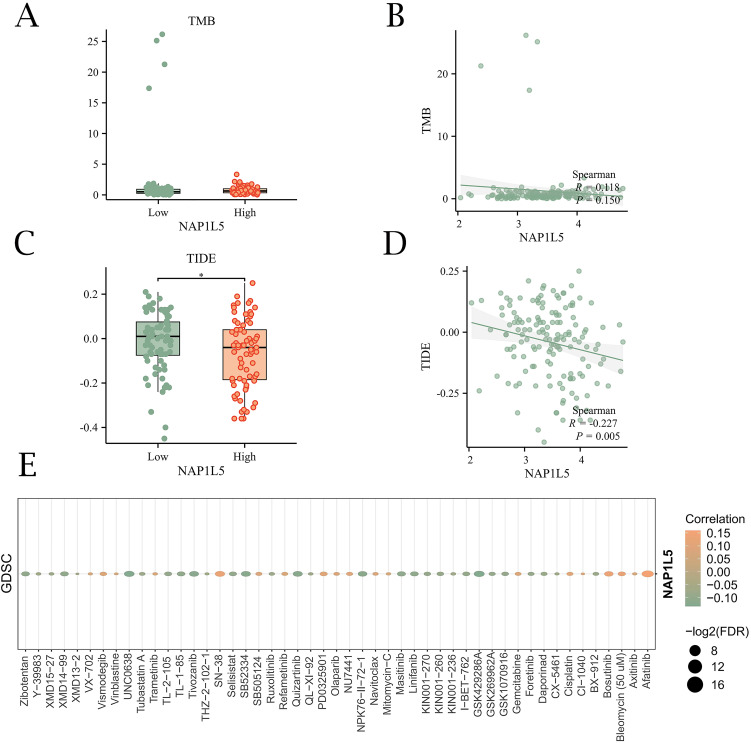
In AML, elevated expression of NAP1L5 was significantly associated with reduced overall survival, underscoring its prognostic relevance. GSEA revealed that NAP1L5 was prominently enriched in pathways related to apoptosis and DNA replication. GO analysis further indicated that its co-expressed genes were closely linked to autophagy and stress response mechanisms. Interaction network analysis revealed that NAP1L5 engages in complex regulatory interactions with multiple genes, miRNAs, transcription factors (TFs), and RNA-binding proteins (RBPs). Notably, high NAP1L5 expression correlated with increased infiltration of resting CD4+ memory T cells, implicating its potential influence on the tumor immune microenvironment. A predictive model integrating NAP1L5 expression and clinical AML features exhibited robust prognostic utility. Drug sensitivity analysis identified NAP1L5 overexpression as a marker of resistance to Zibotentan, along with associations with 49 additional therapeutic agents. functional assays demonstrated that NAP1L5 overexpression promoted cellular proliferation, migration, and colony formation while concurrently inhibiting apoptosis, highlighting its oncogenic potential in AML pathogenesis.
NAP1L5 emerges as a promising prognostic biomarker and therapeutic target in AML, offering potential for improved patient outcomes and precision treatment strategies.
核小体组装蛋白1样蛋白5(NAP1L5)是基因转录和核小体组装的关键调节因子,与多种癌症的进展及不良预后相关。然而,其在急性髓系白血病(AML)中的具体作用和分子机制仍 largely未被探索。
为鉴定与AML相关的关键基因,我们使用从基因表达综合数据库(GEO数据库)获取的微阵列数据集,分析了AML患者和健康对照的基因表达谱。进行差异表达分析以鉴定差异表达基因(DEG),其中基于其表达模式和预后相关性,NAP1L5成为关键候选基因,并且我们在临床AML样本中验证了NAP1L5的表达。为阐明NAP1L5的功能作用,我们进行了基因集富集分析(GSEA)和基因本体论(GO)分析,这揭示了其参与特定的信号通路和生物学过程。此外,我们构建了NAP1L5的相互作用网络和预测模型,并辅以评估其在免疫浸润和药物敏感性中的作用。最后,我们进行了实验以探索其生物学功能和潜在的分子机制。
在AML中,NAP1L5表达升高与总生存期缩短显著相关,强调了其预后相关性。GSEA显示NAP1L5显著富集于与凋亡和DNA复制相关的通路。GO分析进一步表明其共表达基因与自噬和应激反应机制密切相关。相互作用网络分析显示NAP1L5与多个基因、微小RNA(miRNA)、转录因子(TF)和RNA结合蛋白(RBP)进行复杂的调节相互作用。值得注意的是,高NAP1L5表达与静息CD4 +记忆T细胞浸润增加相关,暗示其对肿瘤免疫微环境的潜在影响。整合NAP1L5表达和临床AML特征的预测模型显示出强大的预后效用。药物敏感性分析确定NAP1L5过表达是对西波尼特耐药的标志物,还与另外49种治疗药物有关。功能试验表明,NAP1L5过表达促进细胞增殖、迁移和集落形成,同时抑制凋亡,突出了其在AML发病机制中的致癌潜力。
NAP1L5成为AML中一个有前景的预后生物标志物和治疗靶点,为改善患者预后和精准治疗策略提供了潜力。