Khaloui Ghizlane, Mabkhout Amal, Rachidi Linda, Benjelloun Ghizlane
Child and Adolescent Psychiatry Department, Abderrahim Harouchi Mother-Child Hospital, Ibn Rochd University Hospital Center, Casablanca, Morocco.
Laboratory of Clinical Neurosciences and Mental Health, Faculty of Medicine and Pharmacy, Hassan II University, Casablanca, Morocco.
Eur J Case Rep Intern Med. 2025 Jul 16;12(8):005679. doi: 10.12890/2025_005679. eCollection 2025.
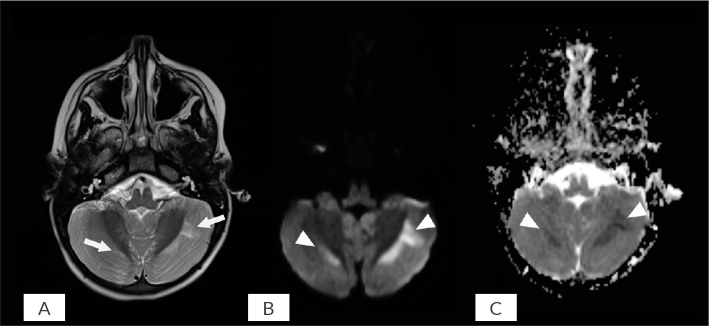
Anti-N-methyl-D-aspartate receptor (anti-NMDAR) encephalitis is a rare but increasingly recognized autoimmune disorder that predominantly affects adolescents and young adults. It often presents with prominent psychiatric symptoms at onset, leading to frequent misdiagnosis as a primary psychiatric disorder. We report the case of a 16-year-old girl who presented with acute psychiatric symptoms, including mood lability, hallucinations, and aggression, initially diagnosed as first-episode psychosis. Her condition rapidly deteriorated under antipsychotic treatment, progressing to neuroleptic malignant syndrome, followed by the emergence of cerebellar ataxia, which raised strong suspicion of an underlying organic aetiology. Subsequent investigations confirmed the diagnosis of anti-NMDAR encephalitis. The patient was successfully treated with intravenous immunoglobulin, achieving complete recovery. This case underscores the diagnostic challenges posed by isolated psychiatric presentations of anti-NMDAR encephalitis in adolescents. Early recognition and prompt initiation of immunotherapy are crucial for favourable outcomes, particularly in cases presenting with antipsychotic intolerance or atypical clinical progression.
Anti-N-methyl-D-aspartate receptor encephalitis can initially present as an isolated psychiatric syndrome mimicking primary psychosis, particularly in adolescents, often leading to misdiagnosis.The development of neuroleptic malignant syndrome during a first-episode psychosis, occurring rapidly and at low antipsychotic doses, should raise suspicion of an organic aetiology, notably autoimmune encephalitis.Magnetic resonance imaging, electroencephalogram, and cerebrospinal fluid analysis are essential to distinguish autoimmune encephalitis from primary psychiatric disorders.
抗N-甲基-D-天冬氨酸受体(抗NMDAR)脑炎是一种罕见但越来越被认识到的自身免疫性疾病,主要影响青少年和年轻成年人。它在发病时常常表现出突出的精神症状,导致频繁被误诊为原发性精神障碍。我们报告了一名16岁女孩的病例,她出现急性精神症状,包括情绪不稳定、幻觉和攻击性,最初被诊断为首发精神病。在抗精神病药物治疗下,她的病情迅速恶化,发展为抗精神病药物恶性综合征,随后出现小脑共济失调,这强烈怀疑存在潜在的器质性病因。随后的检查证实了抗NMDAR脑炎的诊断。患者通过静脉注射免疫球蛋白成功治愈,实现了完全康复。该病例强调了青少年抗NMDAR脑炎孤立性精神症状表现所带来的诊断挑战。早期识别和及时启动免疫治疗对于取得良好预后至关重要,特别是在出现抗精神病药物不耐受或非典型临床进展的病例中。
抗N-甲基-D-天冬氨酸受体脑炎最初可表现为类似原发性精神病的孤立性精神综合征,尤其是在青少年中,常导致误诊。在首发精神病期间迅速且在低抗精神病药物剂量下发生抗精神病药物恶性综合征,应怀疑存在器质性病因,特别是自身免疫性脑炎。磁共振成像、脑电图和脑脊液分析对于区分自身免疫性脑炎和原发性精神障碍至关重要。