Department of Psychiatry and Behavioral Sciences, Tulane University School of Medicine, New Orleans, Los Angeles, USA.
Department of Internal Medicine, Ochsner Clinic Foundation, New Orleans, Louisiana, USA.
Brain Behav. 2023 Jun;13(6):e3037. doi: 10.1002/brb3.3037. Epub 2023 May 1.
Bipolar disorder (BD) is a mood disorder that affects millions worldwide. Up to half of the diagnosed patients are reported to not receive adequate treatment. This study aims to assess the relationship between the gut-brain axis and BD and to discuss and compare the efficacy of varying methods of balancing gut microbiotas in BD.
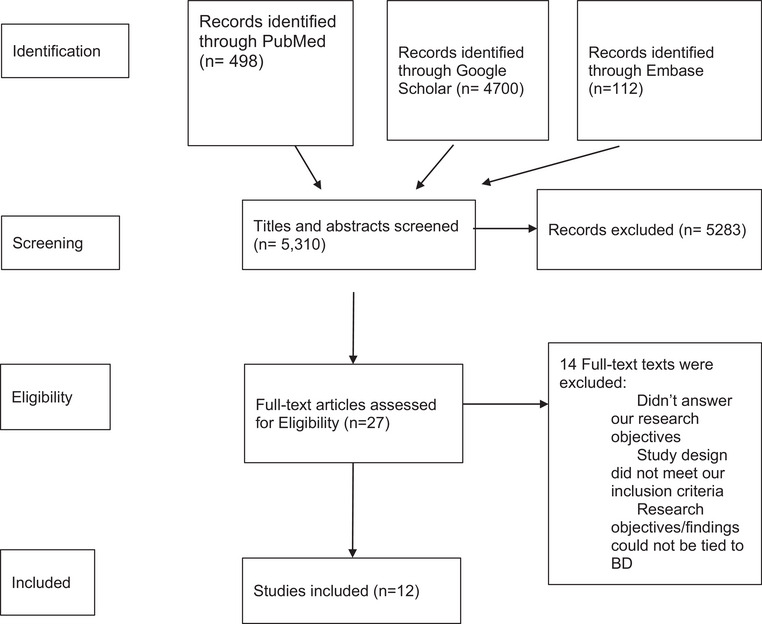
Using PubMed, Embase, and Google Scholar from November 2021 to February 2022, we found 5310 studies on gut microbiota and its relation to BD. Using our inclusion criteria, 5283 studies were excluded. A total of 27 full-text articles were assessed for eligibility. Also, 12 articles that met our criteria and eligibility criteria reported on 613 BD patients.
Most studies analyzed found an overall difference in gut microbiota composition in bipolar patients compared to healthy controls, though the alterations found were not consistent. Differences in Lactobacillus, Faecalibacterium, and Ruminococcus abundance in BD compared to controls were found to be the most consistent across a few of the studies, but their effects on the gut-brain axis conflicted. Probiotic supplementation was found to lower patient rehospitalizations and significantly improve depressive symptoms and cognitive impairments among patients with BD.
Multiple studies included in this review point toward a possible link between BD and the gut microbiota. Probiotic supplements and other gut-balancing therapies could serve as effective adjunctive methods for the treatment of BD. Notable limitations of the studies included for analysis were small sample sizes and majority observational study designs. Furthermore, the microbiota aberrations found in patients with BD were not consistent across multiple studies. Despite these limitations, our findings demonstrate the need for further research regarding the relationship between aberrant gut microbiota profiles and BD, as well as the effectiveness of gut balancing methods as adjunctive treatments.
双相情感障碍(BD)是一种影响全球数百万人的情绪障碍。据报道,多达一半的确诊患者未接受足够的治疗。本研究旨在评估肠道-大脑轴与 BD 的关系,并讨论和比较平衡 BD 肠道微生物群的各种方法的疗效。
使用 PubMed、Embase 和 Google Scholar,从 2021 年 11 月至 2022 年 2 月,我们发现了 5310 篇关于肠道微生物群及其与 BD 关系的研究。使用我们的纳入标准,排除了 5283 项研究。共有 27 篇全文文章被评估是否符合纳入标准。此外,符合纳入标准和排除标准的 12 篇文章报告了 613 名 BD 患者。
大多数研究分析发现,与健康对照组相比,双相情感障碍患者的肠道微生物群组成存在总体差异,尽管发现的变化并不一致。与对照组相比,BD 患者中 Lactobacillus、Faecalibacterium 和 Ruminococcus 的丰度差异在几项研究中最为一致,但它们对肠道-大脑轴的影响存在冲突。益生菌补充剂被发现可降低患者的再住院率,并显著改善 BD 患者的抑郁症状和认知障碍。
本综述中纳入的多项研究表明 BD 与肠道微生物群之间可能存在联系。益生菌补充剂和其他肠道平衡疗法可以作为 BD 的有效辅助治疗方法。纳入分析的研究存在显著局限性,包括样本量小和多数观察性研究设计。此外,BD 患者的肠道微生物群异常在多项研究中并不一致。尽管存在这些局限性,但我们的研究结果表明,需要进一步研究肠道微生物群异常与 BD 之间的关系,以及肠道平衡方法作为辅助治疗的有效性。