Zhang Jingjing, Zhou Rui, Zhang Huiling, Peng Yin, Meng Jintao, Xi Wenhui, Wei Yanjie
Shenzhen Institutes of Advanced Technology, Chinese Academy of Sciences, Shenzhen, China.
University of Chinese Academy of Sciences, Beijing, China.
Front Genet. 2025 Jul 29;16:1654305. doi: 10.3389/fgene.2025.1654305. eCollection 2025.
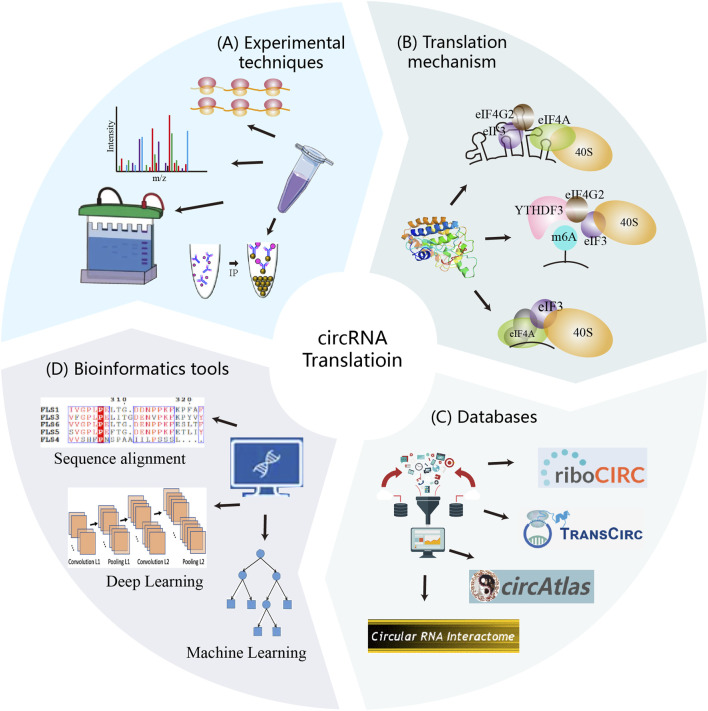
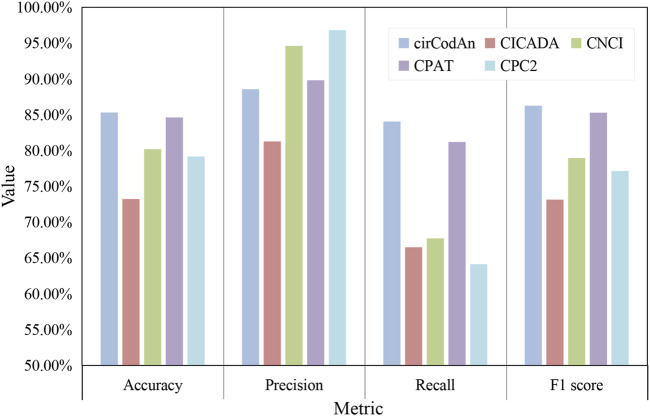
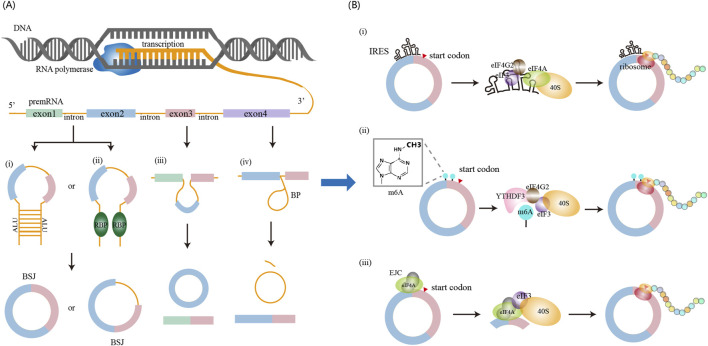
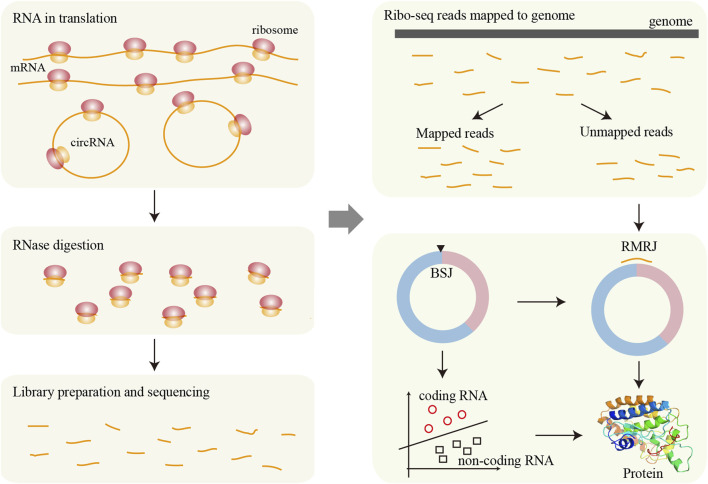
In recent years, numerous studies have demonstrated that circRNAs play crucial biological roles through their capacity to encode functional proteins. Computational methods have become essential for investigating circRNA translation. In this review, we first outline circRNA biogenesis and translation mechanisms to establish the rationale for developing specialized computational strategies. We then summarize experimental techniques and existing databases that support computational method development. Subsequently, we provide a systematic introduction to existing circRNA translation analysis tools and their underlying algorithms, with emphasis on benchmarking the performance of sequence-based methods using a unified dataset. Our benchmarking revealed that: (1) cirCodAn achieved superior predictive accuracy while maintaining user accessibility; (2) the training data selection during method development critically impacts model performance. This review serves as a comprehensive reference for the selection and application of circRNA translation analysis methods and provides foundational guidance for the development and refinement of future computational tools.
近年来,大量研究表明,环状RNA(circRNAs)通过其编码功能性蛋白质的能力发挥关键的生物学作用。计算方法已成为研究circRNA翻译的重要手段。在本综述中,我们首先概述circRNA的生物合成和翻译机制,以确立开发专门计算策略的理论依据。然后,我们总结了支持计算方法开发的实验技术和现有数据库。随后,我们系统介绍了现有的circRNA翻译分析工具及其底层算法,重点是使用统一数据集对基于序列的方法的性能进行基准测试。我们的基准测试表明:(1)cirCodAn在保持用户可及性的同时实现了卓越的预测准确性;(2)方法开发过程中的训练数据选择对模型性能有至关重要的影响。本综述为circRNA翻译分析方法的选择和应用提供了全面的参考,并为未来计算工具的开发和完善提供了基础指导。