Mirach Tsega H, Lysaght Rosemary M, Adugna Molalign B, Alemu Abebe A, Ayele Meseret H, Tilahun Sewbesew Y, Adhanom Tewelde G
Department of Health Systems and Policy, College of Medicine and Health Sciences, University of Gondar, Gondar, Ethiopia.
School of Rehabilitation Therapy, Queen's University, Kingston, Canada.
Afr J Disabil. 2025 Jul 8;14:1660. doi: 10.4102/ajod.v14i0.1660. eCollection 2025.
Job satisfaction among people with disabilities (PWDs) is a significant concern because of its impact on productivity, job retention and well-being in the workplace.
This study aimed to assess the job satisfaction of employees with disabilities in Ethiopia and to identify key factors influencing job satisfaction.
A cross-sectional survey was conducted with 784 Ethiopian government employees with various disabilities. All interviews were conducted in 2021.The survey was designed to collect key socio-demographic information, and factors related to job satisfaction.
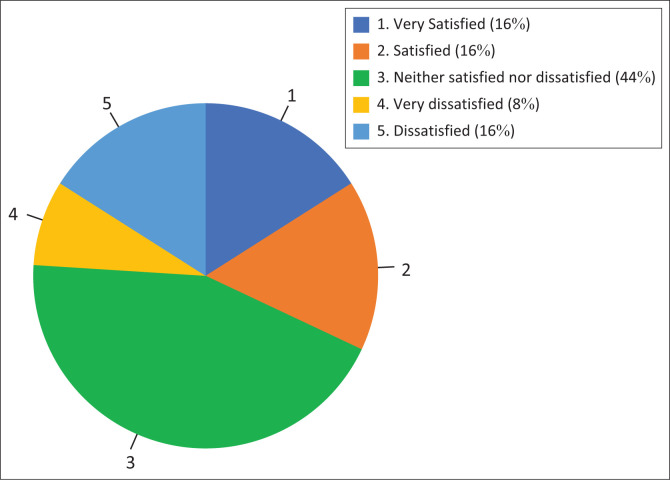
The majority of respondents had motor difficulties (59%), followed by visual impairments (36.7%). The mean age was 33 years, and 67% were male. Over half of the study participants were first-degree holders, and 80.6% had experienced integrated education. The mean time to secure a job was 15.41 months, with over 18% unemployed for 6-12 months. Job dissatisfaction was influenced by factors such as low salary, gender, service years and lack of personal assistance. Vision impairment correlated with higher dissatisfaction. Overall, around 32.5% reported satisfaction in their job, 44.1% were neutral and 23.4% were dissatisfied. Dissatisfaction rose to 29% when measured using supplementary questions.
The study was the first to examine factors leading to job satisfaction of employees with disabilities in the Ethiopian public sector. Recommendations include social policy adjustments for better working conditions, considering central factors associated with dissatisfaction. The government should explore measures such as employment quotas or wage supplementation to address disparities and ensure reasonable accommodation. Inclusive research methods will assist in leading change.
This research contributes nuanced insights into the factors affecting job satisfaction and its complexities among employees with disabilities in the Ethiopian context, emphasising the need for ongoing research to improve worker support structures and inclusive practices in job acquisition and employment.
残疾人的工作满意度是一个重要问题,因为它会影响工作效率、工作保留率和职场幸福感。
本研究旨在评估埃塞俄比亚残疾员工的工作满意度,并确定影响工作满意度的关键因素。
对784名患有各种残疾的埃塞俄比亚政府雇员进行了横断面调查。所有访谈均在2021年进行。该调查旨在收集关键的社会人口信息以及与工作满意度相关的因素。
大多数受访者存在行动困难(59%),其次是视力障碍(36.7%)。平均年龄为33岁,67%为男性。超过一半的研究参与者拥有学士学位,80.6%接受过融合教育。找到工作的平均时间为15.41个月,超过18%的人失业6至12个月。工作不满意受到低工资、性别、工作年限和缺乏个人协助等因素的影响。视力障碍与更高的不满意程度相关。总体而言,约32.5%的人表示对工作满意,44.1%持中立态度,23.4%不满意。使用补充问题进行测量时,不满意率上升至29%。
该研究首次调查了埃塞俄比亚公共部门残疾员工工作满意度的影响因素。建议包括调整社会政策以改善工作条件,考虑与不满意相关的核心因素。政府应探索就业配额或工资补贴等措施,以解决差异问题并确保合理便利。包容性研究方法将有助于引领变革。
本研究对埃塞俄比亚背景下影响残疾员工工作满意度及其复杂性的因素提供了细致入微的见解,强调需要持续开展研究以改善员工支持结构以及求职和就业中的包容性做法。